
Violet Banks (1896-1985) was born near Kinghorn, Fife and educated at Craigmont, Edinburgh, and at Edinburgh College of Art. In 1928 she was senior arts mistress at St. Oran’s, a private school at Drummond Place, Edinburgh.[1] In 1935, Violet Banks established her own commercial photography studio in Edinburgh, taking photographs of Scotland’s capital city. The Violet Banks Collection is held by Historic Environment Scotland and can be viewed digitally on Canmore. Banks’ collection also holds nine photographic albums of the Hebrides. These photographs were the result of tours she made during the late 1920s / early 1930s.
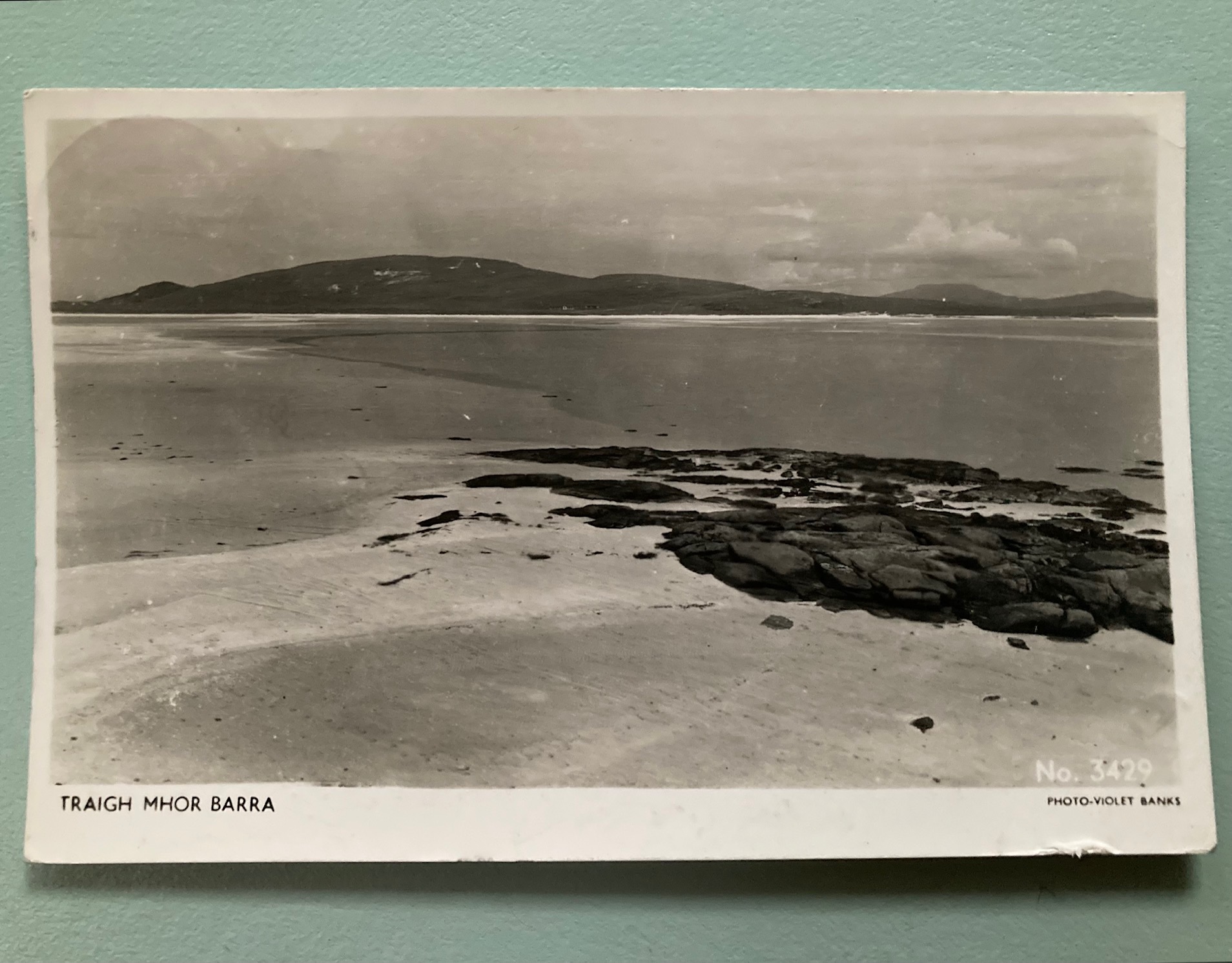
I first became aware of Banks’ postcards through a research visit to Eigg History Society in 2016. Three of Banks’ photographs of Eigg, from her photograph album ‘The Small Isles’, appear as facsimiles of postcards in Eigg History Society’s archive. The postcards are distinctive in layout, always bearing black capital lettering ‘Photo: Violet Banks’ at the bottom right of the white border. Since that first encounter, I have slowly been purchasing her original photograph postcards via eBay. All the images Banks selected for her postcards are from her photograph albums at Historic Environment Scotland.
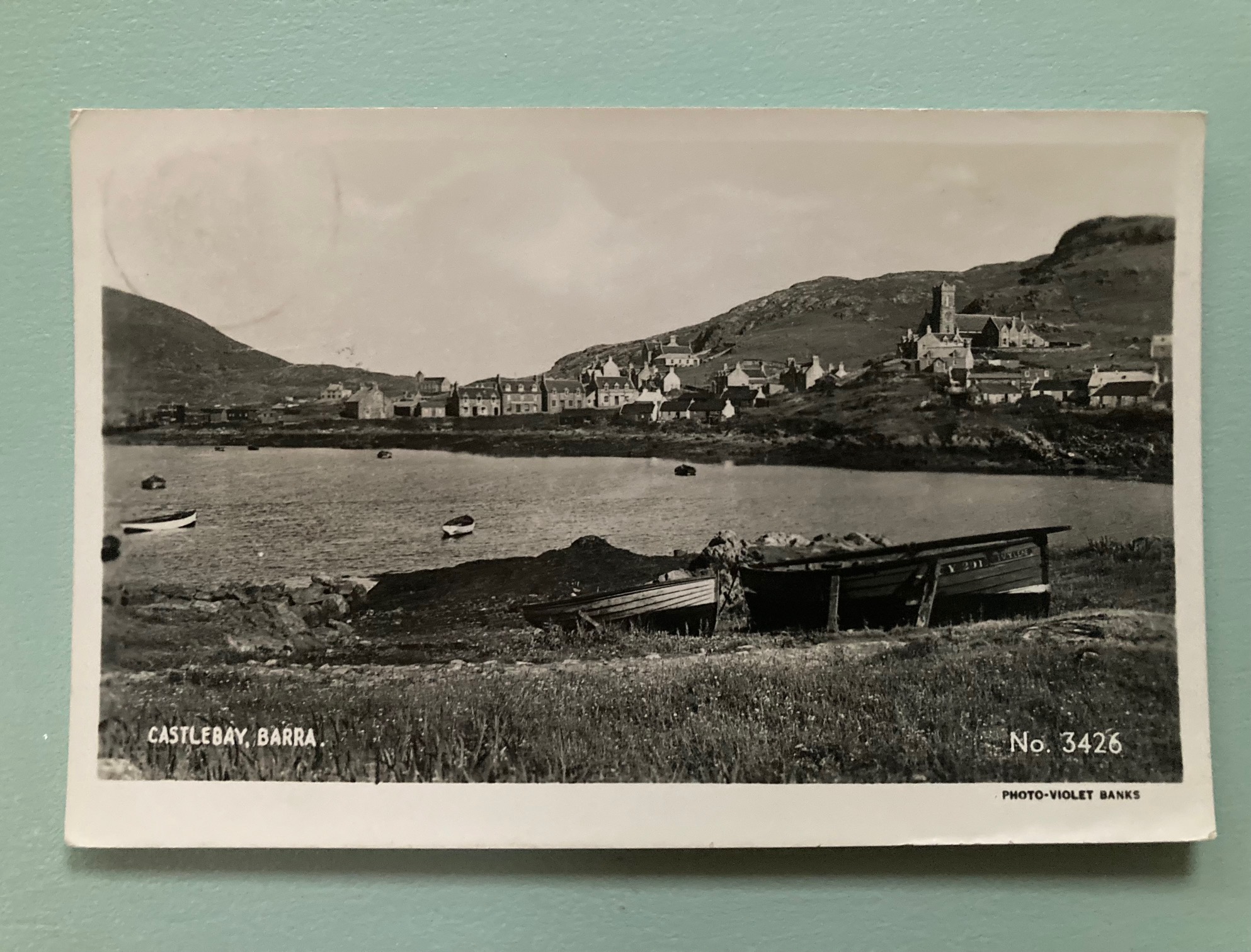
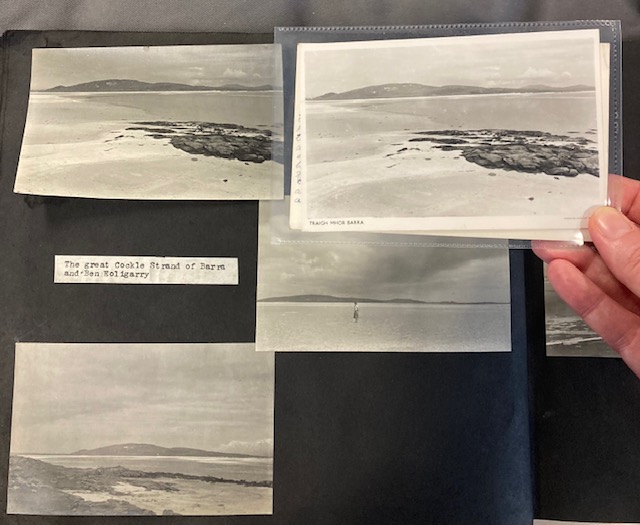
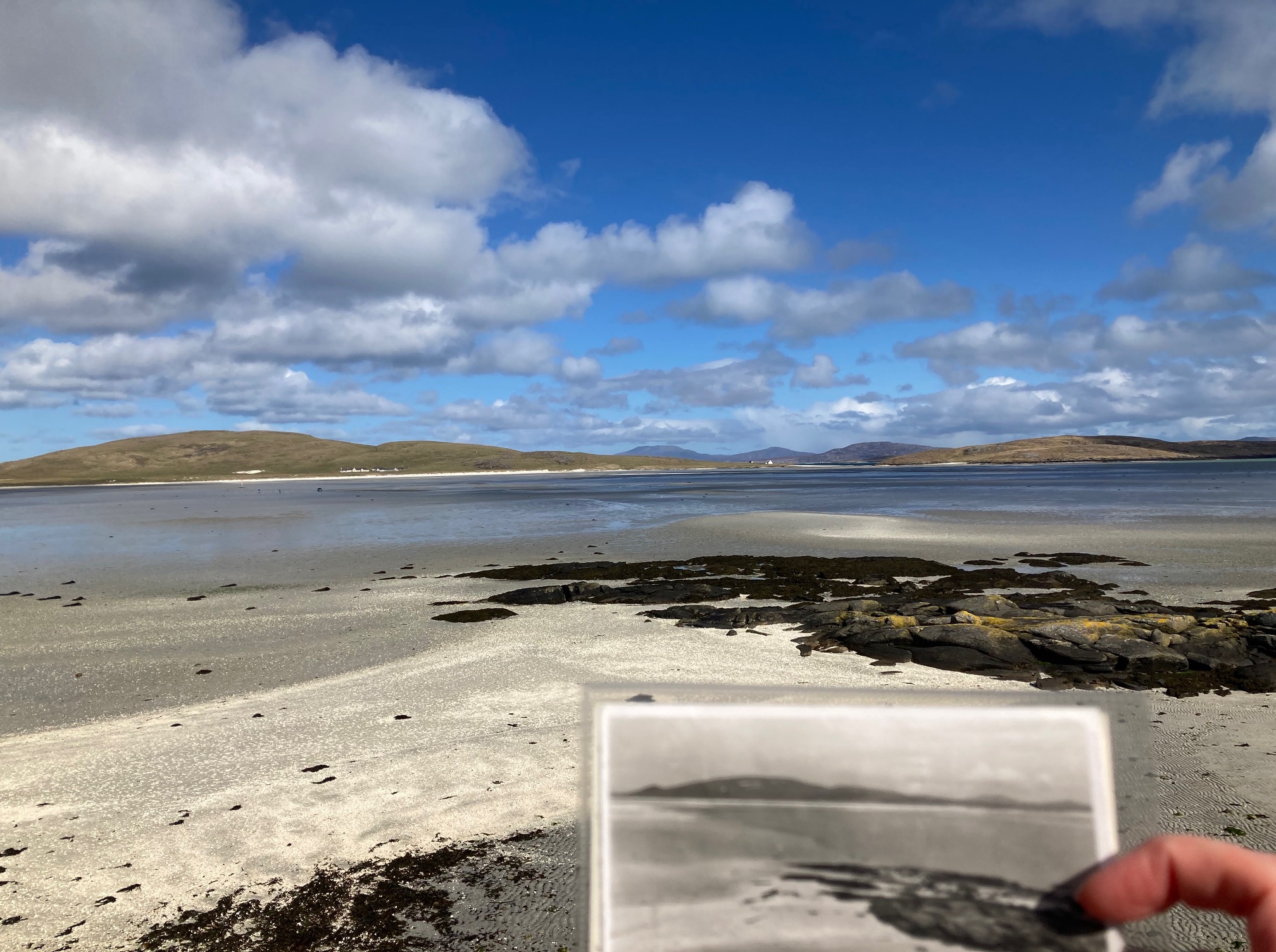
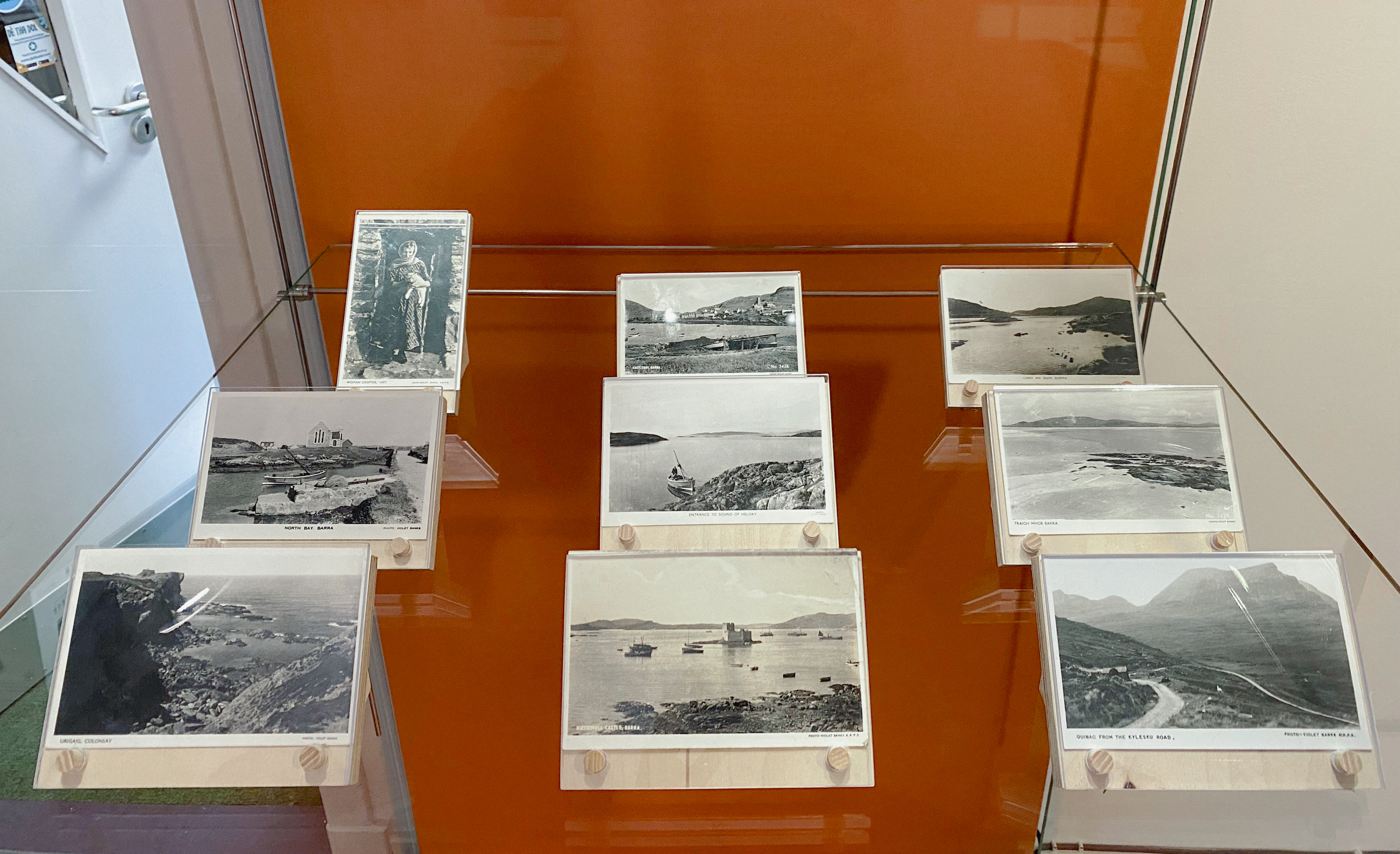
From the postcards I’ve collected to date, Barra has been the main subject. All have their originals in her album ‘A Book of Barra’. Photographic locations include Castlebay, Kisimul Castle, Loch An Duin, Traigh Mhòr, Traigh Eais and Northbay. Messages on the back of postcards show that the latest was posted in 1966, around 30 years after Banks’ visit. Banks’ Traigh Mhòr postcard in particular has had several reprints. The beach name appears mostly in Gaelic on the postcard title, but also as ‘Cockle Strand, Barra’. This postcard’s popularity could be due to this particular beach being famous as the landing strip for Barra Airport, which opened in 1936.
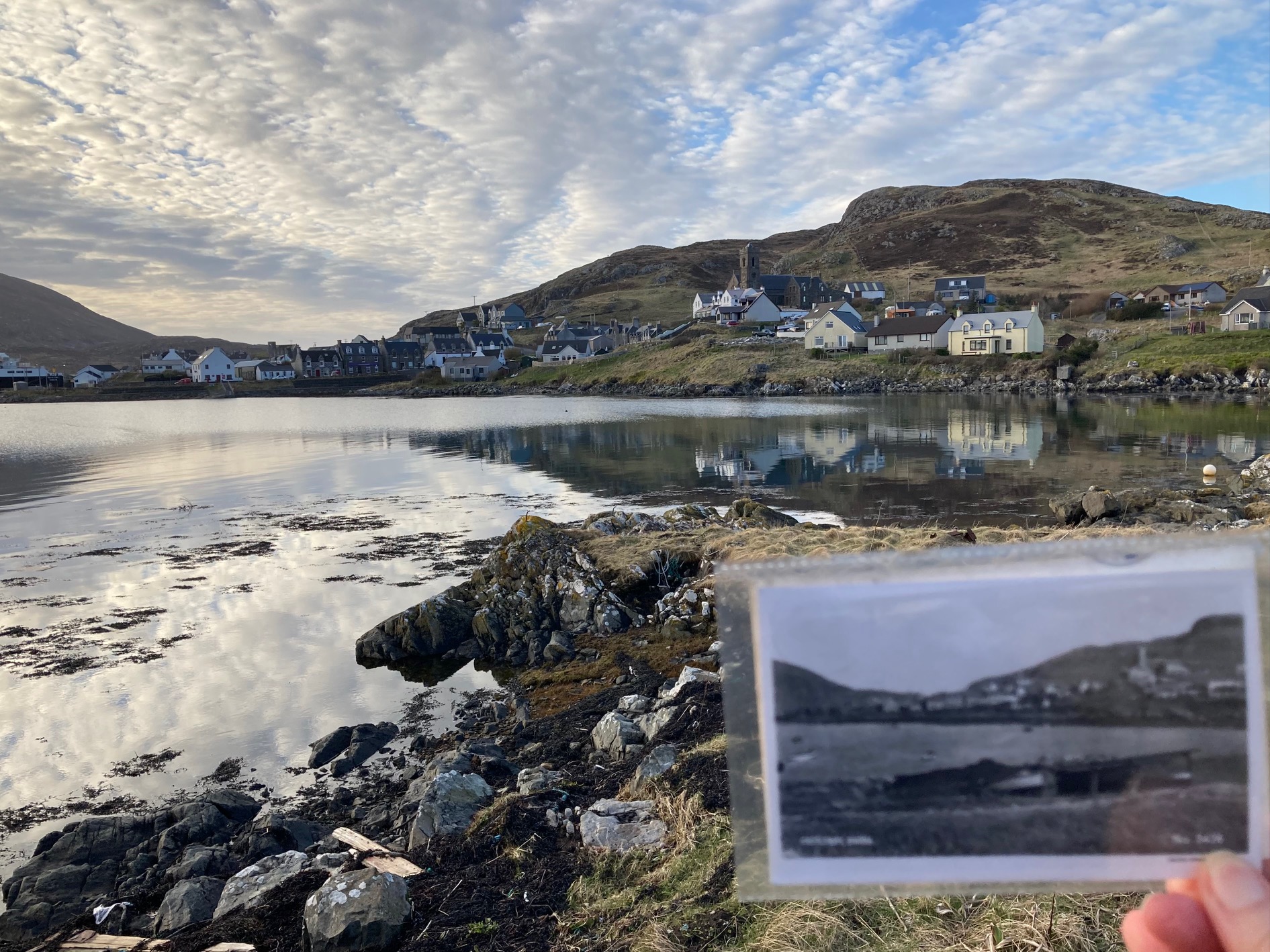
I visited Barra in March 2024. I began to look for the locations where Banks had stood to take her photographs. This method allows for serendipity as well as encountering local knowledge. For example, a local driver, parked in the spot at Traigh Mhòr where I had stopped to take the photograph, recounted that there had been a recent discussion on The Isle of Barra and Vatersay Appreciation Society Facebook Group relating to one of Banks’ photographs of Traigh Mhòr. Several people commented on the location as possibly being the burial site of an old woman where the grave had been lost with the road being built to the airport.
Less than an hour’s walk away from Traigh Mhòr is Northbay and St Barr’s Church, the subject of another of Banks’ photographs and postcards. The church was completed in 1906[2]. Whilst the old pier, a prominent feature in Banks’ composition has been replaced by a modern, concrete version, there is still the presence of boats. The addition of the cross to the church occurred after Banks’ photograph.
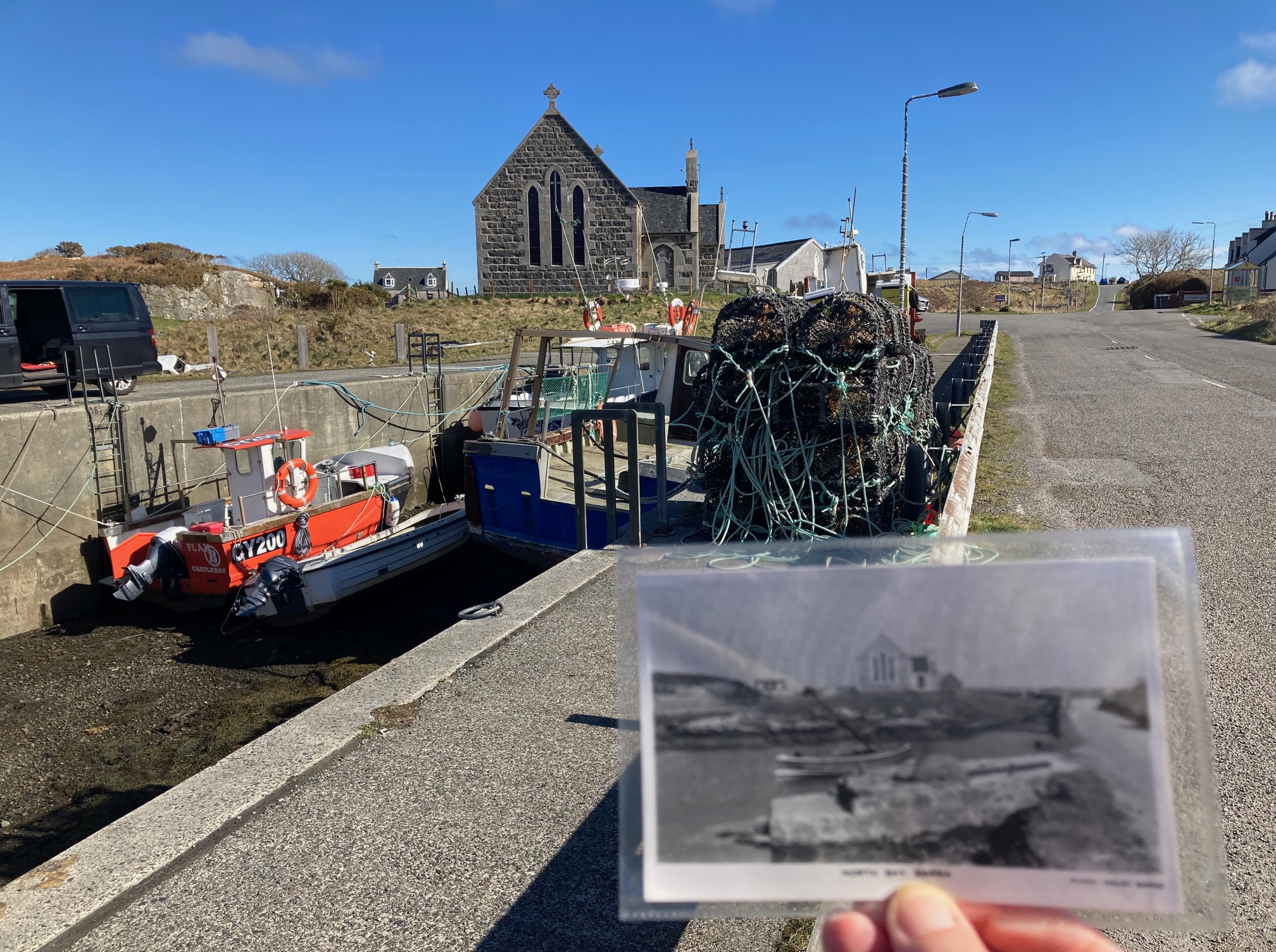
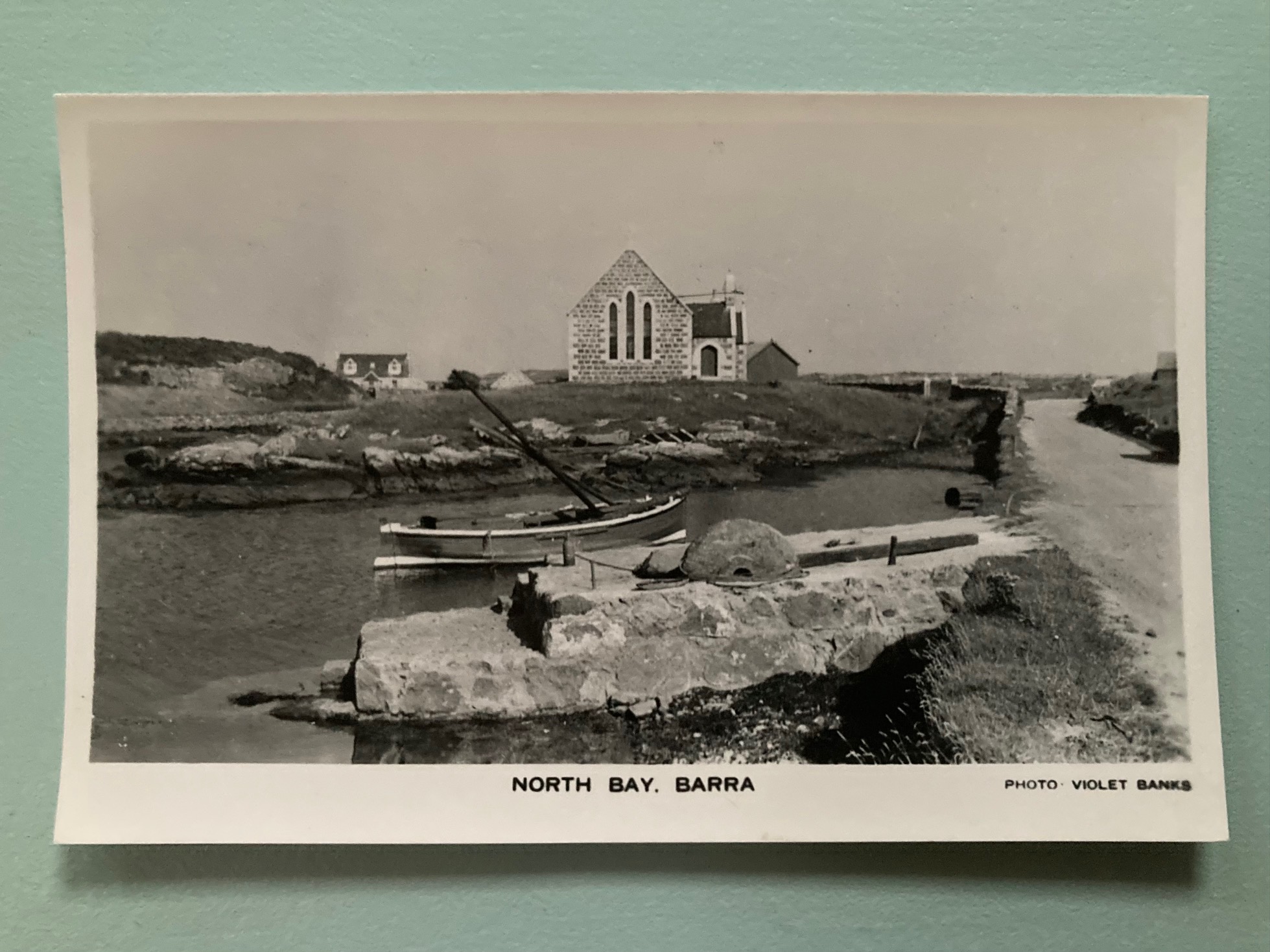
In the case of Banks’ postcard of St Barr’s Church in Northbay, Barra, this particular church, bay and road was also the subject of a number of American photographer, folklorist and author Margaret Fay Shaw’s photographs. Shaw (1903-2004) moved to Northbay and Bridge House[3] in 1935. This was the first home she had with her husband, the historian, folklorist and Gaelic scholar John Lorne Campbell (1906-1996). There is a small bridge at the road junction at the corner of the bay which may indicate the former location of Bridge House. There are a number of photographs in Margaret Fay Shaw photographic collection, held at The National Trust for Scotland Canna House, showing the view from that particular point over the bay towards St Barr’s Church, which would seem to corroborate the location of their home. However, the corrugated iron version of Bridge House as it appears in Shaw’s photographs, no longer exists.
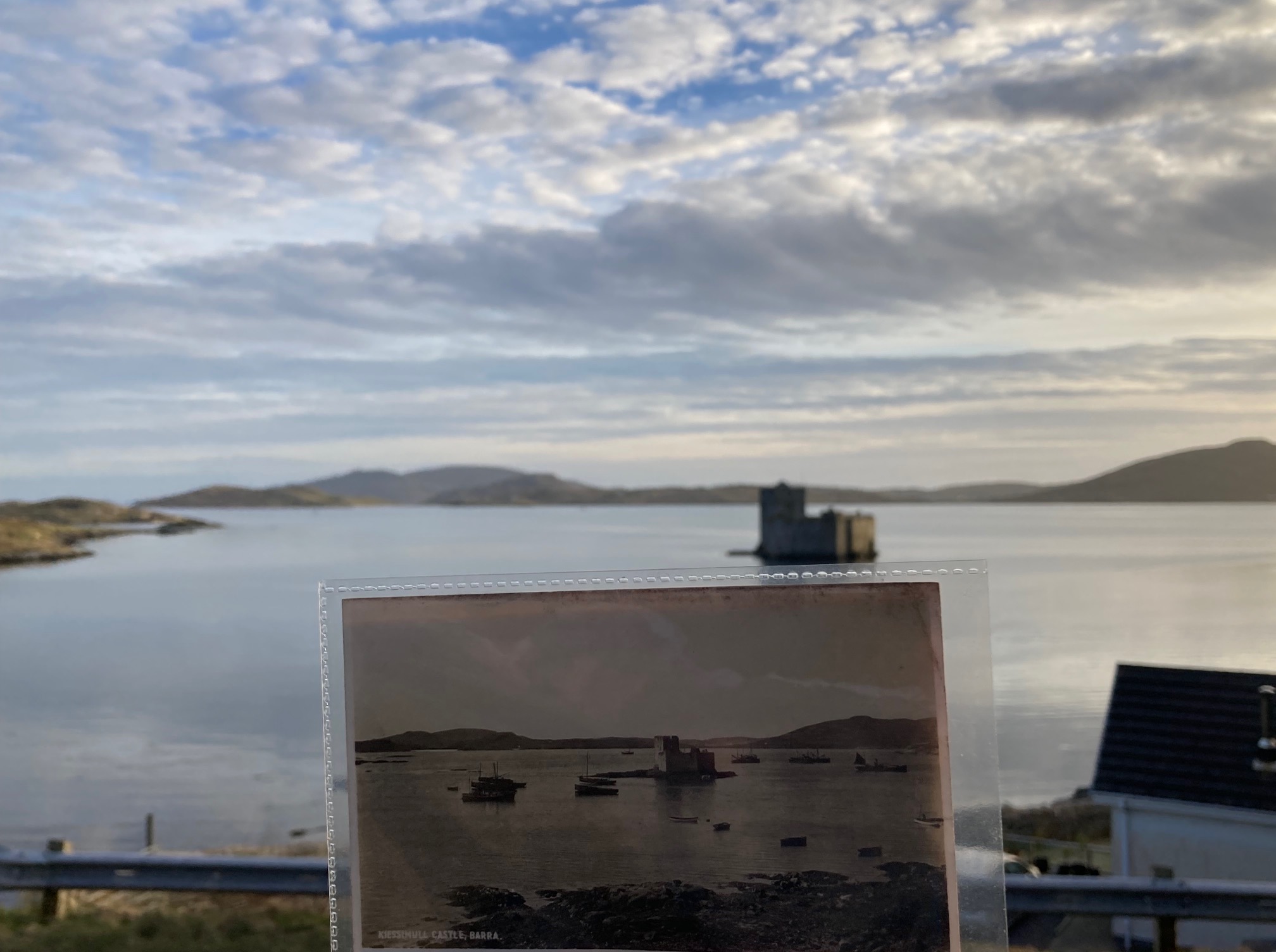
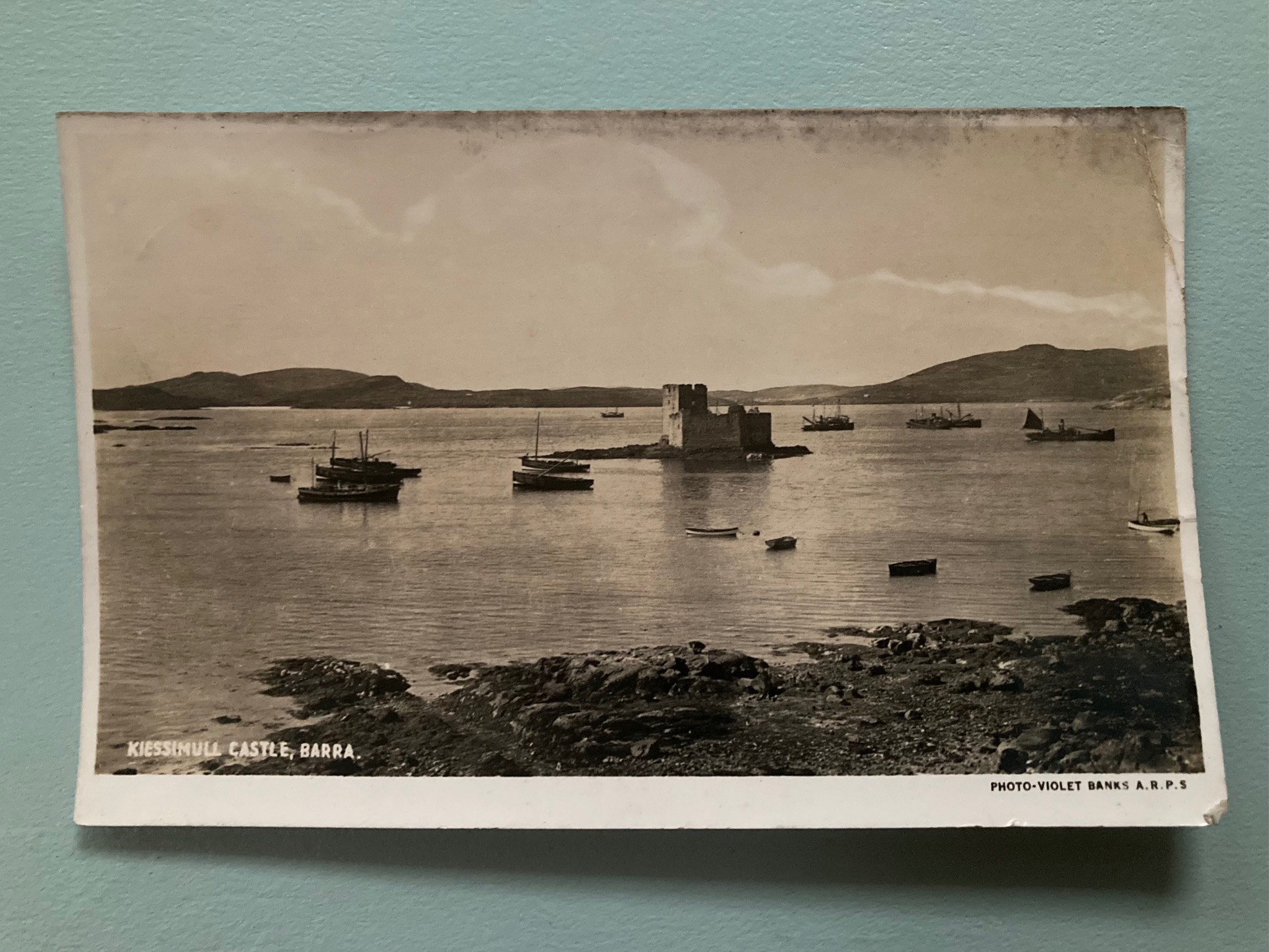
Back in Castlebay, which Banks’ captures in three photograph postcards, I could see she used what was to hand as part of her making her compositions. For example, in her photograph of Kisimul castle, perhaps she had to stand on the rocky outcrop down from Our Lady, Star of the Sea Church, in order to get the top of the castle almost level with the outline of Vatersay behind.
I am keen to find out why there are so many photograph postcards of Barra. Where were the postcards being sold from in the 1930s to 1960s? Was it from the post office or any of the hotels in Castlebay? Was Banks being commissioned to make the postcards? Where did she stay on her visits?
Where I have duplicates of the postcards, I have gifted them to Violet Banks Collection at Historic Environment Scotland. Banks’ own photography of the Highlands and Islands only came to light when discovered by John Dixon of Georgian Antiques, in a drawer in a sideboard that had been part of a furniture purchase and then gifted to Royal Commission for the Ancient and Historic Monuments of Scotland (RCAHMS) now Historic Environment Scotland (HES), to become The Violet Banks Collection.[4] Given this initial precarity, it is important that the collection and knowledge surrounding it, continues to grow.
The postcards have been exhibited as part of larger exhibitions I have curated, including ‘Glean: early women filmmakers and photographers in Scotland’ (2023, City Art Centre, Edinburgh) and ‘Co-Roinn | Glean’, in partnership with Vanishing Scotland Archive (2023, Museum nan Eilean Lionacleit, Isle of Benbecula).
Footnotes
[1] Veronica Fraser. (2008-9). The Violet Banks Collection. In Grater, A. (ed). Vernacular Building 32. Scottish Vernacular Buildings Working Group 2008-9.
[2] From P.13, ‘St Barr’s Church Northbay Barra 1906-2006’, compiled by Mairi Ceit MacKinnon, Island Books Trust
[3] P.25, Ibid.
[4] Veronica Fraser. (2008-9). The Violet Banks Collection. In Grater, A. (ed). Vernacular Building 32. Scottish Vernacular Buildings Working Group 2008-9.
 Jenny Brownrigg