Unknown's avatar

Research note 12: Violet Banks, University of Edinburgh Heritage Collections

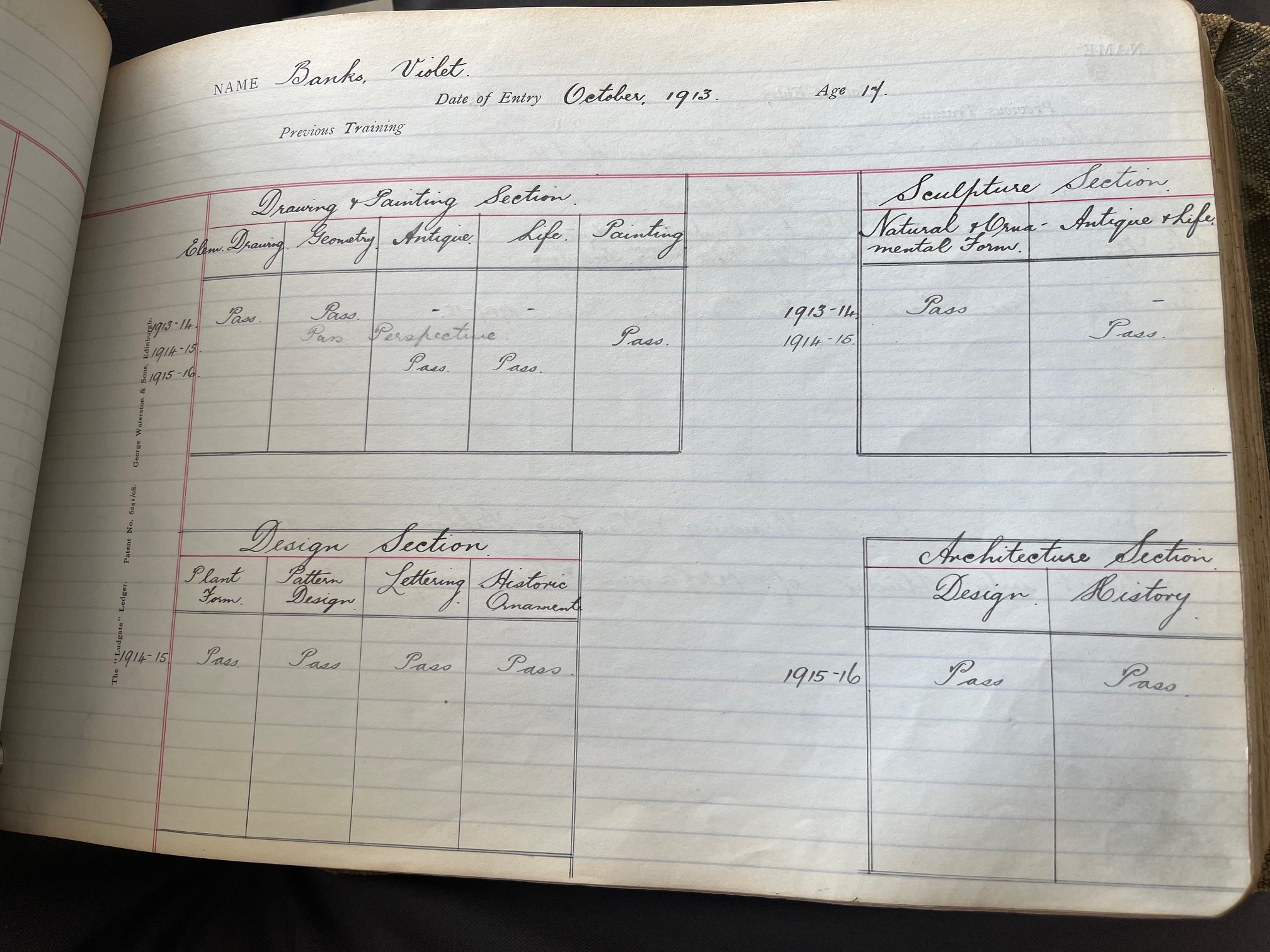
ECA/3/2/1/1, Student Record Book, 1908 – 1920, University of Edinburgh

This visit has allowed for further work on Violet Banks’ (1896-1985) timeline. The Edinburgh College of Art Student Record book (1908-1920)[1] records Banks studying there from 1913-1916 then 1917-1918. Her date of entry is listed as October 1913 at age 17. Banks was predominantly in the Drawing and Painting section. It is listed that she also studied aspects of Design from 1914-15 and Architecture in 1915-16. She received her diploma in Drawing and Painting in June 1918. Two of Banks’ peers who received a diploma in same year were Anne Redpath (1895-1965) and Dorothy Nesbitt (1895-1971).
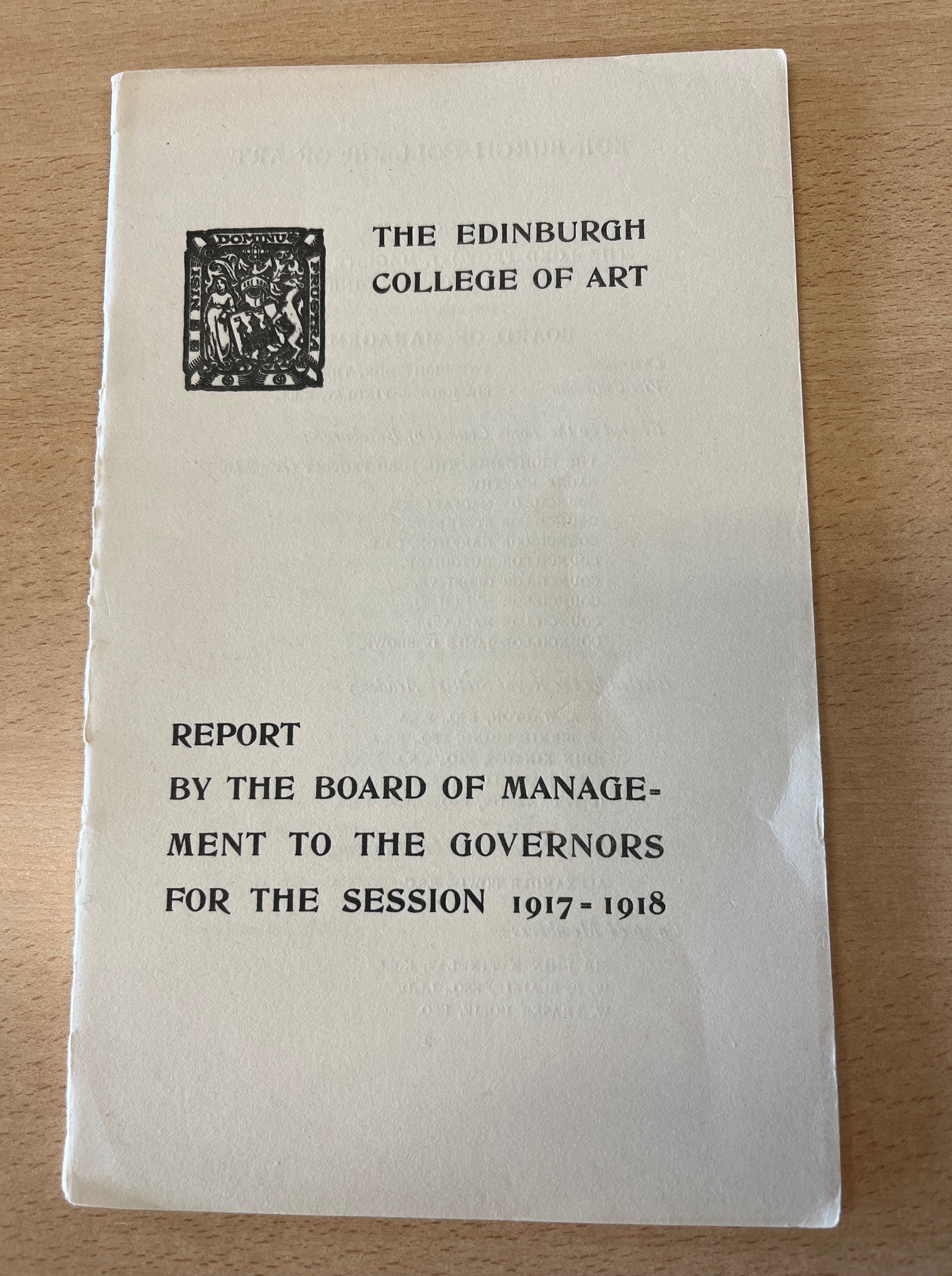
Image: ECA/1/1/1/10, ‘The Edinburgh College of Art, Report by the Board of Management to the Governors for the session 1917 – 1918’, University of Edinburgh. Photo: Jenny Brownrigg


In the ‘Edinburgh College of Art Report by the Board of Management to the Board of Governors 1917-18’, Banks is recorded as one of two students who received a minor travelling bursary of £15. The minor travelling bursary appears to have allowed the recipient to undertake visits to art collections, with a stipulation to present drawings from those on return. In the 1917-18 report, the quality of Banks’ work is recorded as follows:


The Head of Section reports that although conditions in regard to closed Galleries and sketching restrictions were as is, in the previous year, a creditable amount of work was done, thoroughly justifying the award. He states that the work of Anne Redpath while less in quality than that of Violet Banks, was of a very high standard, probably the highest yet reached by any Minor Travelling Bursary.‘[2]


In the Report from the following year, it shows Banks’ fellow students Redpath and Nesbitt go onto get their post-graduate qualification[3]. However, under the heading ‘Appointments to Students of College During Session 1918-19’, Violet Banks has been listed as ‘Art Mistress, Brondesbury House, Kingsgate, Thanet, Kent’.[4] This is the first record of her having spent time out with Scotland. Barry J. White’s ‘Thanet’s Private Schools 19th and early 20th Century’ (2004) lists Brondesbury House as a small girls’ boarding school in Margate, at 2 Eastern Esplanade. It is not currently known how long she stayed, but it looks like her first art mistress position before she was a senior art mistress at St Orans, Edinburgh[5].


To return to the Student Record book, in Banks’ entry it states she ‘Went into the studio of McLagan & Cumming 1928.‘ This was a printers, lithographers and photography studio in Edinburgh.[6] It is interesting to consider whether this experience of potentially working in photography studios gave her the experience to establish her own photography studio in 1930.


The final items relating to Banks held at University of Edinburgh Heritage Collection are seven photographs, stamped on the back with ‘Copyright Violet Banks A.R.P.S. 11 Randolph Place Edinburgh‘. They are noted as being Diploma Photographs, ranging from 1930-1933, showing students from Edinburgh College of Art Design group and Drawing and Painting as well as Design sections. On the back of the 1933 photograph there is a note of costs: ‘Copies 2/- each / Copies matt and mounted 2/6′. This suggests copies were for sale, potentially to the graduating students and their families. These photographs show that 12 years after her own graduation, Banks had returned to Edinburgh College of Art as a jobbing photographer for a commercial opportunity.
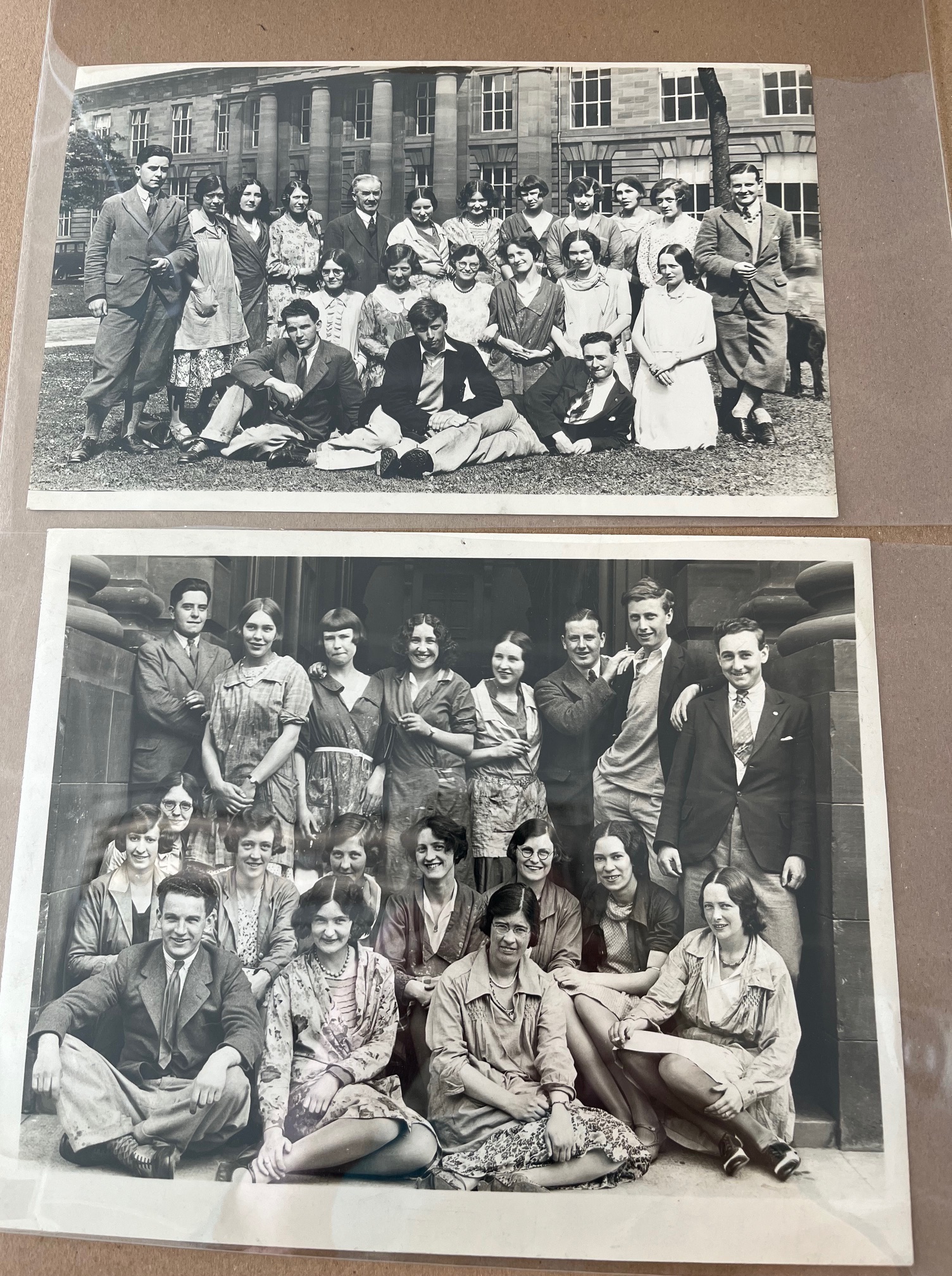
Top: 2/1/3/14, ‘Possibly design group’, 1932, Violet Banks, University of Edinburgh. Bottom: 2/1/3/11, ‘Diploma 1930’, Violet Banks, University of Edinburgh Photos: Jenny Brownrigg


The photographs of the students are informal. Whist the students are in rows, in the 1930 photograph the women students are mostly still wearing their overalls. Banks captures the group’s camaraderie, with their arms around shoulders of peers. In 1932’s class photograph, one of the women is smoking. When contrasted with a formal class photograph by Drummond Sheils depicting the 1932 Architecture Diploma group, there is a marked difference in photographers’ approaches. Whilst Banks’ class photographs are outdoors and natural, the Sheils grouping sees the students formally sat in chairs. All are wearing gowns and are unsmiling.

Violet Banks Collection is at Historic Environment Scotland. Her work is also part of the IF Grant Collection at Edinburgh Central Library, The Museum of Childhood, Edinburgh and National Galleries of Scotland. Out of the 14 women photographers and filmmakers in ‘Glean: Early 20th Century women filmmakers and photographers in Scotland’[7] she is only one of three to have had an art school education[8]. Banks’ trace in the student records and reports at University of Edinburgh has given further crucial information on her biography.  

Footnotes

[1] ECA/3/2/1/1, Student Record Book, 1908 – 1920, University of Edinburgh.

[2] ECA/1/1/1/10, ‘The Edinburgh College of Art, Report by the Board of Management to the Governors for the session 1917 – 1918′, University of Edinburgh.

[3] ECA/1/1/1/11 P.26, the ‘Edinburgh College of Art Report by the Board of Management to the Board of Governors 1918-19’, University of Edinburgh.

[4] P.27, Ibid.

[5] https://www.nationalgalleries.org/art-and-artists/artists/violet-banks

[6] Glasgow Museums collections navigator.

[7] City Arts Centre, Edinburgh (2022/23), curator Jenny Brownrigg.

[8] Margaret Watkins (1884-1969) studied with Clarence H White at his schools in New York and Maine. Helen Biggar (1909-1953) studied textile design at The Glasgow School of Art.

With thanks to Heather Jack for providing the catalogue references and steer to visit University of Edinburgh Heritage Collection.
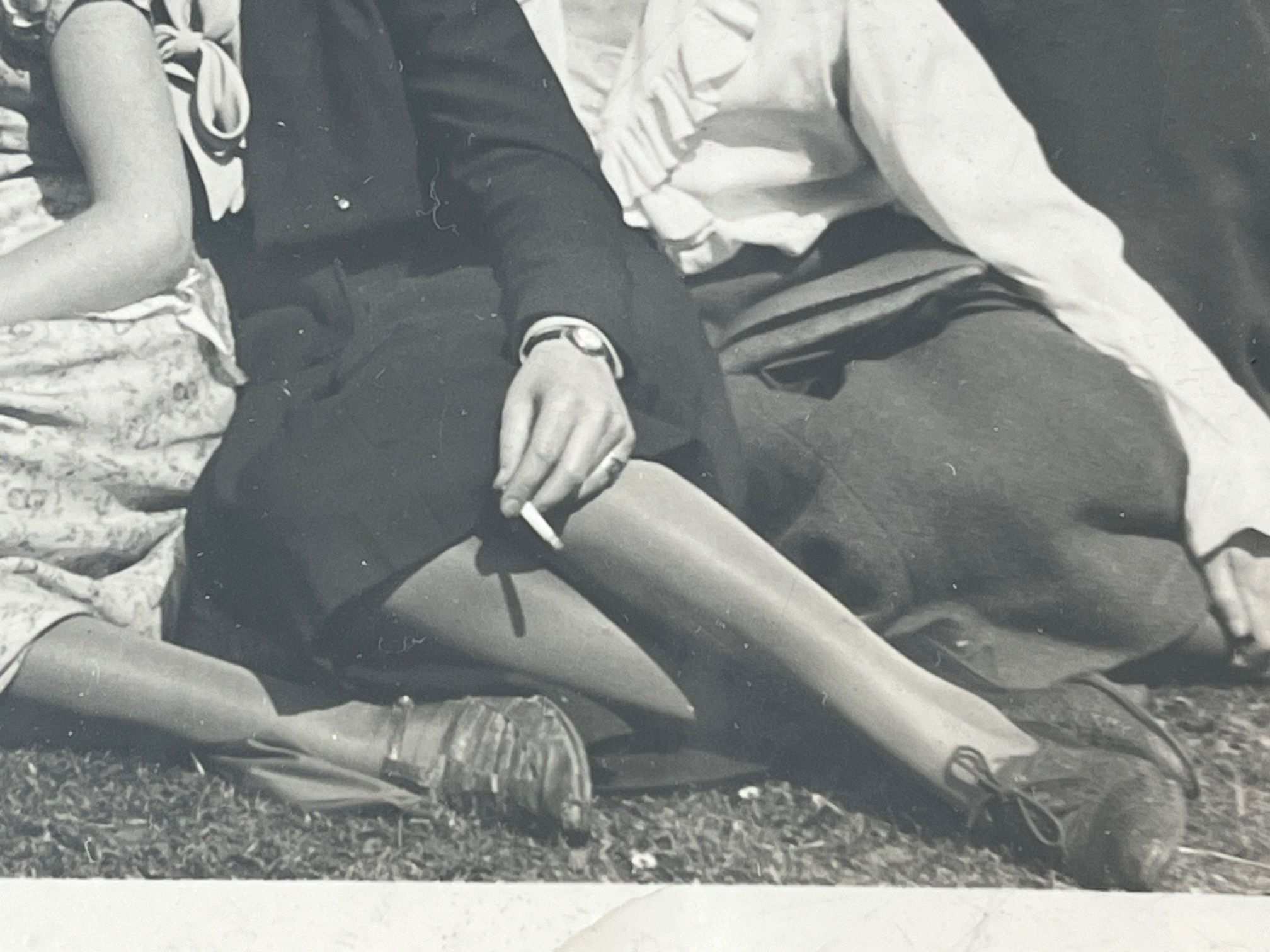
Detail, Diploma group 1932, Violet Banks, University of Edinburgh. Photo: Jenny Brownrigg
Unknown's avatar

Research Note 11: Violet Banks postcards, Isle of Barra

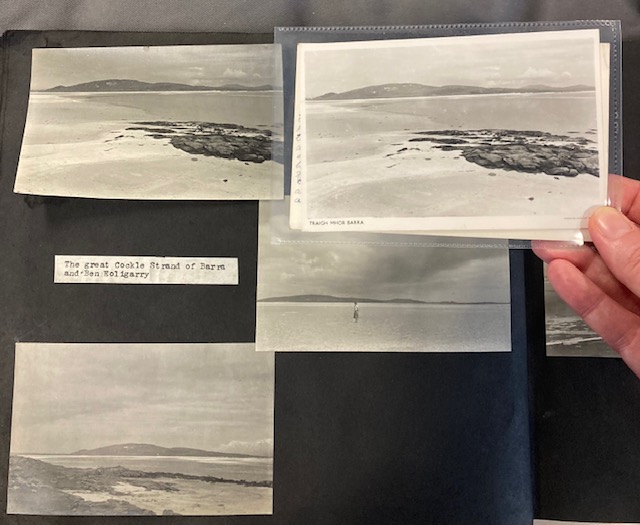
Violet Banks (1896-1985) was born near Kinghorn, Fife and educated at Craigmont, Edinburgh, and at Edinburgh College of Art. In 1928 she was senior arts mistress at St. Oran’s, a private school at Drummond Place, Edinburgh.[1] In 1935, Violet Banks established her own commercial photography studio in Edinburgh, taking photographs of Scotland’s capital city. The Violet Banks Collection is held by Historic Environment Scotland and can be viewed digitally on Canmore. Banks’ collection also holds nine photographic albums of the Hebrides. These photographs were the result of tours she made during the late 1920s / early 1930s.

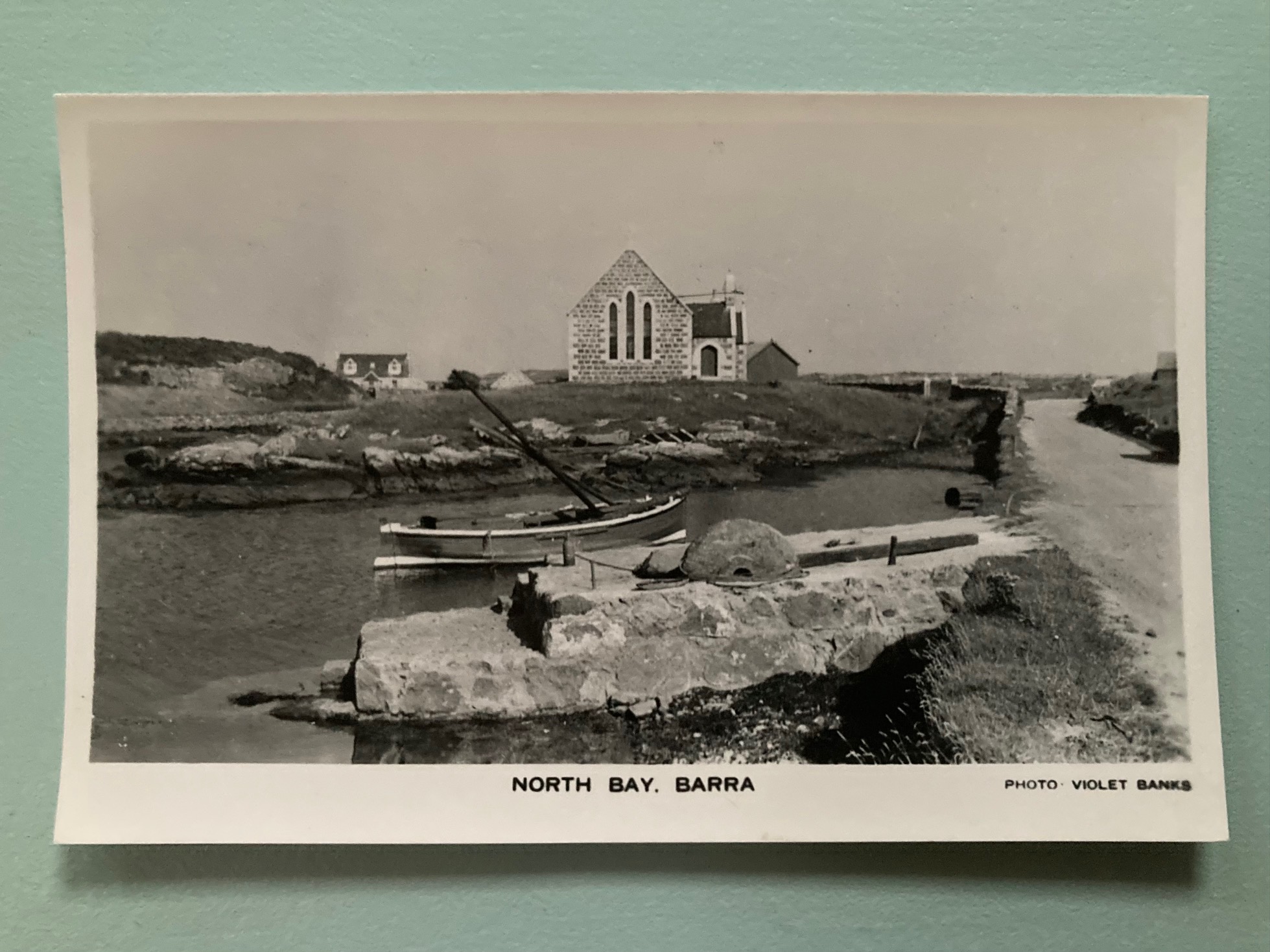
I first became aware of Banks’ postcards through a research visit to Eigg History Society in 2016. Three of Banks’ photographs of Eigg, from her photograph album ‘The Small Isles’, appear as facsimiles of postcards in Eigg History Society’s archive. The postcards are distinctive in layout, always bearing black capital lettering ‘Photo: Violet Banks’ at the bottom right of the white border. Since that first encounter, I have slowly been purchasing her original photograph postcards via eBay. All the images Banks selected for her postcards are from her photograph albums at Historic Environment Scotland.

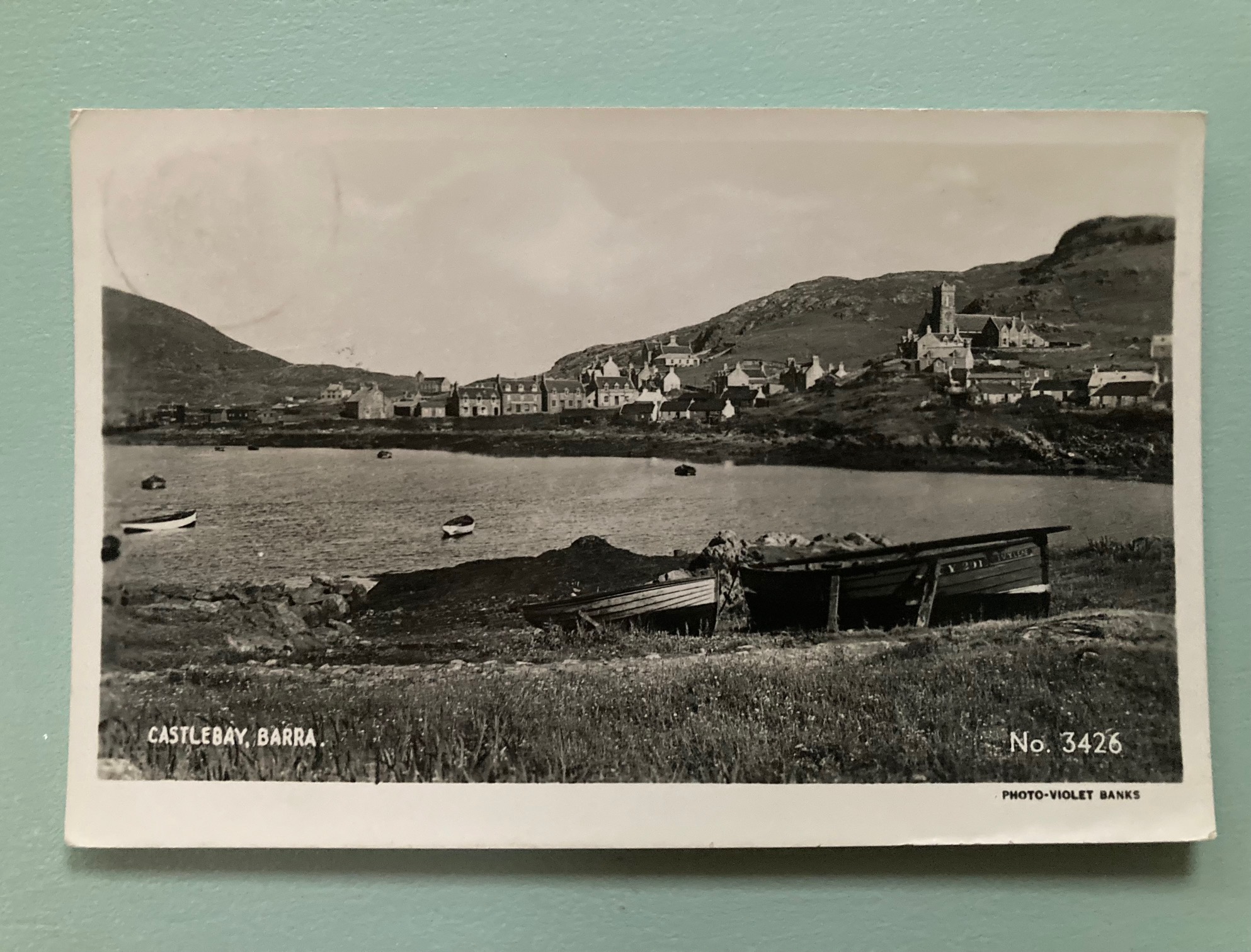
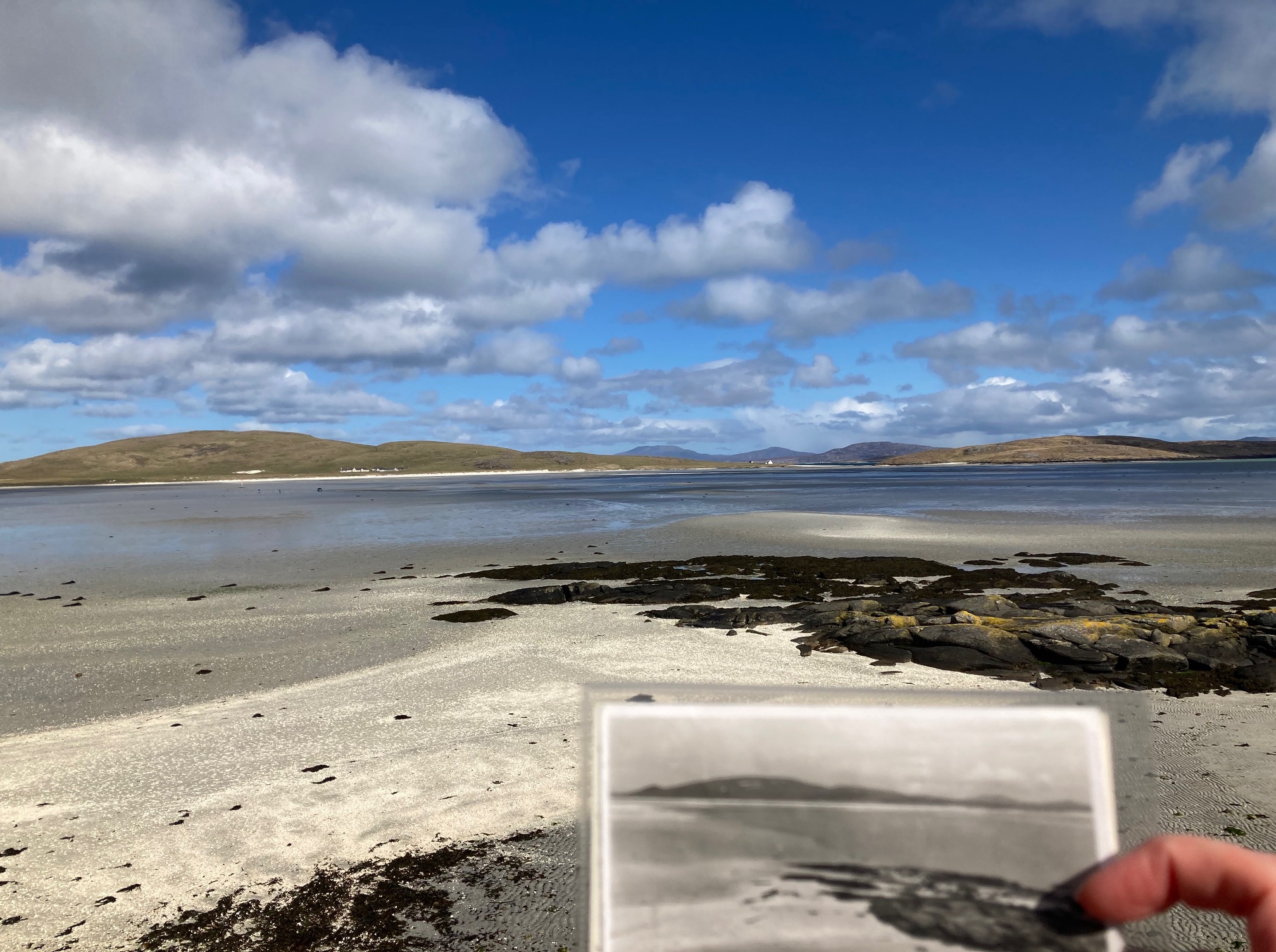
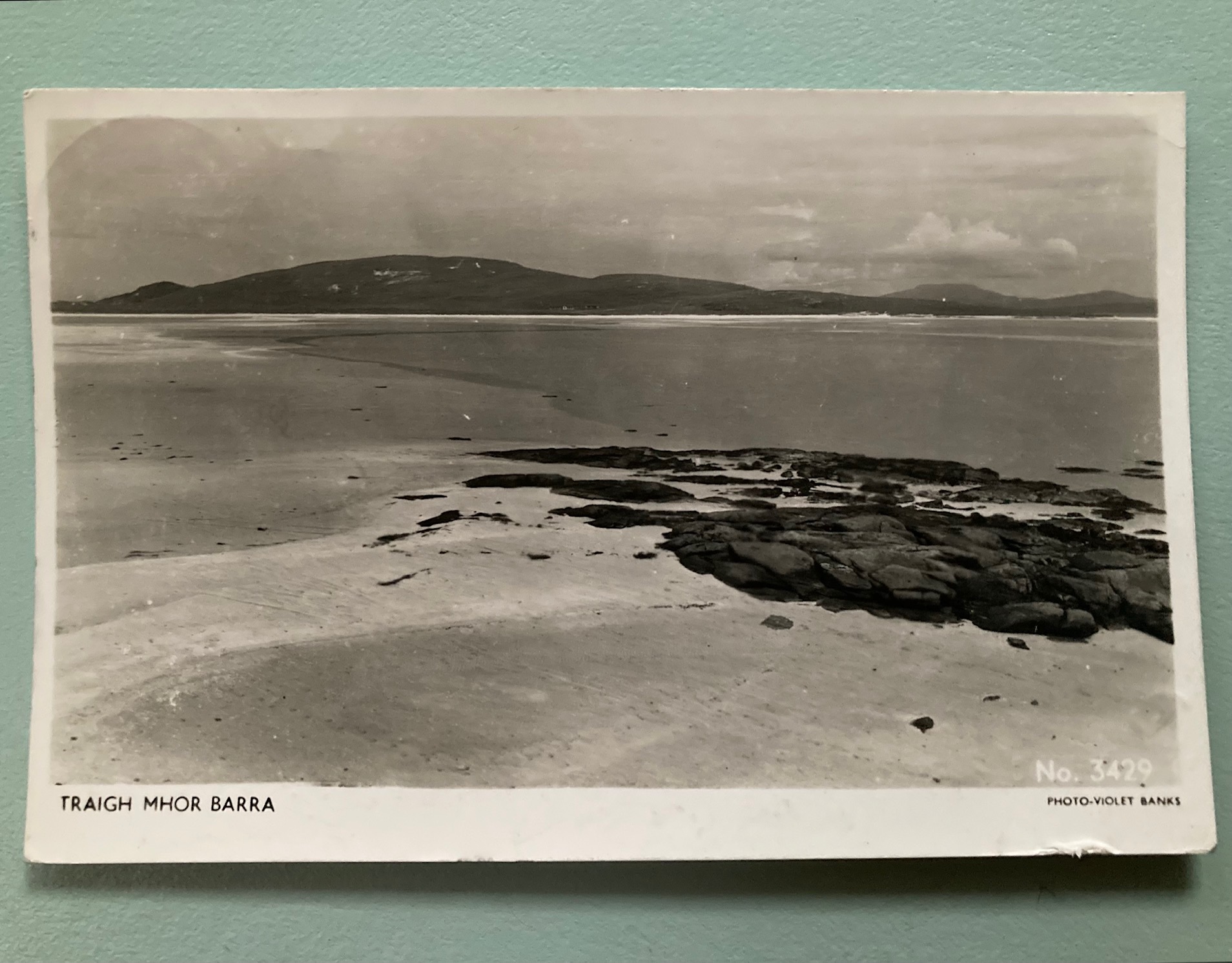
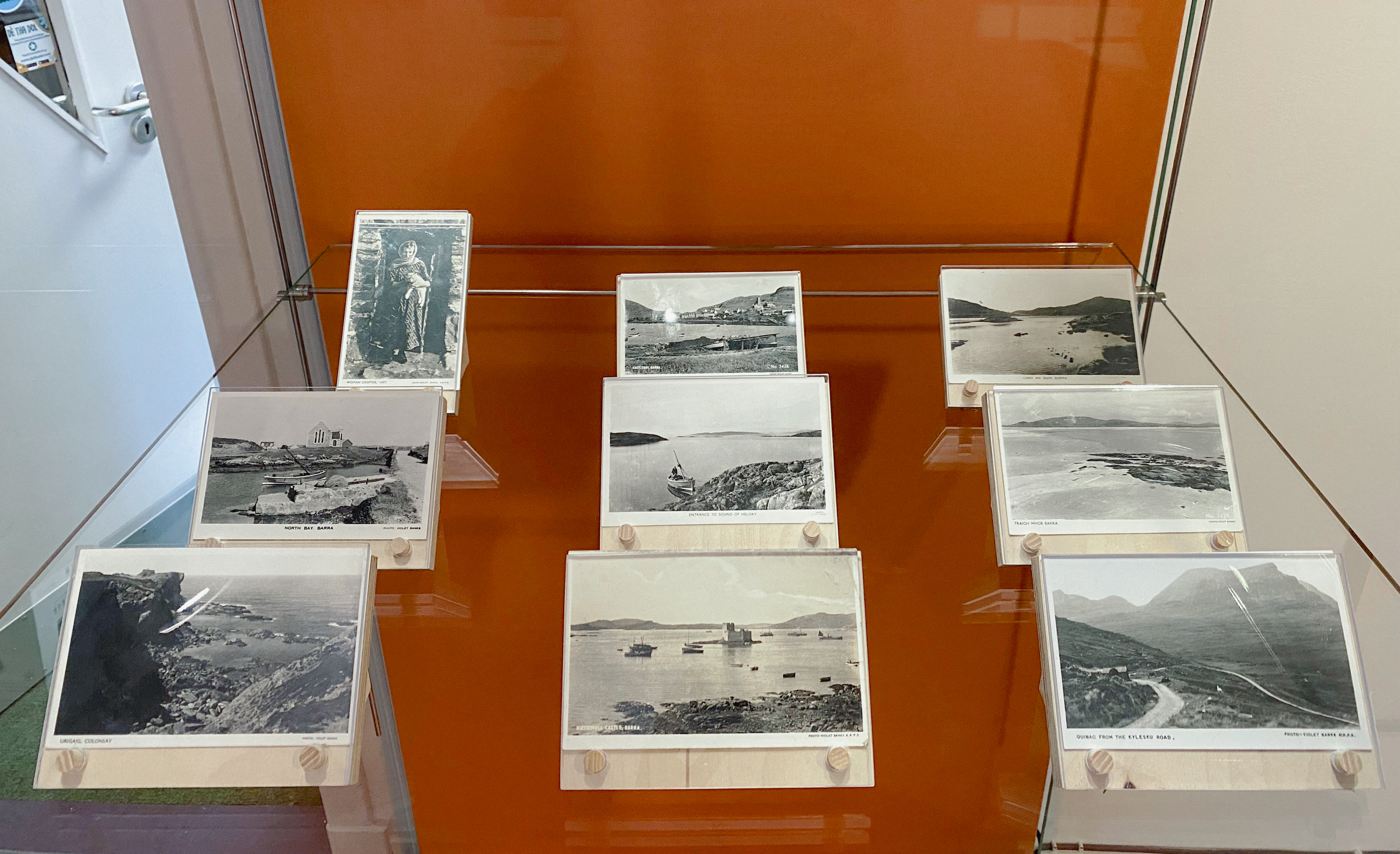
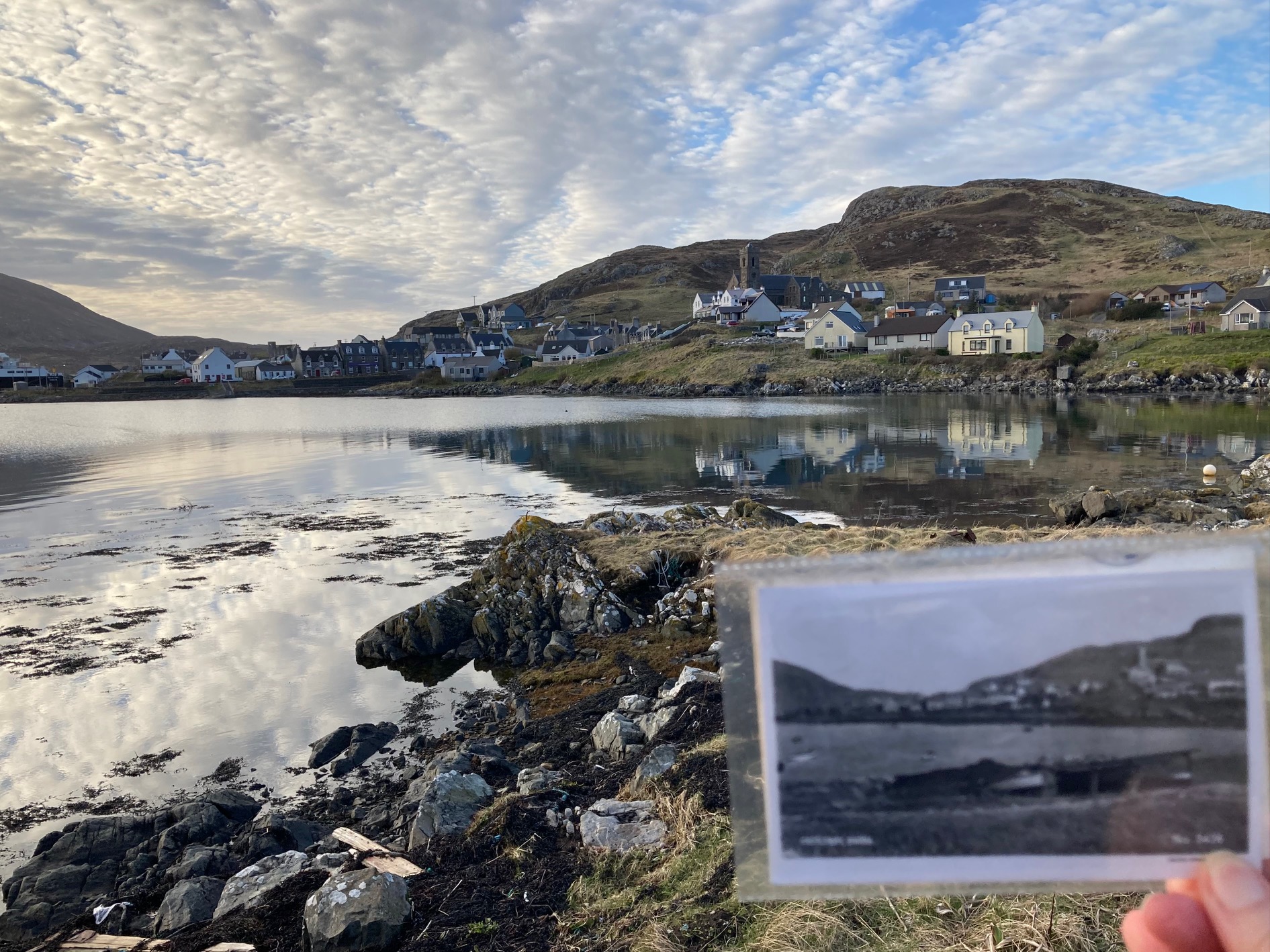
From the postcards I’ve collected to date, Barra has been the main subject. All have their originals in her album ‘A Book of Barra’. Photographic locations include Castlebay, Kisimul Castle, Loch An Duin, Traigh Mhòr, Traigh Eais and Northbay. Messages on the back of postcards show that the latest was posted in 1966, around 30 years after Banks’ visit. Banks’ Traigh Mhòr postcard in particular has had several reprints. The beach name appears mostly in Gaelic on the postcard title, but also as ‘Cockle Strand, Barra’. This postcard’s popularity could be due to this particular beach being famous as the landing strip for Barra Airport, which opened in 1936.

I visited Barra in March 2024. I began to look for the locations where Banks had stood to take her photographs. This method allows for serendipity as well as encountering local knowledge. For example, a local driver, parked in the spot at Traigh Mhòr where I had stopped to take the photograph, recounted that there had been a recent discussion on The Isle of Barra and Vatersay Appreciation Society Facebook Group relating to one of Banks’ photographs of Traigh Mhòr. Several people commented on the location as possibly being the burial site of an old woman where the grave had been lost with the road being built to the airport.

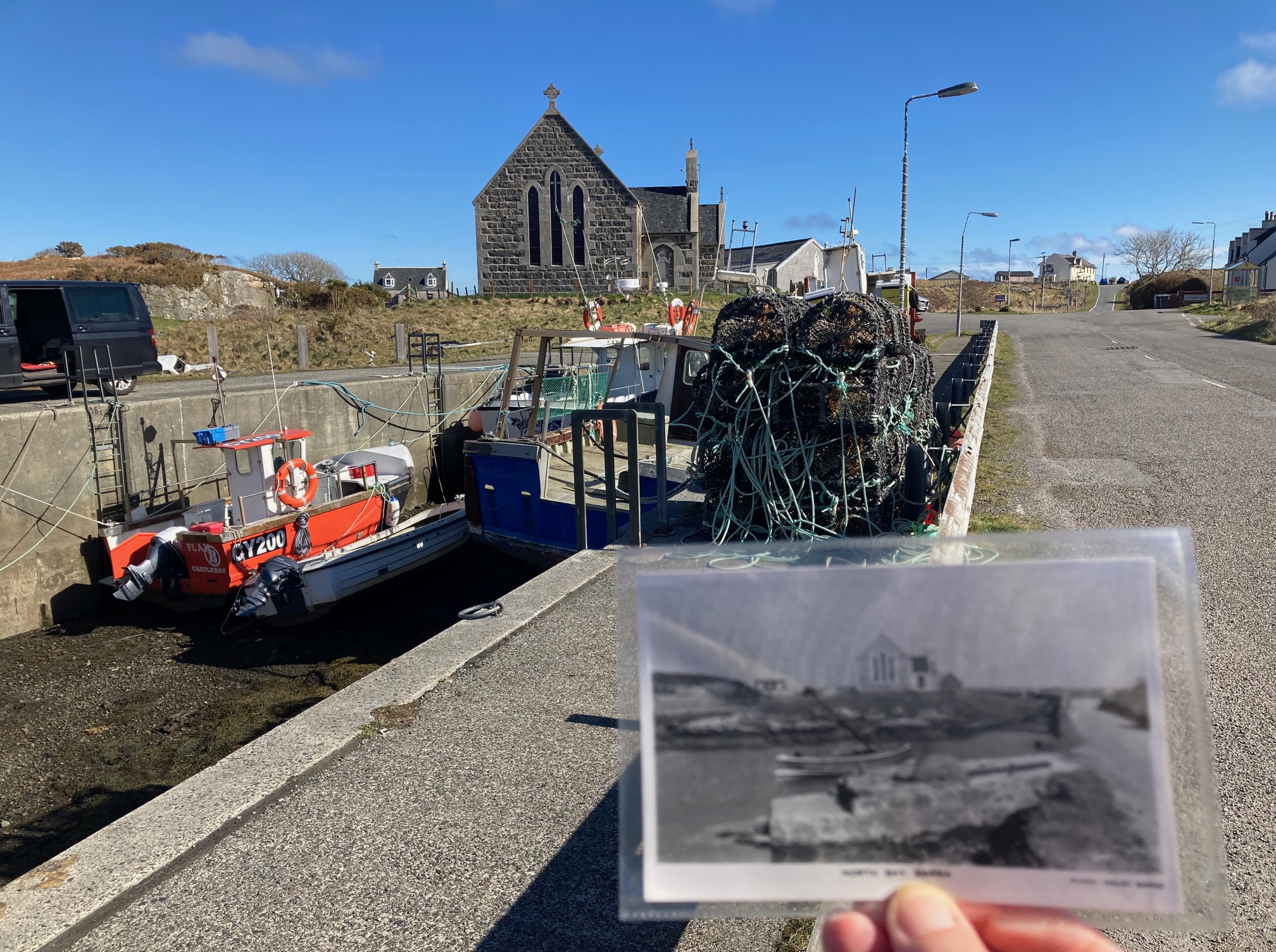
Less than an hour’s walk away from Traigh Mhòr is Northbay and St Barr’s Church, the subject of another of Banks’ photographs and postcards. The church was completed in 1906[2]. Whilst the old pier, a prominent feature in Banks’ composition has been replaced by a modern, concrete version, there is still the presence of boats. The addition of the cross to the church occurred after Banks’ photograph.

In the case of Banks’ postcard of St Barr’s Church in Northbay, Barra, this particular church, bay and road was also the subject of a number of American photographer, folklorist and author Margaret Fay Shaw’s photographs. Shaw (1903-2004) moved to Northbay and Bridge House[3] in 1935. This was the first home she had with her husband, the historian, folklorist and Gaelic scholar John Lorne Campbell (1906-1996). There is a small bridge at the road junction at the corner of the bay which may indicate the former location of Bridge House. There are a number of photographs in Margaret Fay Shaw photographic collection, held at The National Trust for Scotland Canna House, showing the view from that particular point over the bay towards St Barr’s Church, which would seem to corroborate the location of their home. However, the corrugated iron version of Bridge House as it appears in Shaw’s photographs, no longer exists.

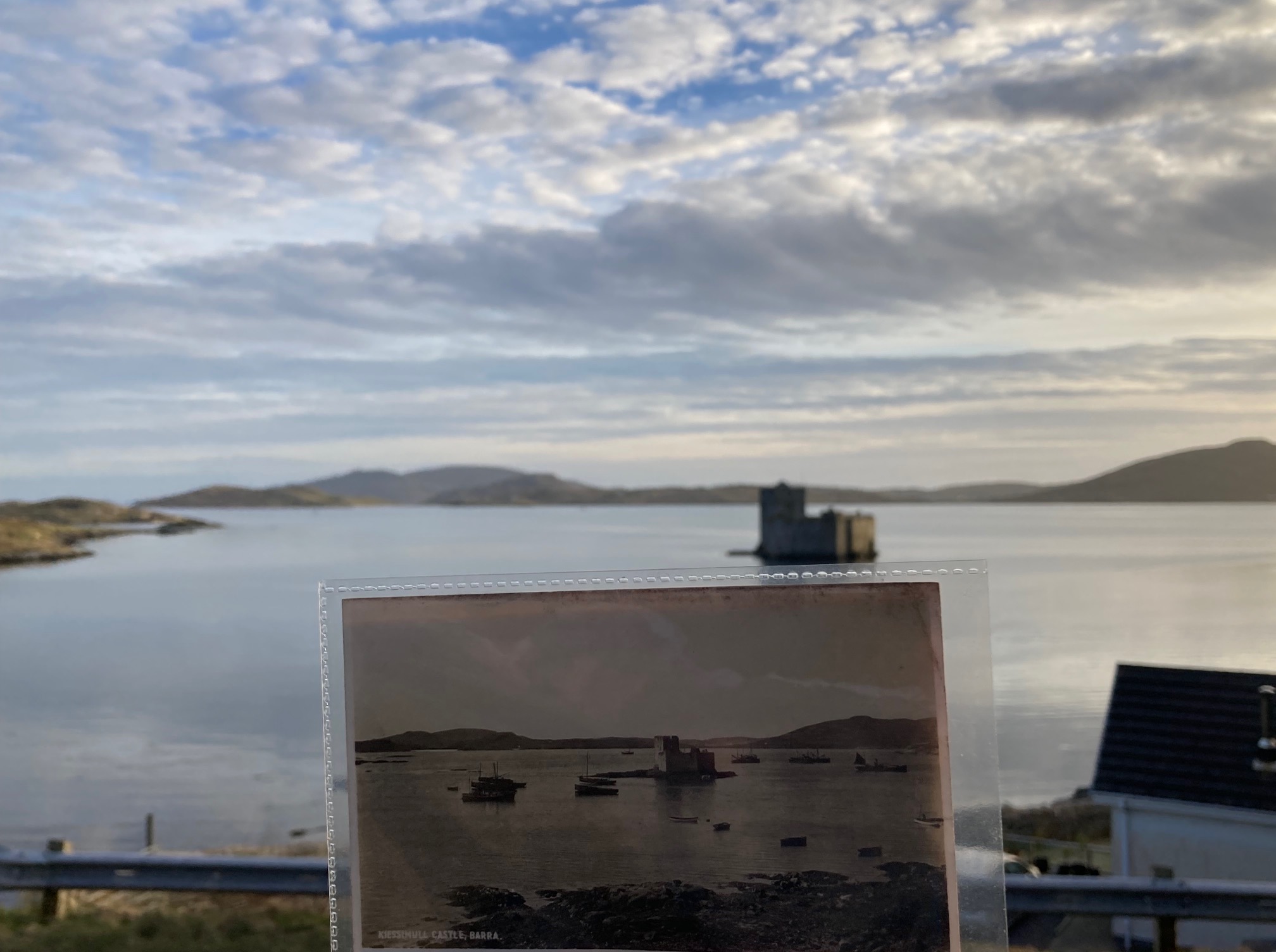
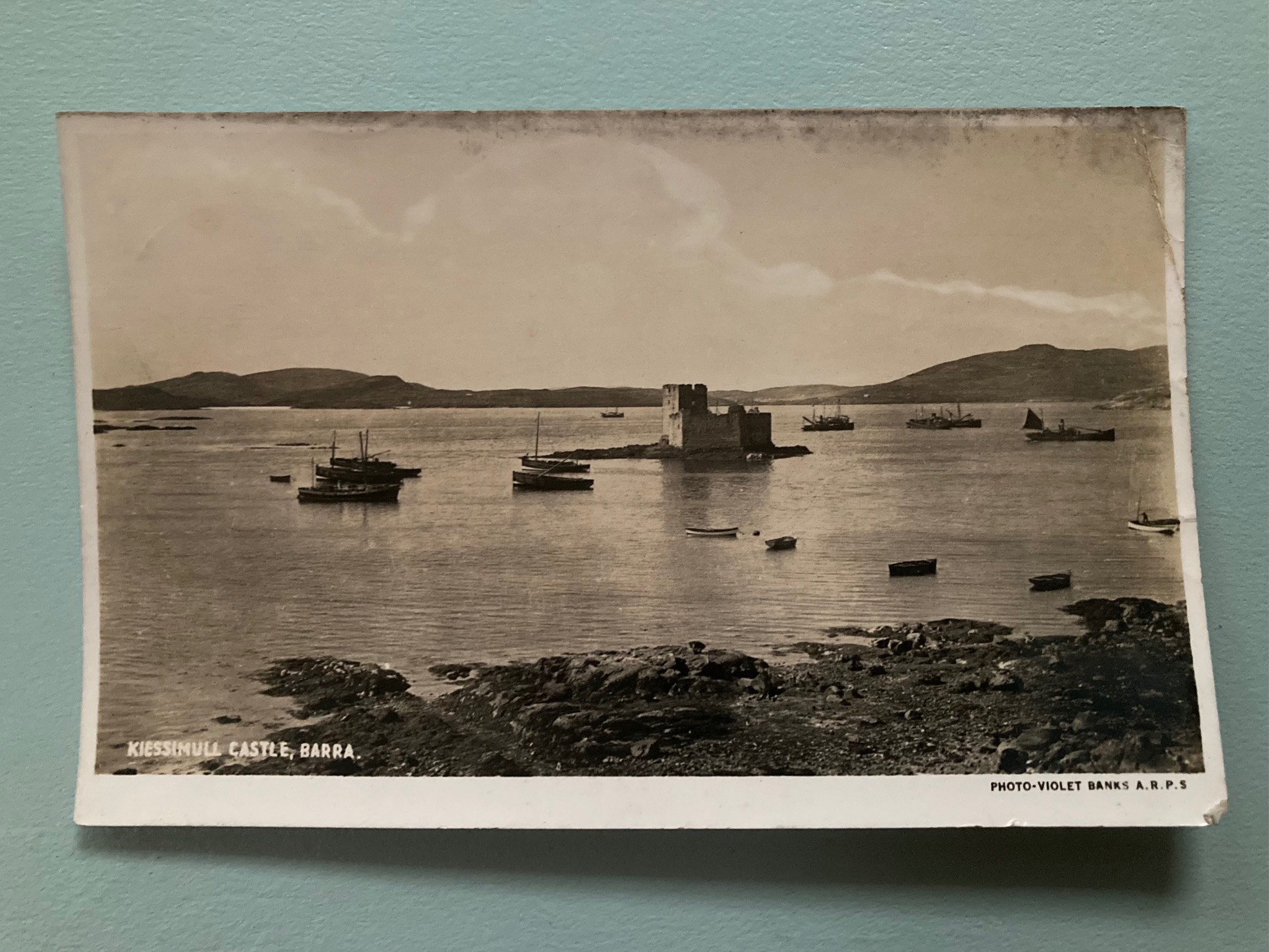
Back in Castlebay, which Banks’ captures in three photograph postcards, I could see she used what was to hand as part of her making her compositions. For example, in her photograph of Kisimul castle, perhaps she had to stand on the rocky outcrop down from Our Lady, Star of the Sea Church, in order to get the top of the castle almost level with the outline of Vatersay behind.

I am keen to find out why there are so many photograph postcards of Barra. Where were the postcards being sold from in the 1930s to 1960s? Was it from the post office or any of the hotels in Castlebay? Was Banks being commissioned to make the postcards? Where did she stay on her visits?

Where I have duplicates of the postcards, I have gifted them to Violet Banks Collection at Historic Environment Scotland. Banks’ own photography of the Highlands and Islands only came to light when discovered by John Dixon of Georgian Antiques, in a drawer in a sideboard that had been part of a furniture purchase and then gifted to Royal Commission for the Ancient and Historic Monuments of Scotland (RCAHMS) now Historic Environment Scotland (HES), to become The Violet Banks Collection.[4] Given this initial precarity, it is important that the collection and knowledge surrounding it, continues to grow.

The postcards have been exhibited as part of larger exhibitions I have curated, including ‘Glean: early women filmmakers and photographers in Scotland’ (2023, City Art Centre, Edinburgh) and ‘Co-Roinn | Glean’, in partnership with Vanishing Scotland Archive (2023, Museum nan Eilean Lionacleit, Isle of Benbecula).

Violet Banks postcards collection, ‘Co-Roinn | Glean’, Museum nan Eilean (Lionacleit), Isle of Benbecula, 2023. Photo: Anne Corrance Monk

Footnotes

[1] Veronica Fraser. (2008-9). The Violet Banks Collection. In Grater, A. (ed). Vernacular Building 32. Scottish Vernacular Buildings Working Group 2008-9.

[2] From P.13, ‘St Barr’s Church Northbay Barra 1906-2006’, compiled by Mairi Ceit MacKinnon, Island Books Trust

[3] P.25, Ibid.

[4] Veronica Fraser. (2008-9). The Violet Banks Collection. In Grater, A. (ed). Vernacular Building 32. Scottish Vernacular Buildings Working Group 2008-9.

Unknown's avatar

Glean: Focus on filmmaking, Fri 27 Jan 2023, 7pm

Book free tickets here

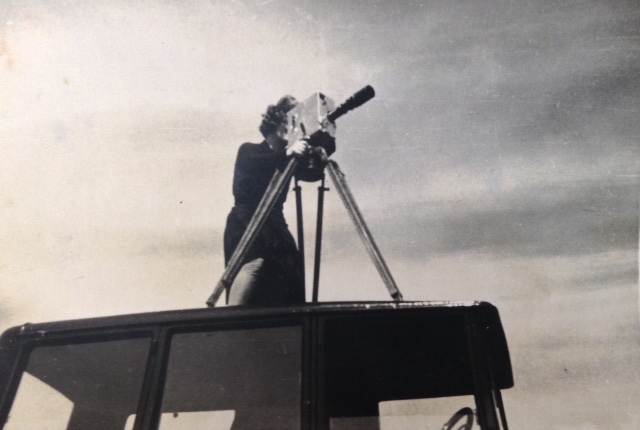
Credit: Jenny Gilbertson (with Cuthbert Cayley) 1938/39, courtesy of Shetland Museum & Archive

This online event focuses on early 20th Century women filmmakers in Scotland. Chaired by Professor Melanie Bell, (Film History, School of Media and Communication, University of Leeds), whose area of expertise is in Gender and Film as well as British Cinema History, the event will discuss the film production of that period, the ethics of filming others, and caring for their work. It will also reflect on how the women filmmakers saw themselves and their motivations for making film. This discussion is with Ros Cranston (Curator of Non-Fiction Film and Television at the BFI National Archive, BFI National Archive), Shona Main (PhD researcher, University of Stirling and The Glasgow School of Art); Janet McBain (founding Curator, Scottish Screen Archive); Professor Sarah Neely (Theatre, Film & Television Studies, University of Glasgow, Dr Isabel Seguí (Film and Visual Culture Department, University of Aberdeen) and Jenny Brownrigg (The Glasgow School of Art, curator of Glean). 

Biographies

Melanie Bell is Professor of Film History at the University of Leeds. She examines production histories through a gendered lens and has published widely on many aspects of women’s film history including documentary directors, costume designers, and foley artists. She uses oral histories, labour records, photographs and ephemera in her scholarship, and is especially interested in life narratives and occupational identities.   

Jenny Brownrigg is Exhibitions Director at The Glasgow School of Art. Her research interests include modern and contemporary Scottish women artists. She is curator of the exhibition ‘Glean: early 2oth century women filmmakers and photographers in Scotland’, at City Art Centre, Edinburgh, Scotland (2022 / 2023).

Ros Cranston is a Curator of Non-Fiction Film and Television at the BFI National Archive. She has a special interest in women documentary filmmakers, and leads The Camera is Ours: Britain’s women documentary makers project. She also led the BFI project This Working Life, which celebrates Britain’s coalmining, shipbuilding and steelmaking heritage on film.

Shona Main has just submitted a SGSAH-supported practice-led PhD thesis at Stirling University. A filmmaker herself, she is interested in the quietly radical ethical practice of the early documentary filmmaker Jenny Gilbertson (1902-1990) who filmed Shetland crofters in the 1930s and Inuit of Coral Harbour and Grise Fiord in Arctic Canada in the 1970s – when she was in her seventies. Operating alone and outside the film industry, Gilbertson’s DIY approach to filmmaking allowed her to take the time to attend, listen and build and sustain friendships with the people she lived and filmed with. 

 A graduate in Scottish history, and former Survey Officer for the National Register of Archives Scotland, Janet McBain joined the Scottish Film Council in 1976 at the inception of what was to become the Scottish Screen Archive. Since then she has overseen the development of the archive into Scotland’s national collection of some 35,000 reels of film and video reflecting Scottish life and cinematic art in the film century, and has been researching and promoting the history of film production and cinema exhibition in Scotland. She is the author of ‘Pictures Past – Recollections of Scottish Cinema Going’ (pub Moorfoot 1985) and contributor of essays, articles and conference papers on many aspects of film in Scotland.  In 2006 she was awarded the Outstanding Achievement in Film by BAFTA Scotland for her work in preserving and presenting Scotland’s film heritage and in 2016 was awarded the honorary degree of Doctor of Letters (DLitt) from the University of Glasgow.

Sarah Neely is Professor in Film and Visual Culture at the University of Glasgow. Her current research focuses on the areas of film history, memory and artists’ moving image.  Recent publications include Between Categories: The Films of Margaret Tait – Portraits, Poetry, Sound and Place (Peter Lang, 2016) and, as editor, Personae (LUX, 2021), a non-fiction work by Margaret Tait.  She is currently writing a book on memory, archives and creativity. 

Isabel Seguí is a Lecturer in Film and Leverhulme Early Career Fellow at the University of Aberdeen. Her work has appeared in academic journals such as Latin American PerspectivesFeminist Media HistoriesFrameworkJump Cut, and edited collections like Feminist Worldmaking and the Moving Image (Balsom & Peleg eds, the MIT Press, 2022) or Incomplete: the Feminist Possibilities of the Unfinished Film (Beeston & Solomon eds., UC California Press, 2023). She is a member of the steering committee of RAMA (Latin American Women’s Audiovisual Research Network).

Unknown's avatar

Research Note 10: Orkney Library & Archive

Orkney Library & Archive, Kirkwall Photo: Jenny Brownrigg (2022)

The photography of Dr Beatrice Garvie (1872-1956) has come to my attention solely through the ongoing meticulous work of artist and researcher Fiona Sanderson. Sanderson had come across Garvie’s photographs through her own connection to North Ronaldsay, Orkney. As part of her time on the island as the community doctor in the 1930s and 40s, Garvie had photographed Sanderson’s grandmother ‘Jenny South Ness’. Sanderson has, over several years, presented her ongoing research as part of a number of events including ‘Holm Sound’ (Episode 7: BLØM, 2022); and XPoNorth’s podcast series ‘Unforgotten Highland Women’ (2022). As an artist involved in a ‘Culture Collective’ project in North Ronaldsay, Sanderson has also introduced Dr Garvie and her work to North Ronaldsay schoolchildren. As part of her  research, Sanderson has contacted Garvie’s family, and, through her own connections with North Ronaldsay, the families of those in the photographs. This has allowed Sanderson to work collaboratively to name and caption, when not noted in Garvie’s own captions. Sanderson also recognises the ethical issue of use of the photographs in further public platforms such as exhibitions and events, asking permission as some may not wish to have photographs of family members shown. This research approach is also echoed in Shona Main’s work with Jenny Gilbertson’s early films in Shetland, asking communities to name those beyond the central islanders involved.

Like Margaret Fay Shaw (1903-2004), who lived with the MacRae sisters in North Glendale, South Uist for five years in the early 1930s’, Dr Garvie also lived in the community she was photographing for 15 years from the 1930s to ‘40s. As can be noted through the work of Shetland filmmaker Jenny Gilbertson who also, latterly as a teacher, lived and worked in the community she had documented, this sustained period of immersion allowed for a full understanding and recording of the changing seasons and their impact on the island.  For Gilbertson,  ‘A Crofter’s Life in Shetland’ (1931) was filmed over the period of a year, showing seasonal farming and fishing cycles. Seasons can also be perceived in Garvie’s work through the types of farm labour she photographed. The weather is also apparent, for example, in one sequence  of unloading the boat ‘The Earl Sigurd’, with snow lying on the pier in the foreground. As Sanderson points out, Garvie as a doctor is likely to be the only woman photographer to have taken photographs of the babies and children she brought into the world, there is a sense of time passing in her photographs of the children beginning to grow up, from babies into toddlers. Dr Kenneth Robertson, a physician in South Uist from 1956-1981, is a later example of a doctor in Scotland photographing the community they served.

Garvie captured communal work in North Ronaldsay, from re-roofing the baker’s shop, to repairing the unique wall that encircles the high shore line around the island, keeping the seaweed-eating sheep on the foreshore. Her photographs really have a unique sense of ‘place’, with the lighthouse, as a main landmark, often discernible in photographs where she has focussed on farm work, such as of a woman scything. There are several sequences of activities relating to ‘tangle work’, such as men and women piling up kelp in heaps; and then placing these in ‘kilns’ on the shore to set light to. A handwritten description on the back of one of the photographs reads:

‘Tangle stacks. Tangle is collected from the beach during winter… left on this ridge of stones above the beach – about July is forked into circular shallow pits… and burned, becoming lumps of dark grey material. This is shipped to Grangemouth Chemical Works.

As I have noted before, some of the male photographers of this period were keen to perpetuate the idea of island Scotland as a romantic and remote location, however Garvie’s description firmly links the labour of the islanders to Scottish industry, on this occasion, in Grangemouth. As we see later, the boat and the plane, also recorded in Garvie’s photography, link up North Ronaldsay to Orkney mainland and mainland Scotland. Jenny Gilbertson’s film ‘A Crofter’s Life in Shetland’ also shows modernity and tradition living side by side in this period.

One of the key aspects of Garvie’s style is her ability to catch ‘movement’. Her photography often captures a ‘live’ rather than staged, activity. She has made no effort to edit or to ask for the action to be repeated or frozen, for the benefit of the camera. The hands of those working the land are often a blur. In one  photograph, she captures a man throwing a rope to the incoming boat. His body is in a diagonal, with the black of the boat’s hull providing a backdrop for the water droplets cascading from the rope to be seen against. As well as the movement of the subject, when seeing an activity in photographic sequence, such as the tangle work, Garvie’s own movement as a photographer becomes apparent. She ranges round the point of focus, photographing up close, then moving behind to photograph the same activity at a distance. Sanderson is currently working with Garvie’s relatives to identify the type of camera she used. From the low angle of the camera looking up, as was synonymous with the period, it looks likely that that camera was held at waist height.

A second aspect to note in Garvie’s style as a photographer is that her compositions often revolve around strong shapes. This may be the distinct curve of a furrow connecting up to horses and plough in the foreground, or placing the large stone circle of a shallow pit on the shore as the immediate focus in the photograph, with the islanders burning kelp in another pit, in the far distance. This sense of shape also comes into her pictures of children. In one, a triangular composition is dominant; a large triangular wooden frame is echoed by the triangle of a mother’s body (who is sitting perched within it), which in turn frames the baby, dressed in white, that she holds in her lap. These shapes and her liking for the abstract is also followed through with unusual cropping in her framing of the subject. A young boy on top of a gate post is framed from just below his shoulders down. This, and Garvie’s innate understanding of perspective, sets the triangle created by his legs echoed by the chimneyed end of a cottage in the distance.  In looking at Garvie’s photography as a whole, in the 500-strong collection of photographs, these are not unintended compositions but a preference for strong and unusual compositions.

This is carried through to Dr Garvie’s aerial work. Orkney Archive holds the Gunnie Moberg (1941-2007) collection where, in Moberg’s work such as ‘Stone Built’ (1979, Stromness Books & Prints), Moberg took photographs from an airplane of Orkney’s archaeological sites and stone structures, including the ‘seaward wall’ of North Ronaldsay. It is pleasing to think that in the same archive, Dr Garvie is a forerunner to Moberg. Garvie photographed aspects of an aerodrome being built on North Ronaldsay and the excitement of island events such as the first Royal Mail flight in 1939 linking up the UK to North Ronaldsay. Again drawn to abstract shapes, Garvie also photographed North Ronaldsay, Kirkwall and Caithness by air, the shape of the white wing  sometimes visually echoing that of an island peninsula. In compositions that focus soley on dark and alternating light strips of fields with the dots of the haystacks, her aerial work is at its most sublime.

Just as the women photographers Violet Banks and Margaret Fay Shaw kept their work in photograph albums, the holdings at Orkney Library & Archive show that Dr Garvie kept the majority of her work in albums too. However, whereas Banks’ albums were only found through the sale of the dresser that they were kept in, Sanderson discovered that the accession of the albums had begun following the death of Dr Garvie, with North Ronaldsay islanders asking Garvie’s relatives for the return of the photograph albums. Their importance as an archive of a generation of islanders, to their families, is a key part of these works.

The  forthcoming exhibition ‘Glean: Early 20th Century Women Filmmakers and Photographers in Scotland’, at the City Art Centre, Edinburgh, (12 Nov 2022-12 March 2023) will feature the work of fourteen women. A selection from Dr Garvie’s work will add important co-ordinates, those of North Ronaldsay and Orkney, to the breadth of locations these fourteen women worked in. Furthermore, Dr Garvie’s work brings with it a distinct style and approach to recording a Scottish community over a prolonged period of time in the 1930s and 40’s. Sanderson will be developing an event as part of this exhibition programme.

With thanks to Fiona Sanderson, and to Lucy Gibbon and Colin Rendall at Orkney Library & Archive.