
A Jonathan Ruffer Curatorial Grant allowed me to make a professional research visit to meet with Senior Curator Marie Robert at Musee D’Orsay, in Paris, 4 May 2026, and an accredited visit to Venice Biennale 5-8 May 2026. All travel was by train. This post is from my notes for my report.
Paris
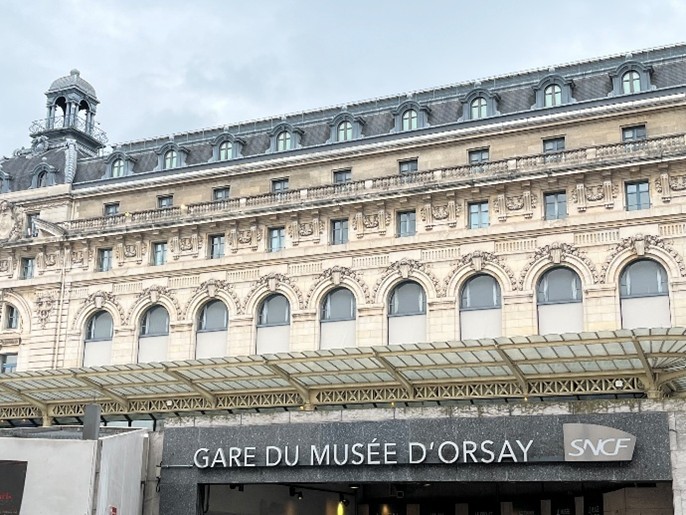
I visited Marie Robert, Senior curator of photography at Musee d’Orsay, to see selected works by women photographers from the 19th century and start of the 20th century from their photography collection. Marie Robert is part of the Fast Forward Women in Photography network. She is co-editor with Luce Lebart of ‘Une histoire Mondiale des femmes photographes’ (2022). The funding meant I could follow up on a contact made with her during Fast Forward Women in Photography’s Conference “Beyond The Canon: Exhibiting, Curating and Collecting Photography by Women,” Oct 2025 in Toruń, Poland.
I was able to select photographs to view from Musée d’Orsay’s collection in particular by women photographers including Anne Brigman, Alice Boughton, Frances Benjamin Johnston, Julia Margaret Cameron, Clementina Hawarden, Gertrude Käsebier, Jenny Girard de Vasson, Celine Laguarde, Virginia Oldoini La Contessa di Castiglione and Marjory Theodore Hardcastle. It was interesting seeing the themes emerge from this period- both earlier and concurrent with my own current research area of 1900-1940 – around portraiture, self-portraiture, motherhood, and observations of architecture including rooms, classrooms, parlours, playgrounds.
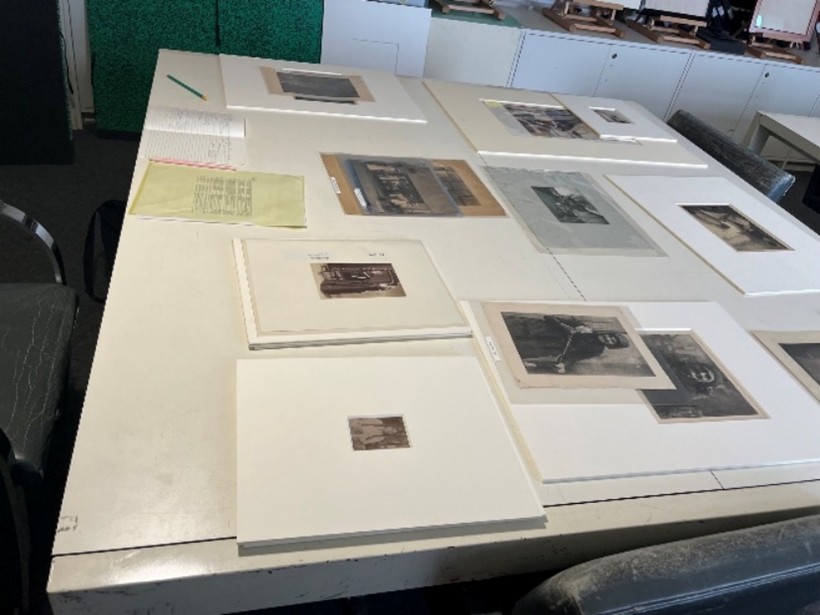
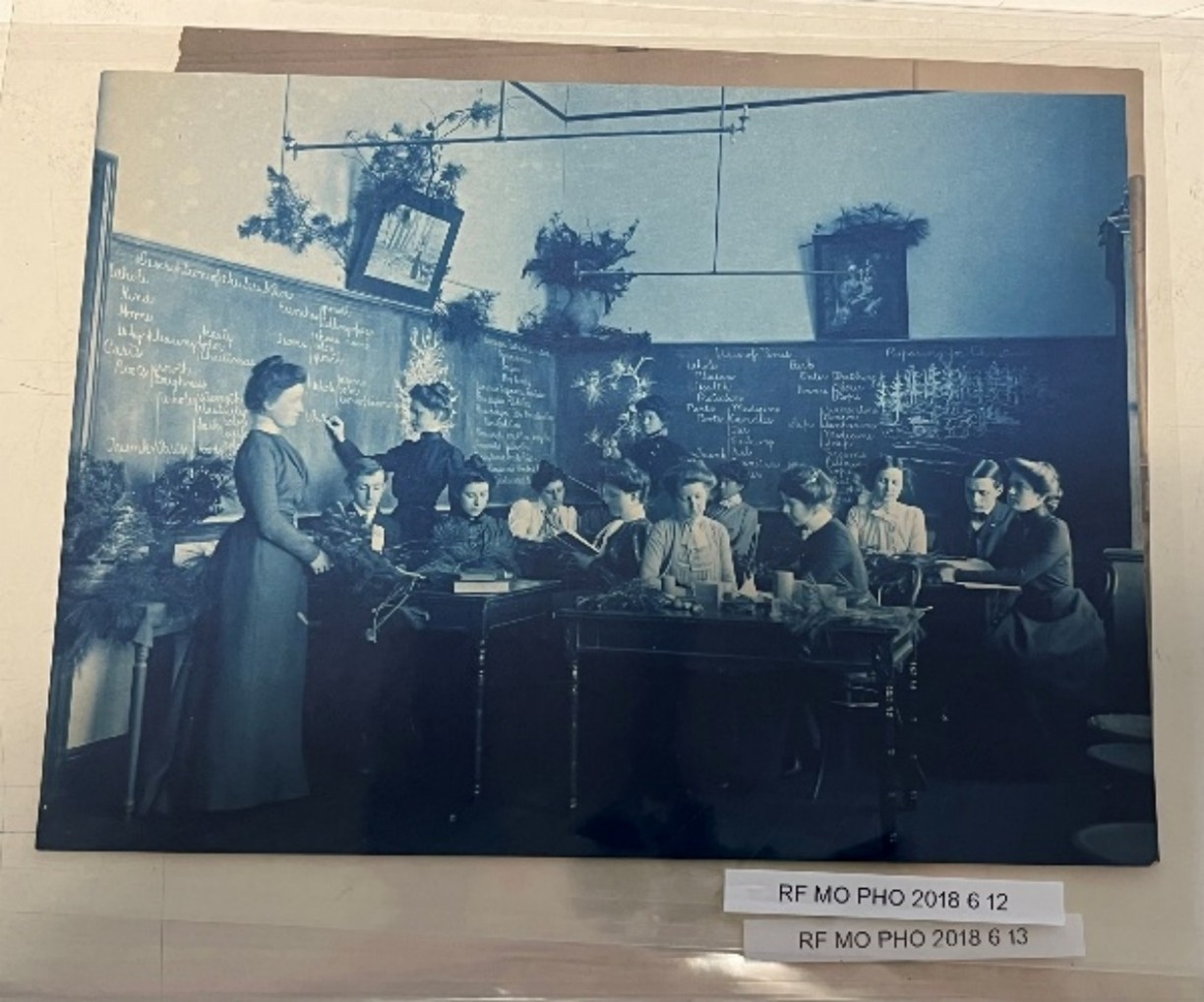
I was particularly drawn to Frances Benjamin Johnston’s 1899-1900 work creating a series of classrooms and playgrounds, which are like set pieces that explore what female knowledge looks like. In Johnston’s classrooms, the women pupils outnumber the males. There is quiet action and interest in every area of the photograph. Johnston composes her works with a relatively blank top section of the photograph – in this case the light walls of classroom, to provide some relief from the busy focus of activity. Johnston was also commissioned by Booker T Washington to document Tuskegee Institute in Alabama. The collection includes a series of these photographs of America’s first Institute for African Americans, which offered teacher training, vocational and industrial education.
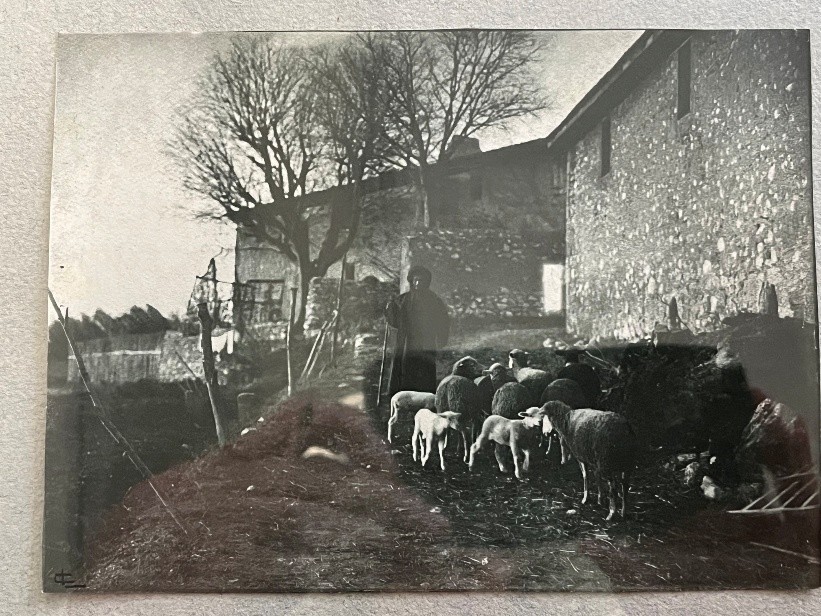
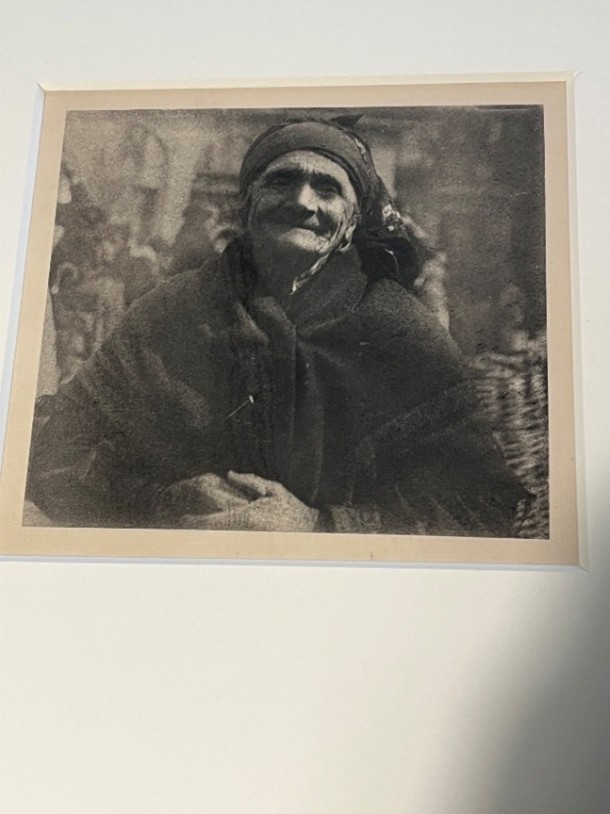
Two photographs by Celine Laguarde, ‘Berger et troupeau’ (1900-1914) and ‘Portrait de Femme’, (1900-1914) depict village life in France. The woman in the latter photograph holds a ball of wool and knitting needles in her hand. These photographs were the only ones in the collection to represent working class rural life in France in that period by a woman photographer.
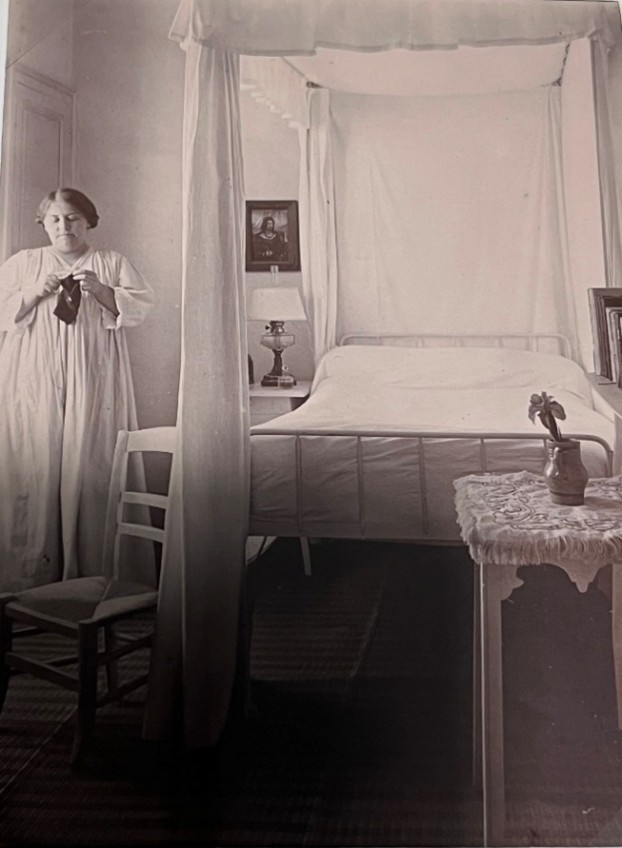
Jenny Girard de Vasson’s self-portraiture series, such as ‘Autoportrait dans la chambre de la photographe, Abbaye de Verennes, Fougeolles’ (1902/1903), are really wonderful, often showing intimate views of the photographer, in bedrooms, in informal dress and in this case, her night dress. In another work, ‘Autoportrait avec deux hommes’, there is a playfulness, where she has turned to face the camera, whilst standing with two men. In this way she plays with private and public views.
The meeting also gave me the opportunity to wander around Musee D’Orsay on a day that it was closed to the public. The visit allowed me to continue the conversation with Marie Robert and to widen out my own research from early 20th century women photographers in Scotland and UK, to consider this period internationally, in particular North America and France.
Venice:
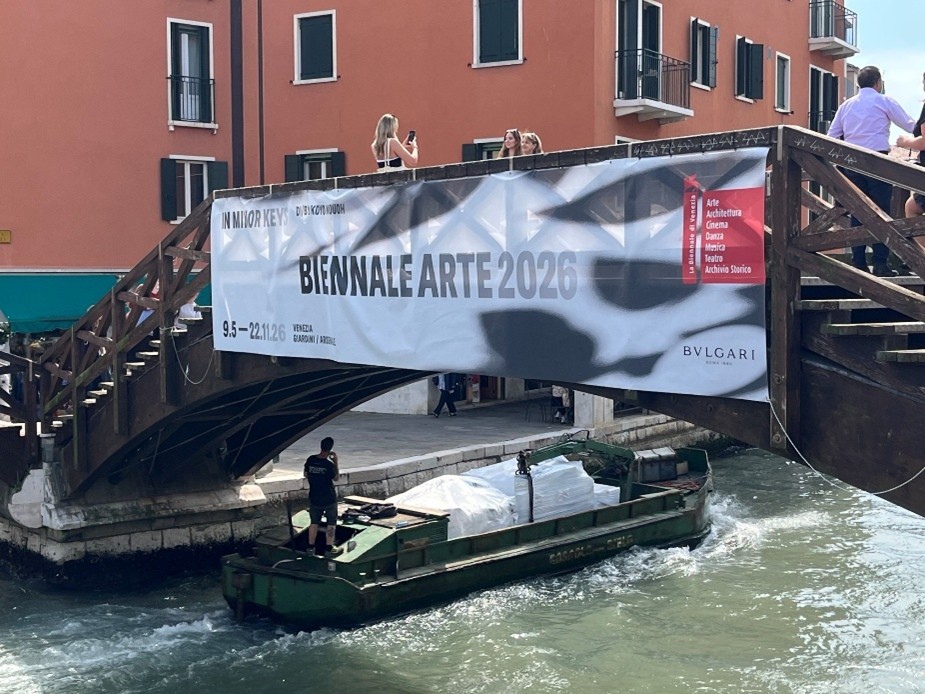
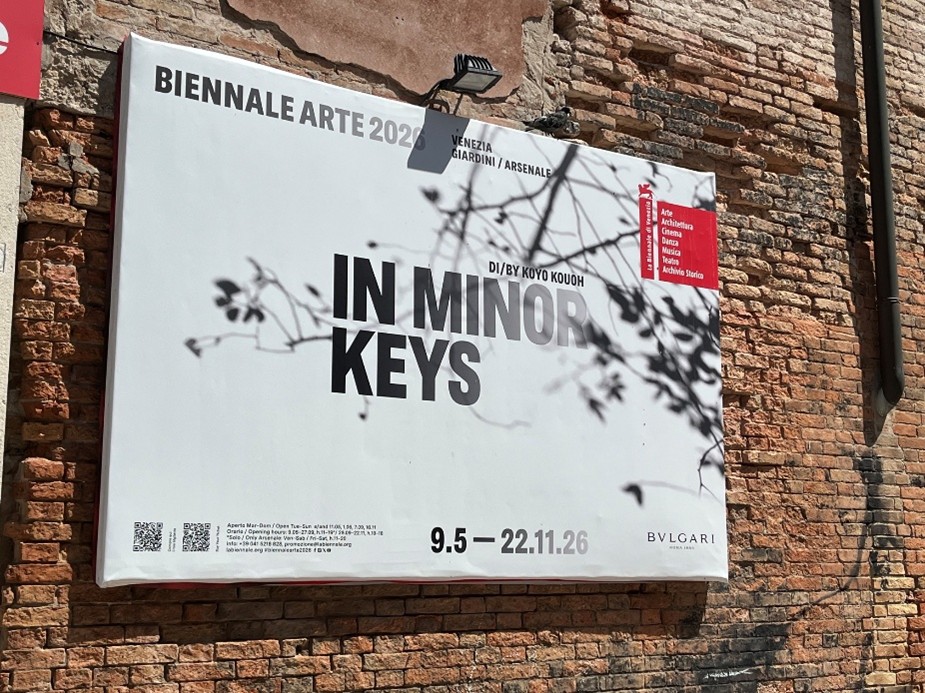
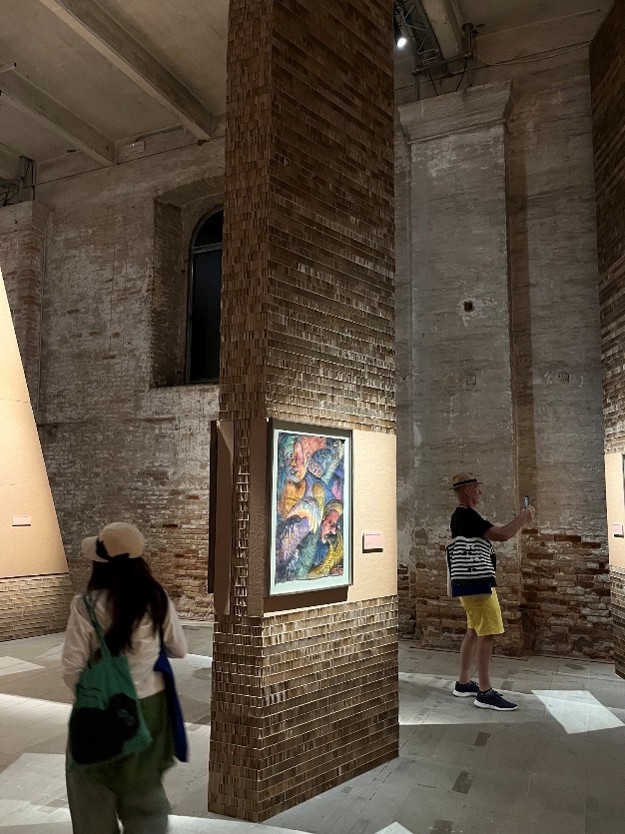
The curatorial award also supported me to see ‘In Minor Keys’ by Koyo Kouoh (1967-2025) at Venice Biennale 2026 and travel by train Glasgow-Venice return. The transformation of the old rope making Corderie, the Arsenale, for ‘In Minor Keys’ was very much enhanced by key exhibition design by the South African architects practice Wolff Architects (Cape Town) who were appointed by Kouoh. Large reconstituted cardboard wall sections created zones of shelter for smaller works, such as the figurative pastel works by Mmakgabo Mmapula Helen Sebidi.
Key works in Minor Keys:
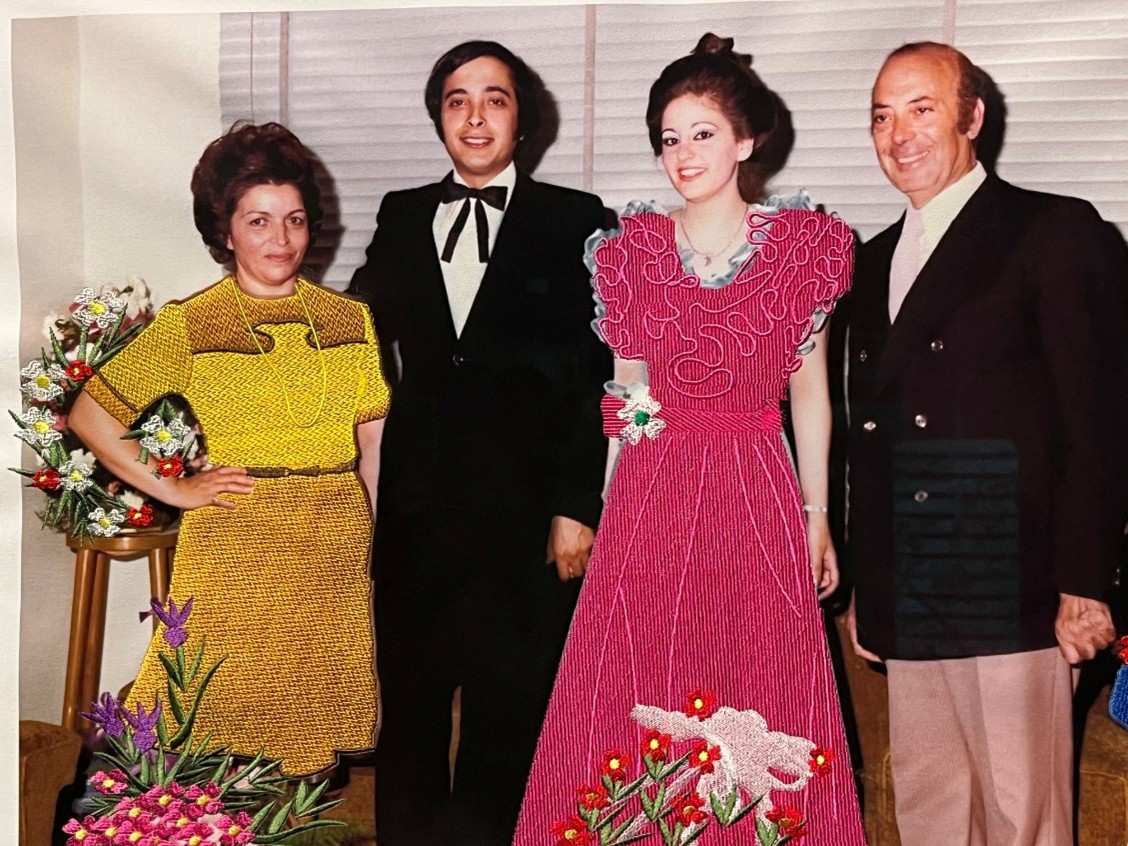
In Raed Yassin’s series ‘Haute Couture’ (2018), the artist directly embroiders onto prints of family photographs. ‘Yassin’s father was a fashion designer who worked in Saudi Arabia until his murder during the Lebanese Civil War. The artist imagines the embroidery patterns his dad might have designed…’ (Kaelen Wilson-Goldie, exhibition interpretation).
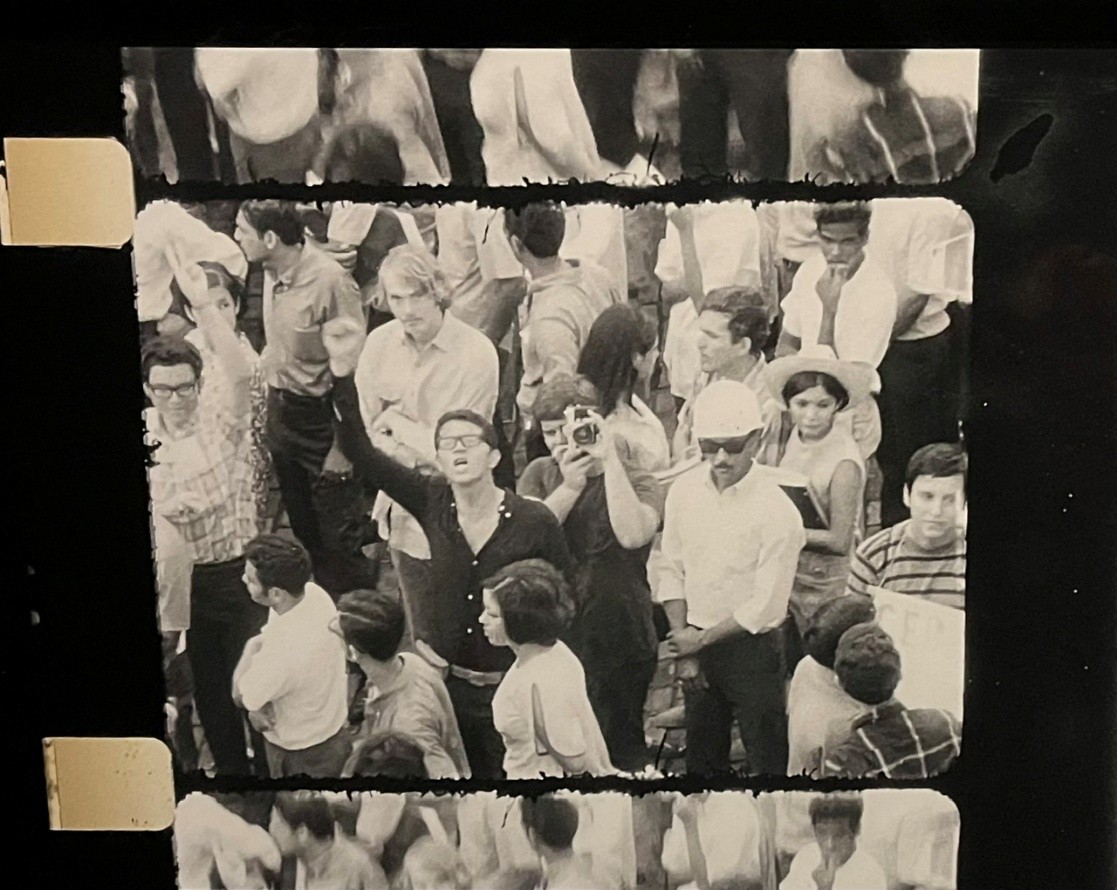
Sofia Gallisa Muriente’s ‘Useless Cinema I=IX’ (2023-4) is ‘a series of stills from films shot by policeman observing leftist groups in Puerto Rico’ (Venice biennale website). I very much enjoyed the typewritten narration accompanying the images, which subverts the original intention of the archival material.
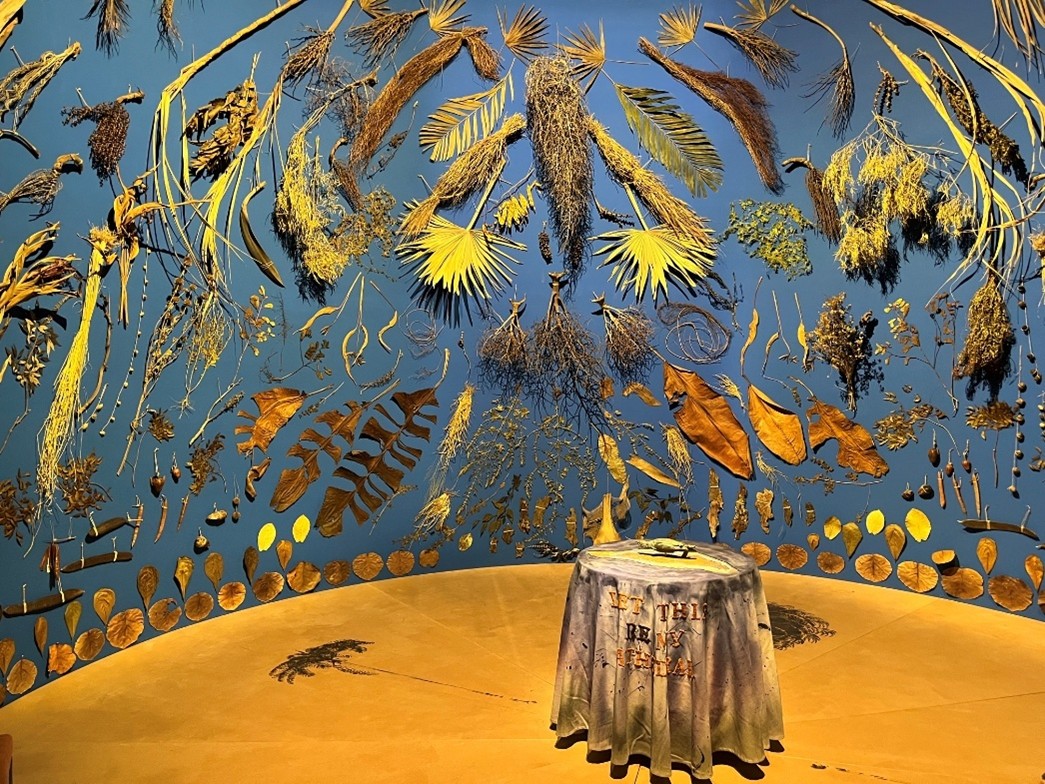
Annalee Davis’s installation ‘Let this be my cathedral’ (2026), brought an herbarium to Venice Biennale from her home on a former plantation in Barbados where her Creole family lived for generations. The herbarium was the backdrop to a small shrine of a sculpture of an Eskimo curlew, now thought extinct. The poem included in the installation was Olive Senior’s ‘Bird shooting Season’ (1985).
This work is one of the key ones brought under Kouoh’s curatorial theme of the resilience of Creole gardens. South African artist Senzeni Marasela had installed 7 works, tremendous in scale in the Arsenale, with each titled after South African mining disasters. ‘A central motif in her practice is the colour red, which she connects with the ‘red dust’ period in South African history, a time of drought, displacement and social upheaval’. (Ebony Curated, website).
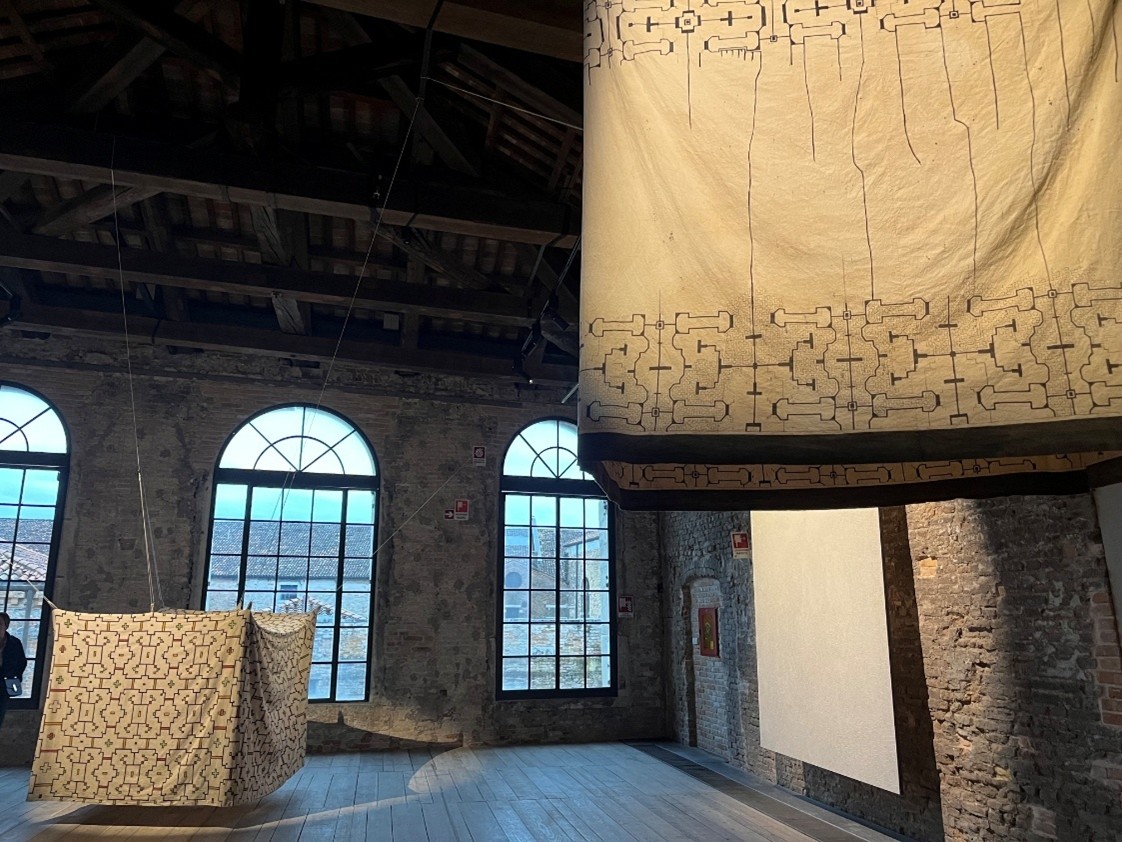
Sara Lores’ presentation ‘From other worlds’ in the Peruvian Pavilion at the Arsenale, was so beautiful in the light and within the brick walls. The artist in a review in Art Review said ‘My practice is rooted in kene, the design system of the Shipibo-Konibo, the people to whom I belong. Kene is a living visual language that comes from the forest, the rivers, medicinal plants and from the songs transmitted through generations of women’. The Peru Pavilion is curated by Issela Ccoyllo and Matteo Norzi.
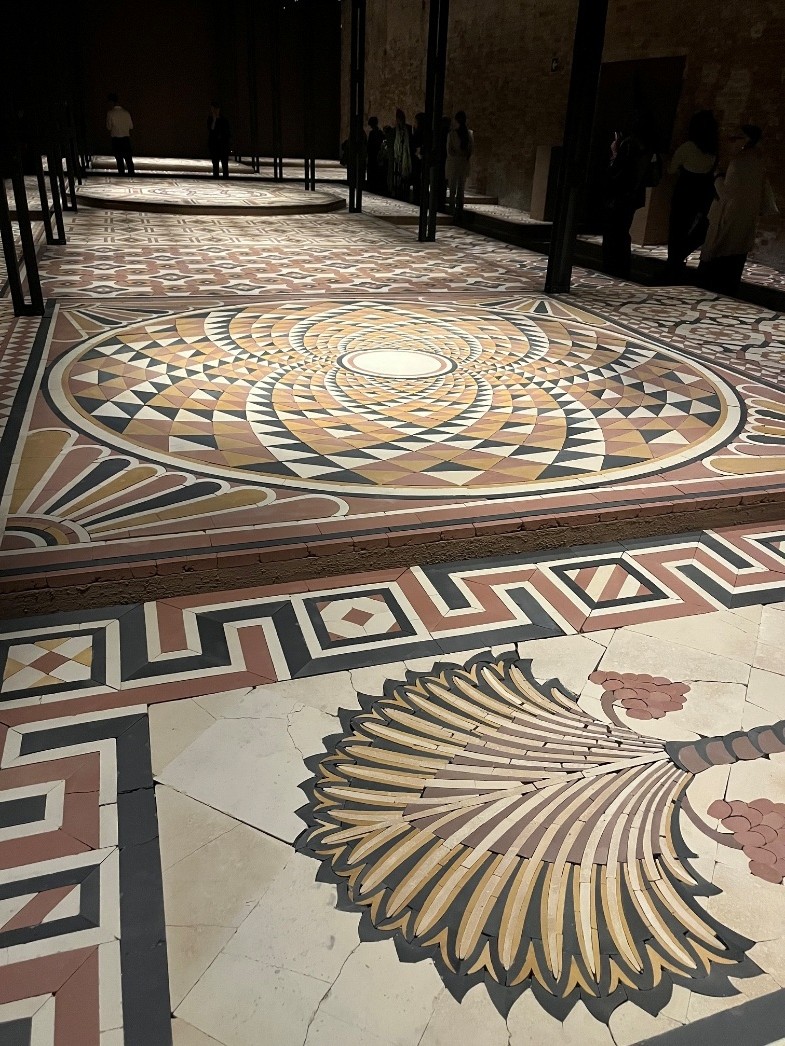
Palestinian-Saudi artist Dana Awartani’s work ‘May your tears never dry, you who weep over stones’, speaks of both the craft and subsequent destruction of archaeological and heritage sites of war. ‘In the Arsenale, she is showing a horizontal array of thousands of clay bricks, placed in decorative motifs drawn from the artist’s long-term study of damaged or destroyed ancient heritage sites and monuments across the Middle East, from Aleppo to Jerusalem to Gaza. As these ancient sites are reduced to rubble today, the strength of Awartani’s work lies in its directness: summoning heritage that will likely never be seen again’ (Pablo Larios, Artforum).
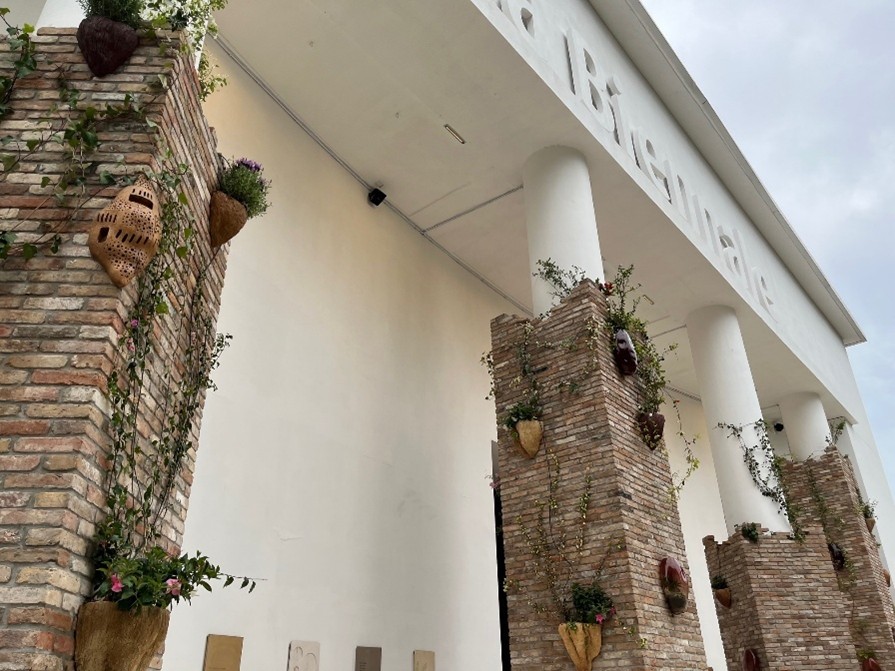
Curated by Antonia Carver for the Saudi Pavilion in Arsenale. Otobung Nkanga’s marvellous ‘Soft Offerings to Silenced Voices and to All Who Have Turned to Dust’ (2026), encased the white pillars, altering the threshold of the Central Pavilion in the Giardini. Plants continued to grow over the months the Biennale ran for.
There were a real plethora of amazing artist films across Venice Biennale, collateral events and exhibitions. In the Ecuador Pavilion, there was a film by Tawna, an ‘anti-colonial collective formed by Sapara, Kichwa and mestizx artists who create from the rainforest as a territory of memory, resistance and vision’ (biennale website). This was part of a show curated by Manuela Moscoso.
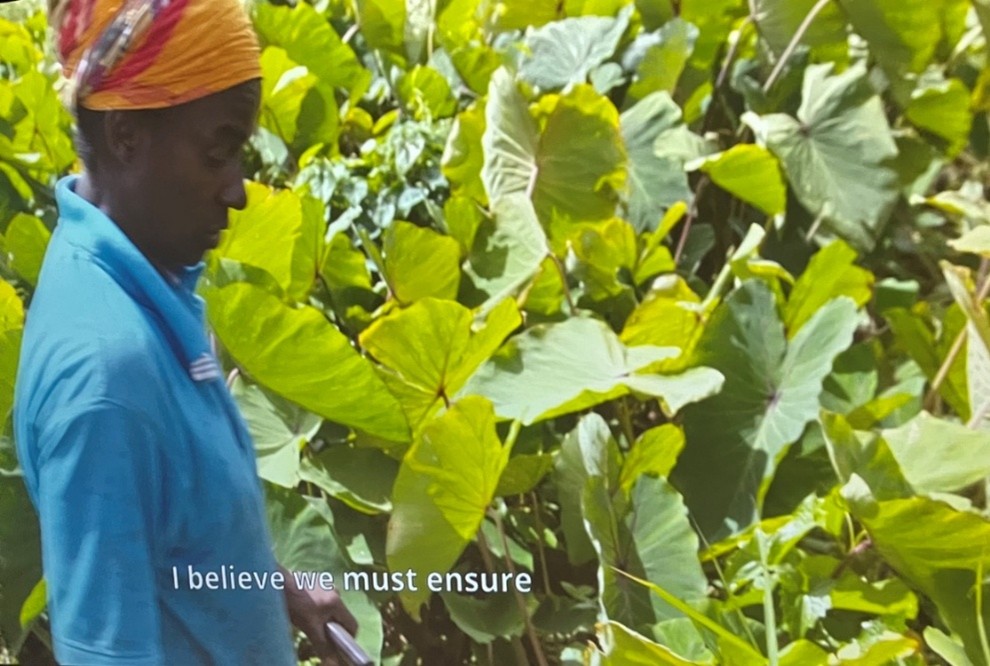
French artist Florence Lazar had two films showing ‘In Minor Keys’, ‘It’s all thanks to bad weather’ (2024) and ‘125 Hectares’. Both are set in Martinique. The former focuses on a violent colonial past, the ecological impact of a hurricane and the wisdom of the land. The latter films Veronique Montjean, a member of a farming collective who ‘recounts the struggle to occupy and reclaim land for community healing and nutrition in the face of rampant real estate development’ (biennale text).
I enjoyed Farah Al Qasimi’s film ‘The Curse’ (2026), as part of the group ‘WashWasha’ (‘Whispers Across the Water’) curated by Bana Kattan for the UAE Pavilion at the arsenale. The film follows a story of a child who bears guilt that their scream has brought a curse on a village. Cauleen Smith’s immersive film installation ‘The Wanda Coleman Songbook’ (2024) interprets Coleman’s poetry set in the location of LA.
It was brilliant encountering the collateral exhibitions in Venice. The Republic of Sierre Leone was participating for the first time.
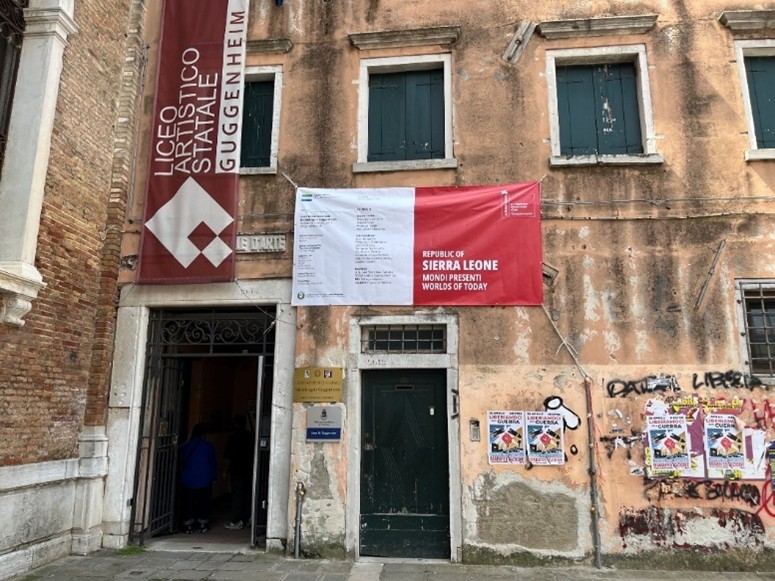
Works were positioned around an inner courtyard of Liceo Artistico Statale M. Guggenheim. Abu Bakarr Manseray’s drawings were for the inventions of futuristic machines. Documentary photographer and public health professional Hickmatu Leigh (‘Melanin’, 2023) records the lives of Sierre Leonean women.
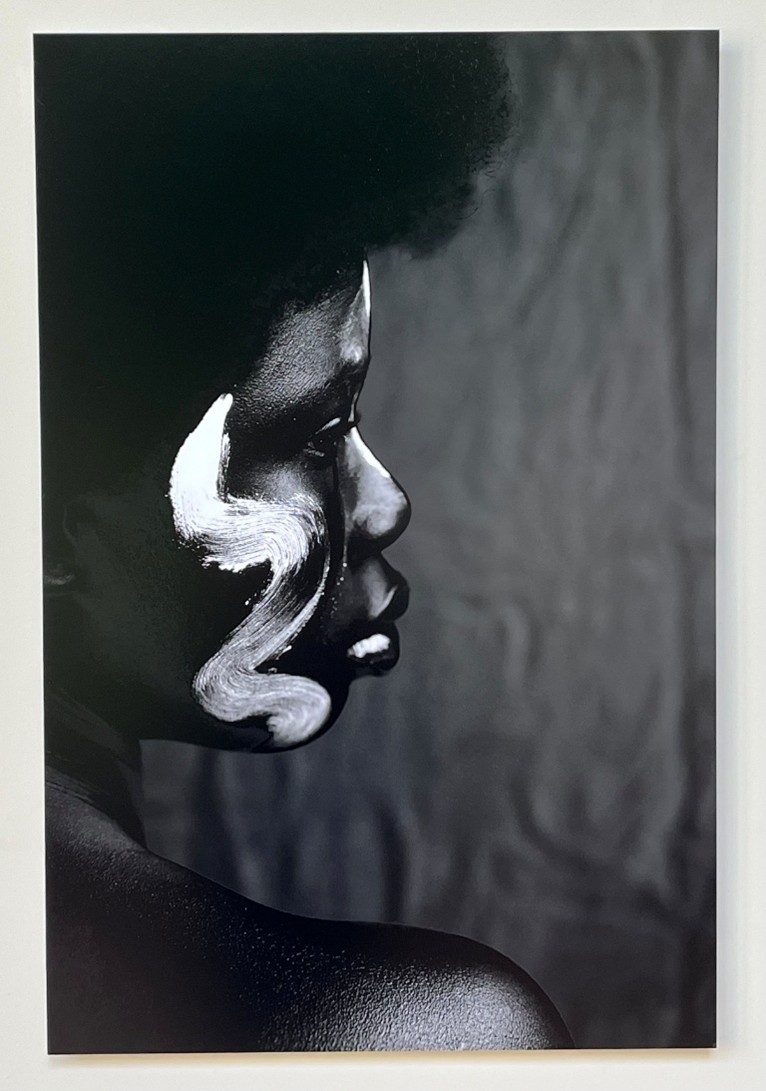
Hawa-Jane Bangaru has a series of paintings in the exhibition ‘Signs and Symbols: Beyond the Zodiac’, (2025). Seyni Awa Camara’s work ‘Mother Earth’ (2011) is shown In this Pavilion as well as further work in the Central Pavilion in the Giardini. Curated by Sandro Orlandi Stagl and Willy Montini. The Indonesian Pavilion, ‘Printing the Unprinted’ with artists Agus Suwage, Syahrizal Pahlevi, R.E. Hartanto, Nurdian Ichsan. Theresia Agustina Sitompul (Terre), Mariam Sofrina and Rusyan Yasin, curated by Aminudin TH Siregar, cleverly utilised a finite economy by utilising resources to create a two-month printmaking residency for the artists in Venice, rather than shipping works from Indonesia to Venice. The residency and subsequent exhibition in Venice was hosted by the site of production at Scuola Internazionale di Grafica.
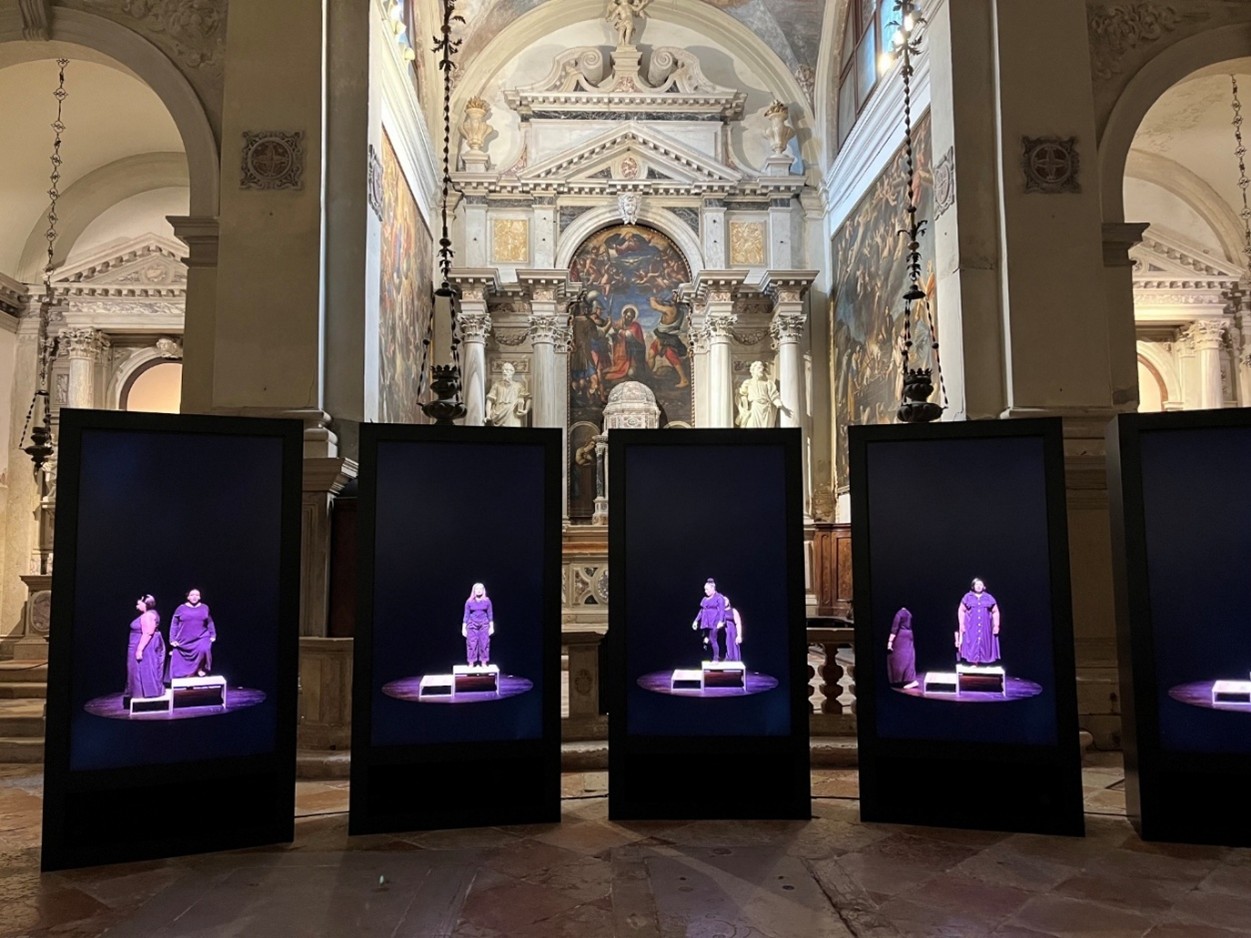
‘Elegy’, a series of video works by Gabrielle Goliath was staged in Chiesa di Sant’Antonin, following cancellation by the South African Government from the work being exhibited in the South African Pavilion at the Arsenale. The work, which mourns violence ‘against women, children and civilians’, includes reference to Palestinian poet Heba Abunada, in one of Goliath’s works ‘Elegy for a Poet’ (2026). Abunada was murdered along with her son in Oct 2023 by an Israeli air strike, in Khan Yunis, Gaza. The work was highly emotive in the church setting. Every woman mourning in the line moves forward to continue the sound. The last plinth remains empty for the poet. A number of representatives of the artist stood vigil at the site of the empty South African Pavilion in the Arsenale, handing out the bookmarks and stating that the work had been silenced by the government. The Venice presentation out with the Biennale has been funded by Bertha Foundation, in partnership with Ibraaz, Fondazione ICA Milano, Galleria Raffaella Cortese and friends of Elegy. ‘Elegy’ will be presented at Ibraaz in London (Oct 2026) and then ICA Milano (Jan 2027).
‘Shame Parade’, Scotland + Venice’s collateral event by artists Bugarin + Castle, curated by Dr Morven Gregor for Mount Stewart, marked Scotland’s return to Venice Biennale.
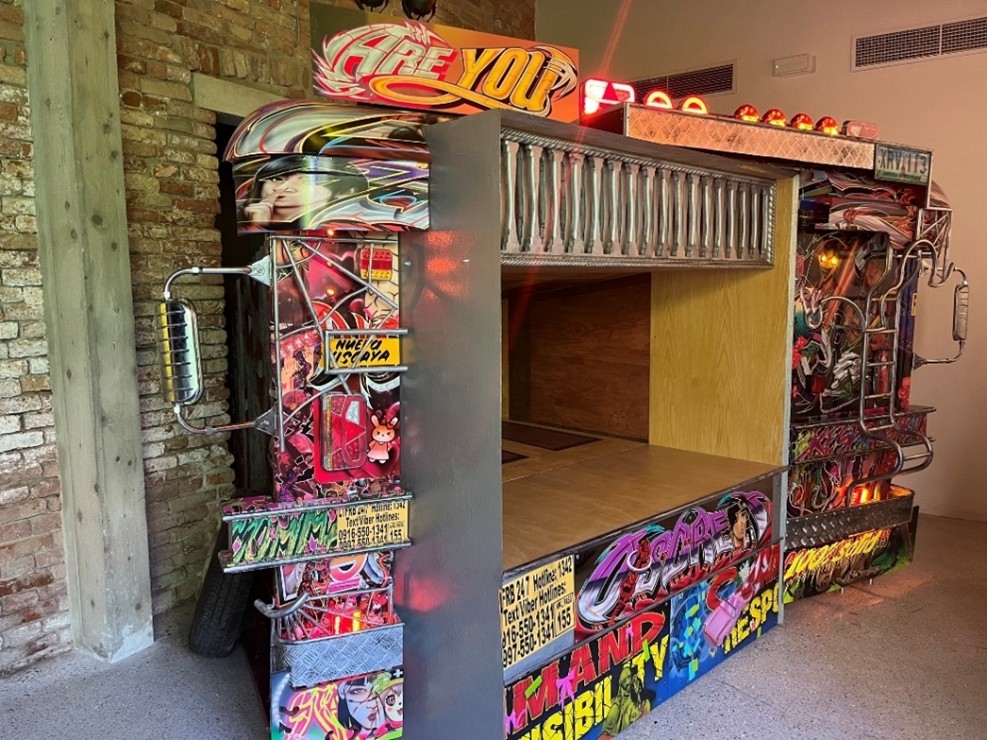
The ambitious installation created its own world and an important site within the rough stone walls, to explore historic shaming rituals, and impacts on those who socially transgress and transform. I particularly found the scene relating to voice feminization exercises poignant and important in the film ‘Submit to Sound’.
‘Sowd’ by artists Manon Awst and Dylan Huw for Wales in Venice creates a contained, sculptural environment drawing on sheep’s wool, clay, wood, and rushes, across several rooms at Instituto Santa Maria della Pieta. ‘Sownd’ is a Cymraeg/Welsh word meaning both ‘stuck’ and ‘foundationally sound’. There was a real emphasis on organic materiality and making across the Venice Biennale, which this installation chimes with. Furthermore, an immersion in Welsh language situated the visitor within this work and place – the small book room was a great addition.
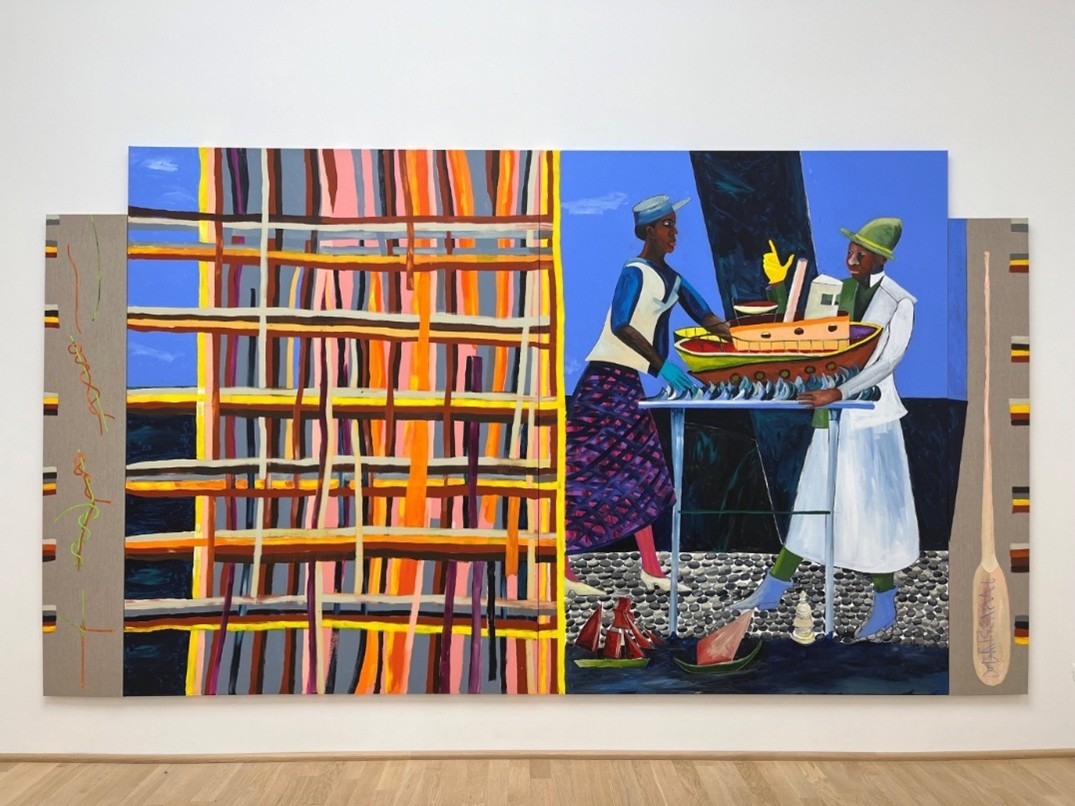
Lubaina Himid has been key in creating a sense of place for Black peers and younger generations pf artists since the 1980s. ‘Predicting History: Testing Translation’ in the British Pavilion, through questions, multi-panel paintings and objects explored a sense of belonging and the difficulties and challenges of living in a place – when that space is not built to welcome. The British Pavilion was curated by Ese Onojeruo.
A curtain of glass beads, leads into ‘5 works’ by Lydia Ourahmane, at Nicoletta Fiorucci Foundation Venice. ‘5 works’ is An exquisite reading of place, with a pared back installation.
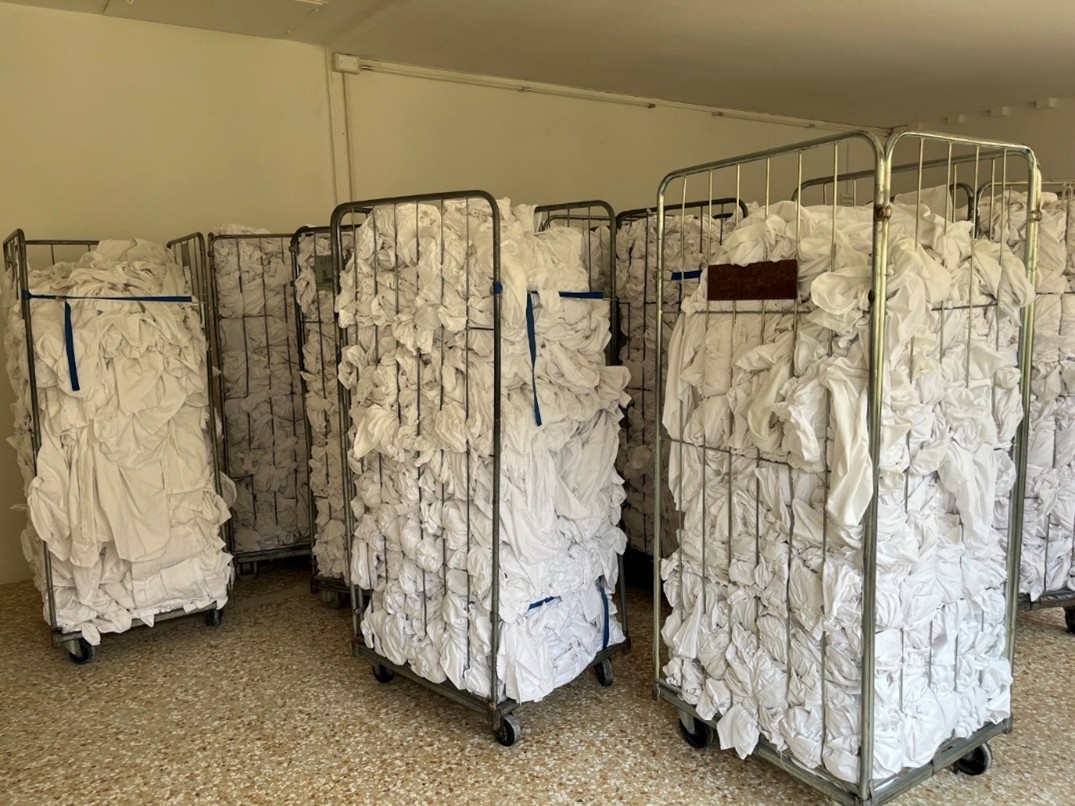
The artist had been in residence in Venice for two months, and the exhibition very much benefited from this. Contact sheets on one of the final rooms indicated this passage of time and the artist in the city. The pier structure will be transferred and put to use on the island of Poveglia after the show. After a fair bit of large scale and grandeur, this was a beautiful, well considered show, curated by Polly Staple.
The last exhibition I saw before starting for home was the group show ‘Outta Love’ at Palazzo Vendramin Ai Carmini, presented by Stallmann Galleries. I by chance saw a huge banner outside the palazzo, which listed Vivan Maier and Francesca Woodman, along with artists including Daniel Spivakov, Angela Brandys, Lawrence Weiner, Darren Bader, Jenny Saville, Wolfgang Tilmans and Milko Pavlov. I particularly enjoyed the large-scale mixed media textiles by Angela Brandys being consciously placed next to the diminutive in scale Francesca Woodman photographs.
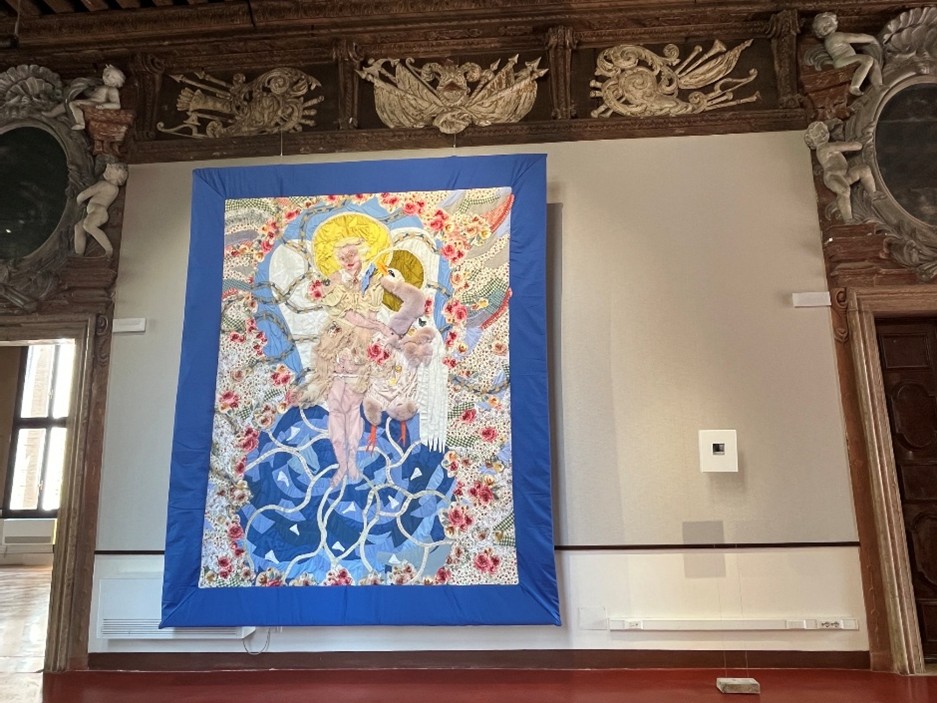
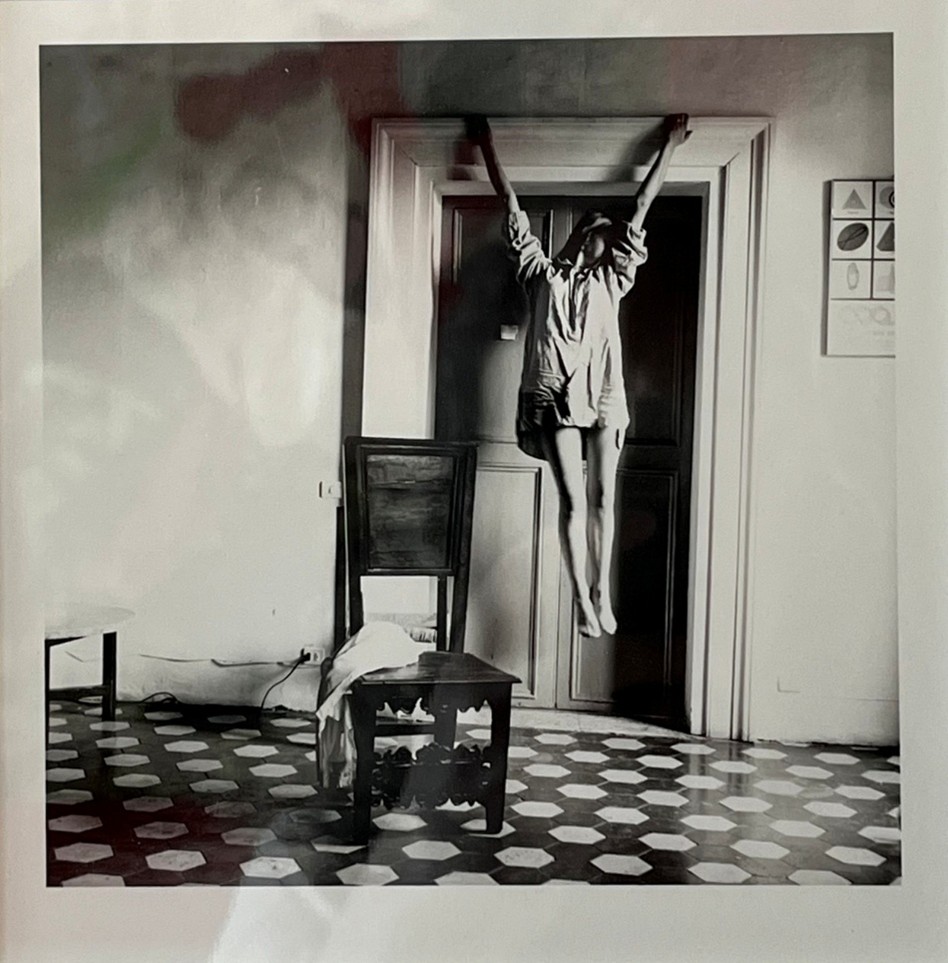
It is relatively unusual to have these disciplines next to each other. It was fantastic to see the Maier self-portraits too – I had not seen her photographs in the flesh. The faded grandeur of the palazzo and this exhibition will remain in my mind.
The Venice Biennale is not in a bubble, so protest against the Israel Pavilion at the Arsenale and the Russian Pavilion in the Giardini took place during the opening weekend. On the day of my departure, 8 May, a 24 hour strike and mass protest organized by the Art Not Genocide Alliance (ANGA) and Italian trade unions took place in Venice, protesting the inclusion of Israel in the biennale.
May 2026

