Unknown's avatar

Research Note 2: Margaret Fay Shaw – Canna House research visit, November 2015

Salutations, Margaret Fay Shaw
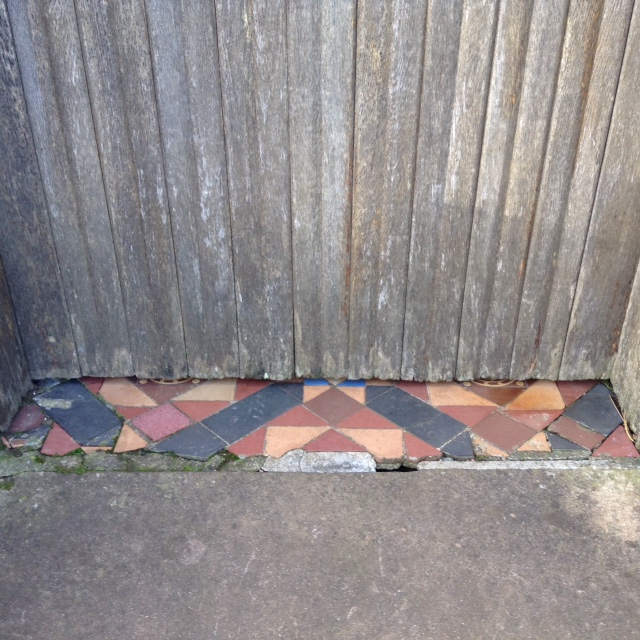
Front door, Canna House Photo: Jenny Brownrigg

Front door, Canna House Photo: Jenny Brownrigg

Mrs Shaw Campbell, Mrs John Campbell, Dear Mrs Campbell, Dear Mrs Lorne, Dear Margaret, Dear Margarita, Dearest Maggie, Maggie love, Dear Meg, My dear Meg, My dear dear Meg, Dearly beloved Meg, Dearest Marge, Dearest Marcat.

These salutations are on letters addressed to Margaret Fay Shaw (1903-2004) ranging from the formal to the diminutive. These letters, both business and personal, were sent from all over the world and are part of a significant archive at Canna House, on the Isle of Canna, where Margaret Fay Shaw lived with her husband John Lorne Campbell. Both sought to record the everyday life of people living in the Hebrides.  Whilst John Lorne Campbell specialised in capturing the spoken word, in order to understand everyday Gaelic and its dialects, Margaret Fay Shaw focused on transcribing Gaelic songs and recording Hebridean island life predominantly through her photography.

Shaw, as a single woman, spent six years from 1929-35 living with the sisters Peigi [1874 -1969] and Màiri MacRae [1883 -1972] at their croft at North Glendale, South Uist. Màiri MacRae was forty-six and Peigi, fifty-five, when a twenty-six year old Margaret Fay Shaw arrived. Indeed, as Shaw’s own ‘amanvensis’ Magdalena Sagarzazu [1] narrates in her introduction to the book ‘The Voices’ by Alex MacRae [2], this time was so significant for Shaw, (leading to a continued friendship with the sisters), that she chose to be buried next to them: ‘Margaret Fay Shaw was buried beside her two friends and among the people of South Uist she loved so well at Cladh Halainn cemetry’. [3] Shaw recounted during the programme ‘Tir A’ Mhurain’ that Peigi and Màiri MacRae, ‘… taught me more than university, they were the most interesting and knowledgeable women’.  [4]

A trained musician, Shaw’s primary motivation to move from New York to South Uist was to transcribe Gaelic songs at their source. In her own words, she ‘… chose South Uist, as the island least visited by strangers and where there would be an opportunity to live amongst a friendly and unprejudiced people not self conscious of their unique heritage.’ [5]

 After hearing Màiri MacRae sing at Boisdale House on her arrival in 1929, she was invited by Màiri to learn the song by visiting her at home in Glendale. On making the journey to their croft, which was two miles from any road and easier accessed by boat, Shaw asked if she could lodge there. Over the next six years Shaw transcribed the MacRae’s songs and those of their neighbours, further learning Gaelic over this period too. Michael Russell in his book ‘A Different Country: The Photographs of Werner Kissling’ attributes Shaw’s knowledge of Gaelic- ‘almost unique[ly] amongst photographers who worked in the Hebrides’ – as a way ‘to penetrate Hebridean culture more thoroughly and to get closer to the rhythms of place’. [6]

With her Graflex camera (the first on loan for two years from her brother-in-law Boone Groves until she was able to buy her own) and 16mm Kodak movie camera, Shaw photographed and filmed the Glendale community at work and at leisure. She did not own a light meter or tripod at that point: ‘I used piled up rocks for support or got someone to crouch on all fours while I balanced the camera on their back’. [7] Whilst a photographer such as Paul Strand, who over three months of the summer of 1954,  made single monumental portraits of South Uist islanders, [8] Shaw focussed on a single community and recorded it in its detail.  The time shared with the MacRae’s and their neighbours allowed Shaw to take numerous photographs, in particular of Màiri MacRae. Shaw records her digging the field with her son Donald; sything the oats with her sister Peigi; and shearing the sheep.

Like Shetland film maker Jenny Gilbertson [8], through the prolonged period of time spent living on a croft, Shaw was highly aware of its seasons and cycle. She records both in her diary, her transcript ‘The Outer Hebrides’ and subsequently in her life work ‘Folksongs and Folklore of South Uist’(1977):

The spring work of the croft began in February, when seaweed, used as fertilizer, was cut with a saw-toothed sickle called a corran on the tidal islands of the loch at low water of a spring tide’. [9]

The year closes with: ‘All the harvest work done, the women wash and card the wool and start the spinning wheels. It is the season for the fireside and the ceilidh, the rough weather and the short days.’ [10]

Beyond the archetypal image of crofters at labour, also denoted by other photographers and film makers of the era such as Werner Kissling (1895-1988) or Alasdair Alpin MacGregor (1899-1970) [11], Shaw’s photography goes further, recording everyday domesticity as well as the special occasion on the croft. In one photograph, Màiri MacRae stands in her doorway and holds a gifted salt cod up by its gills. The fish is viewed avariciously by the cats at her feet, with one reaching up to snatch at the fish’s tail. In another, Angus John Campbell sits with Màiri MacRae by the fireplace in an interior shot. The second of this short sequence shows him still seated next to MacRae and playing an accordion.

The sisters and their neighbours are often photographed in social situations and gatherings outdoors, one of these scenes being a tea party with Màiri MacRae, her son Donald and Peigi MacRae who all kneel on a white sheet that has been laid out on the grass. This gathering looks ceremonial; Màiri MacRae holds a china teacup with her left hand, raising it to camera, whilst her right hand keeps a hold of a sleeping cat who looks in danger of slipping off her knee. Peigi MacRae holds the teapot in her right hand and bannock in her left. Donald, the most surprising of the trio to contemporary eyes, sits in the middle with their dog Queenie. Whilst the man of the house, he looks barely in his teens in this photograph, but has a pipe in his mouth. A white piece of laundry can be discerned in the background. Like the snowcap of a mountain, it is laid out on the stone wall to dry in the sun.

The sound of the everyday is also wonderfully evoked by a typed document from Canna House Archives entitled ‘South Uist in Sound’ [12] where Shaw lists ‘characteristic sounds’ under headings including ‘Birds on the shore’, ‘The beasts of the croft’, ‘Conversations’ ‘Transport’, ‘The shop’, ‘Dancing’, ‘Songs and stories’ and ‘Agriculture’:

‘Inside the cottage.

Milking, churning, mending shoes, noises above the stoves, lids rattling, kettles boiling, setting dishes, spinning heel, carding (with appropriate songs), the loom and wool winders, the bucket to the well and back, washing clothes and ironing, noise of children, primus stoves and tilly lamps; clocks ticking, rats scuffling in the walls, cats growling under the dresser, dogs being cursed and told to lie down (in Gaelic), scratching fleas.

Magdalena Sagarzazu believes that the photographs cannot be viewed alone without relating them to music and culture; they sit holistically within a wider context. This is borne out through Shaw’s pencil notations on the songs’ original music sheets, held as part of the Canna House archive, as well as the printed transcriptions in Shaw’s ‘Folksongs and Folklore of South Uist’ where tune, words and sometimes composition are attributed to those who appear in her photographs from the Glendale community. For example, ‘Óran Fogarraich – An Exile’s Song’: ‘The tune, chorus and first verse from Miss Peigi MacRae, the second and third verses from Angus John Campbell.’ [13] Shaw records for most songs how the singer learnt the song: ‘Miss Macrae learnt the song from Miss Catriona MacIntosh while employed at Boisdale House when a young girl’. [14] The excellent online resource Tobar an Dualchais’ contains original recordings of songs sung by Màiri MacRae and Peigi MacRae, that were recorded at a later date by Campbell and Shaw when recording equipment was available. It also contains an extract of a song ‘Oran a’ Chutaidh’, sung by Donald MacRae, about a dog.
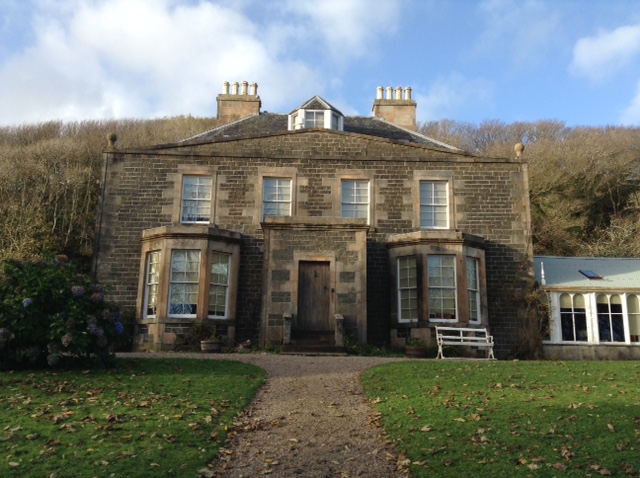
Canna House, The National Trust for Scotland Photo: Jenny Brownrigg

Canna House, The National Trust for Scotland Photo: Jenny Brownrigg

The word ‘source’ crops up often in researching and thinking about Margaret Fay Shaw and John Lorne Campbell’s collection and archive at Canna House. The ‘source’ is the singer, the landscape, language, stories and lives. Martin Padget in his book ‘Photographers of the Western Isles’ [15] notes Shaw’s quest for authenticity, referencing the first occasion Shaw heard a Gaelic song, sung by Marjory Kennedy-Fraser (1857-1930) [16] and wishing that she could hear the song in its raw state sung by the original island singers.  The idea of authenticity and source also follows through to Shaw’s photography and her films, the latter which remained as unedited film rushes, purely made for her and the community’s enjoyment, until later television programmes on Margaret Fay Shaw used this footage. [17]

Furthermore, the very fact the archive is held at Shaw and Campbell’s home at Canna House means it is also kept at ‘source’, rather than in another repository on the mainland. This was not the Campbell’s holiday home but their only home, each room a collection in itself. All has been left as if the couple have just stepped out for a few moments. This condition, gives the opportunity when researching the archives at Canna House to feel closer to the life’s work of Margaret Fay Shaw, John Lorne Campbell and the lives of those that they recorded.

With thanks to Fiona Mackenzie, archivist at Canna House and Magda Sagarzazu, retired archivist, Canna House.

Footnotes

[1] Magdalena Sagarzazu, retired archivist, Canna House, The National Trust for Scotland. Margaret Fay Shaw called Sagarzazu her ‘amanvensis’: a person employed to write or type what another dictates, or to copy. From an interview with Sagarzazu, 2014.

[2] ‘The Voices’, MAC RAE, A. (2010) Elk Classic Publishing. Alex Mac Rae is the son of Andrew Mac Rae and compiled the book ‘The Voices’: ‘Through a chance meeting with Margaret [Shaw], Peigi and Mairi’s nephew Andrew Bei Mac Rae was encouraged to record the ways of life of his family through images and sound. So he did and captured life in the 60s and 70s.’

[3] Ibid, P3.

[4] ‘Tir A’ Mhurain: Margaret Fay Shaw’, (9.3.89), TV programme.

[5] P10, ‘The Outer Hebrides: Margaret Fay Shaw’, SHAW, M.F. Undated. Typescript held at The National Trust for Scotland, Canna House.

[6] P32, ‘A Different Country: The Photographs of Werner Kissling’, RUSSELL, M. (2002), Berlinn Ltd.

[7] P4, Typescript of the Aran Islands, SHAW, M.F.  12 July 2002. Typescript held at The National Trust for Scotland, Canna House.

[8] ‘Tir A’ Mhurain: The Outer Hebrides of Scotland’, STRAND, P. (2002) 2nd Ed. Aperture Foundation.

[9] Jenny Gilbertson (1902-1990) was a filmmaker who in the 1930s’ began living on a Shetland croft, making documentary films about life in Shetland. She took up her film-making again in the 1970s’, where she went to live in the Canadian Arctic.

[10] P 96, ‘Folksongs and Folklore of South Uist’, SHAW, M.F. (2005) 2nd Ed. Birlinn Ltd.

[11] P21, ‘The Outer Hebrides: Margaret Fay Shaw’, SHAW, M.F. Undated. Typescript by Margaret Fay Shaw, held at The National Trust for Scotland, Canna House

[12] Alasdair Alpin MacGregor had an ongoing spat with Shaw, her husband John Lorne Campbell and Compton MacKenzie over their differing perspectives on how Hebridean islanders were depicted. This came to a head following the publishing of MacGregor’s book ‘The Western Isles’ (1949, Robert Hale Publishers) where MacGregor ‘endeavoured to give a contemporary account of the Islanders and their ways, free from any “nebulous twentieth-century impressionism”’ (preface, ‘The Western Isles’). MacGregor called the islanders lazy: ‘The characteristics of the people which the stranger to the Western Isles is swift to observe, certainly so far as the male population is concerned, are laziness and drunkeness. Many of the islanders are now so indolent and so spoilt by easy money that they no longer deign to cut peat, even though it is to be had on their own crofts.’ P234, ‘The Western Isles’. A letter from Shaw to MacGregor, held at Canna House, reads: ‘You ask me for an assurance not to express my opinion either by word of mouth or by writing. My letter to your publisher will be my writing. Of my speech I will condemn your book and your action in writing as long as I live’. (Jan 1950).

[13] P5, ‘South Uist in Sound’, SHAW, M.F. Undated. Typescript held at The National Trust for Scotland, Canna House.

[14] P96, ‘Folksongs and Folklore of South Uist’, SHAW, M.F. (2005) 2nd Ed. Birlinn Ltd.

[15] Ibid.

[16] P126, ‘Photographers of the Western Isles’, PADGET, M. (2010) John Donald, an imprint of Birlinn Ltd.

[17] Marjorie Kennedy-Fraser was a professional Scottish singer, composer and arranger. Including songs she transcribed from Eriskay, Kennedy-Fraser made three volumes of ‘Songs from the Hebrides’ published between 1909-1921.

[18] ‘Among Friends: Margaret Fay Shaw’, (2003) made by Mòr Media for BBC Scotland, and directed by Les Wilson. This programme was made to celebrate Shaw’s centenary.

This Research Note is part of my Glasgow School of Art Research Leave project ‘Documenting 1930s’ Scottish Highland and Islands Life: M.E.M. Donaldson, Jenny Gilbertson and Margaret Fay Shaw’.
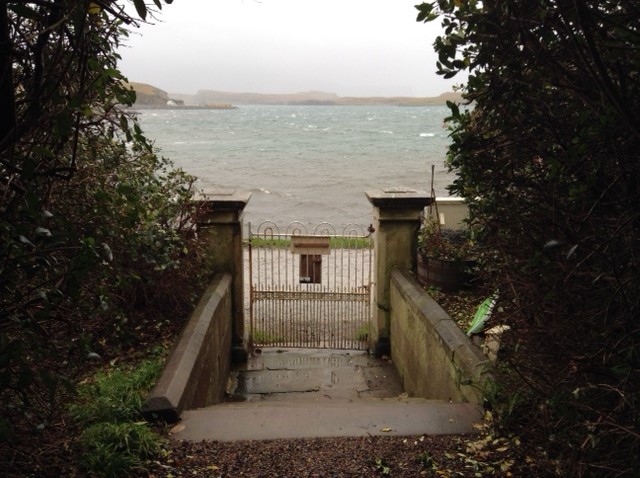
Looking out to the bay from Canna House garden Photo: Jenny Brownrigg
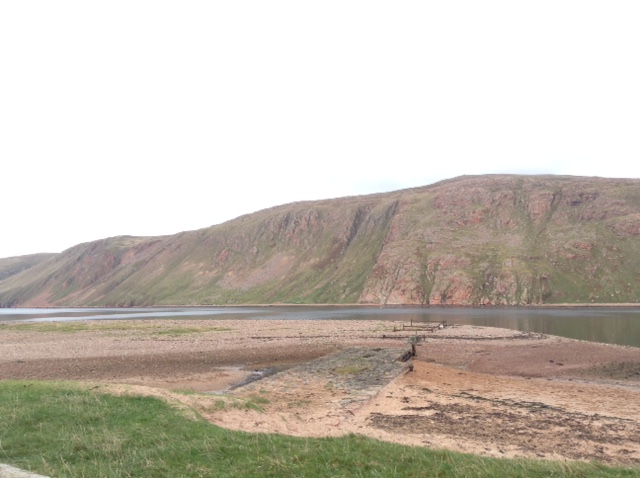
Looking out to the bay from Canna House garden Photo: Jenny Brownrigg
Unknown's avatar

Documenting 1930s’ Scottish Highland and Islands life- M.E.M. Donaldson, Jenny Gilbertson and Margaret Fay Shaw

Research note 1: Jenny Gilbertson- Shetland research visit, October 2015.

Heylor, Shetland.

Heylor, Shetland- one of the locations for ‘Rugged Island’ (1932) Jenny Gilbertson.

Thanks to research leave from The Glasgow School of Art, I have three months away from my role as GSA Exhibitions Director, to work in depth on one piece of written research. I will be looking at Margaret Fay Shaw (1904-2004), Jenny Gilbertson (1902-1990) and M.E.M. Donaldson (1876-1958), in particular their photography or filmmaking from the 1930s’, a period where all three women were independently documenting different aspects of Scottish Highlands and Islands life, having moved to live with the communities they were witnessing.  My aim is for these posts to serve as an introduction or notebook to my research and as an aid to help record, excavate and edge closer to the key points to write about.

As an early career researcher, this is the first experience I have had of working alongside other researchers on the same subject. I am incredibly lucky to be part of a motivated group of women all inspired by Shetland film maker Jenny Gilbertson– Shona Main, a writer and film-maker currently working on a biography of Gilbertson; Dr Sarah Neely, University of Stirling, who has written in particular about Gilbertson’s later work in the Arctic; and Joanne Jamieson from Shetland Moving Image Archive who is writing about Gilbertson and working to gather all Gilbertson’s films in the archive. I have been impressed by and grateful for their openness in sharing their knowledge and field work.

My first research visit has been to Shetland and the Shetland Museum and Archives in Lerwick (thanks to Brian Smith, Blair Bruce and Angus Johnson), to look through their material on Jenny Gilbertson. This resource has mostly been gifted by her two daughters Helen Thomson and Ann Black who live on Shetland.

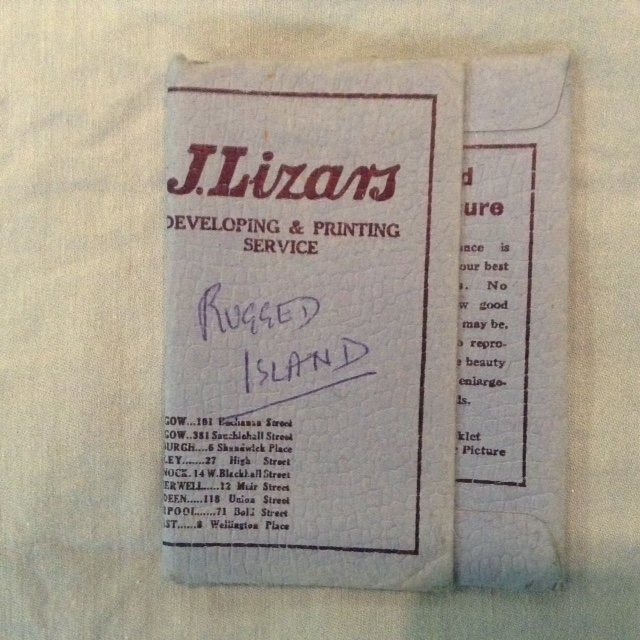
'Rugged Island' photograph holder, Shetland Museum and Archives.

‘Rugged Island’ photograph holder, Shetland Museum and Archives.

These important holdings include Gilbertson’s correspondence over her lifetime, both personal and professional;  the interpretation material she wrote about her work including autobiographical notes and film synopsis; press cuttings, in particular relating to her later filming in the Canadian Arctic with the Inuit; reflections and references from others about her work including a recommendation from her peer, filmmaker Elizabeth Balneaves (1911-2006), a letter and review of her early work by John Grierson (1898-1972) and feedback from the teachers and pupils of the schools she personally toured her films to; ephemera from film screenings and lecture tours that she undertook including some posthumous material; photographs from both her family and professional life, the latter including photographs from her early lecture tour to Canada in 1934-5 as well as from the period in her seventies and eighties living at Coral Harbour and Grise Fiord filming the Inuit; reference material she had compiled relating to subjects that interested her, both historical and contemporary; some of her film outlines and drafts, including a radio play ‘Busta House’ (1955) and essays she sent to magazines; and raw material including 35mm negatives from ‘Rugged Island’(1932) and ‘Prairie Winter’ (1934) as well as sound reels of recordings made in Coral Harbour and Grise Fiord. Shetland Museum and Archives have begun the process of cataloguing this collection.

The importance of the archives has been threefold – to see how Gilbertson saw herself and her work, through her own words and through others; to gain insight into her motivations for filming; and to understand the conditions she had to navigate as an independent filmmaker throughout her career, including those with the film and TV industry.

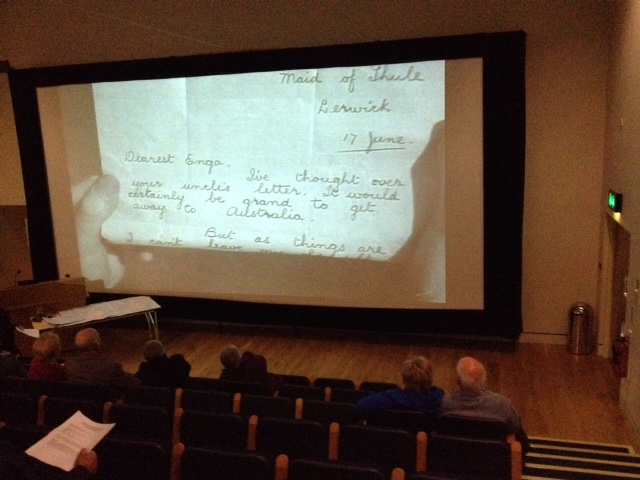
Screening of 'Rugged Island' (1932) at Shetland Museum and Archive. Photo: Joanne Jamieson

Screening of ‘Rugged Island’ (1932) at Shetland Museum and Archive. Photo: Joanne Jamieson

During the time I was in Shetland, Shona Main along with Shetland Moving Image Archive’s Joanne Jamieson, staged two screenings of Gilbertson’s 1930’s films (11 & 15 Oct 2015). The first in Lerwick at Shetland Museum was a screening of ‘Rugged Island’ (1932), the sound version with original score by Kenneth Leslie Smith. The second, to a packed village hall in Hillswick, where Gilbertson and her family had lived, showed her first film ‘A Crofter’s Life in Shetland’ (1931) alongside a number Gilbertson went on to make and sell to Grierson and the G.P.O. Library: ‘Cattle Sale’ (1932), ‘Da Makkin o’ a Keshie’ (1932), ‘Peat From Hillside to Home’ (1932) and ‘In Sheep’s Clothing’ (1932).

Site visit with David Anderson to Hillswick. Heylor and Eshaness

Site visit with David Anderson to Hillswick, Heylor and Eshaness.

As well as showing these films, the aim of the screenings was for Main and Jamieson to find out and record from the audience if they knew the locations and people within the films. They did this following the screenings by going through the films again and using them as an ‘aide memoire’ to prompt discussions on who it was and where it was in different scenes. This proved to be a successful method, in particular leading to a subsequent site visit with David Anderson (Davie a’ Hammar), a member of the audience from the Lerwick screening who had been taught by Gilbertson at Urafirth Primary School. He drove Shona, Joanne and myself around Hillswick and Eshaness areas before the second screening, to locate the croft and ruined cottage that Gilbertson’s husband Johnny Gilbertson had worked on, at Heylor, for part of the ‘Rugged Island’ (1932) set.

Joanne Jamieson and Shona Main at Heylor, with the croft in background from 'Rugged Island' (1932)

Joanne Jamieson and Shona Main at Heylor, with the croft in background from ‘Rugged Island’ (1932)

The experience of this research visit to Shetland has been immersive – from the darkness of the film screenings where people and places came to light, to the richness of material in the archives. I had not contended for the feeling of exhilaration that results from the first connections to occur through research, source material, conversation and of being out in the landscape on the trail of Jenny Gilbertson.


Unknown's avatar

Sogol Mabadi: Home Visit

The Home Visit starts with a cat and ends with a dog.

I look out from my kitchen window on high and see that my two visitors are standing on the street corner, against the pub wall, holding their ground as they are early. The first is dressed in black and white. The second holds a stool. A pub regular sits on a stool in the doorway up from them. I wave from my window but they can’t see me, so I put on my shoes and go down the stairs to hail them.

The black and white cat is sitting like an ornament, behind the glass window of the downstairs flat. This is the first time she has held her ground. She is only two months old, and previously has ran for cover. We come past her and come up the stairs to my flat. We leave Emma, as previously instructed, sitting on her stool outside the door to my flat.

photo 1

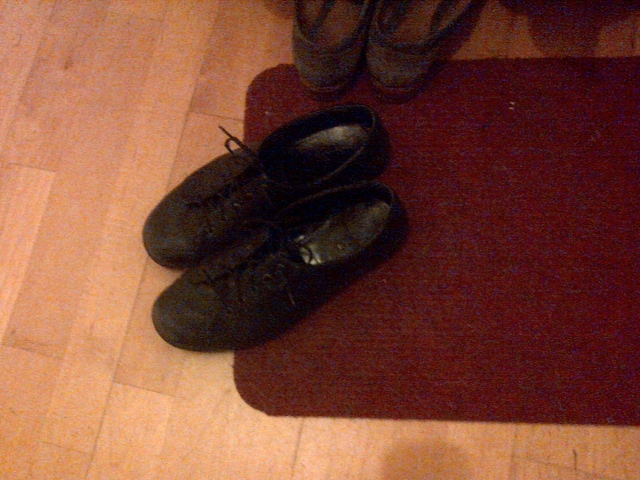
Sogol has been once to the house before, with Birthe. She takes her black shoes off and places them on the red mat. We enter the lounge, and she asks where to sit. I have swithered over this before the home visit- the hard back chairs or the L-shaped red settee? In the end I decide any visitor is always offered the comfy seat, so a ‘performer’ should be no different. I leave her in the room, to prepare to ‘veil’.

I nip out to mention to Emma that that the neighbours don’t know I am arty so they may ask questions, and that she is welcome any time to come into the hall if she is uncomfortable. It is strange that this is the only possible tension in my mind to surface before the visit. Emma, who is very cheery in her role, declines. As I move through the rooms adjacent to where Sogol is sitting, to wash my hands and to sit on my stairs, I am aware that she is in the room even though I can’t see her. It’s not quite like leaving a guest, as she has given instructions to leave her for two minutes to prepare. When the time is up, I enter the lounge. Sogol is sitting where I indicated, but further to the end of the settee than I thought she would, either to make room for me to sit next to her or to give a little distance. Her dark hair has been brought forward over her face, and roughly follows its contour, plaited in place below her chin. Her nose slightly pokes through. She sits with her socked feet together, raising her toes once in a while. I then see that she has two lengths of poppers, on black strips, which she holds in one hand and has it coil at her feet.

The kitchen clock ticks. The buses run past on the Gallowgate. Sogol slowly begins to press together each popper, like a different kind of ticker tape of time. At first I mirror how she is sitting, and wait to see if she looks for a response in me. Her face, covered in hair, reminds me of the custom of the Burryman, a male who would cover his face and body entirely in burrs. She has a benign presence, neither sorrowful nor aggressive. As she slowly fastens the strip of press studs together, it is more like she has a craft or task that she will sit to do until completion. I realise that with her presence here in the house, I could move off or around or do other things, and that gives me the freedom to draw rather than photograph her, to give me a task to do.

photo 2

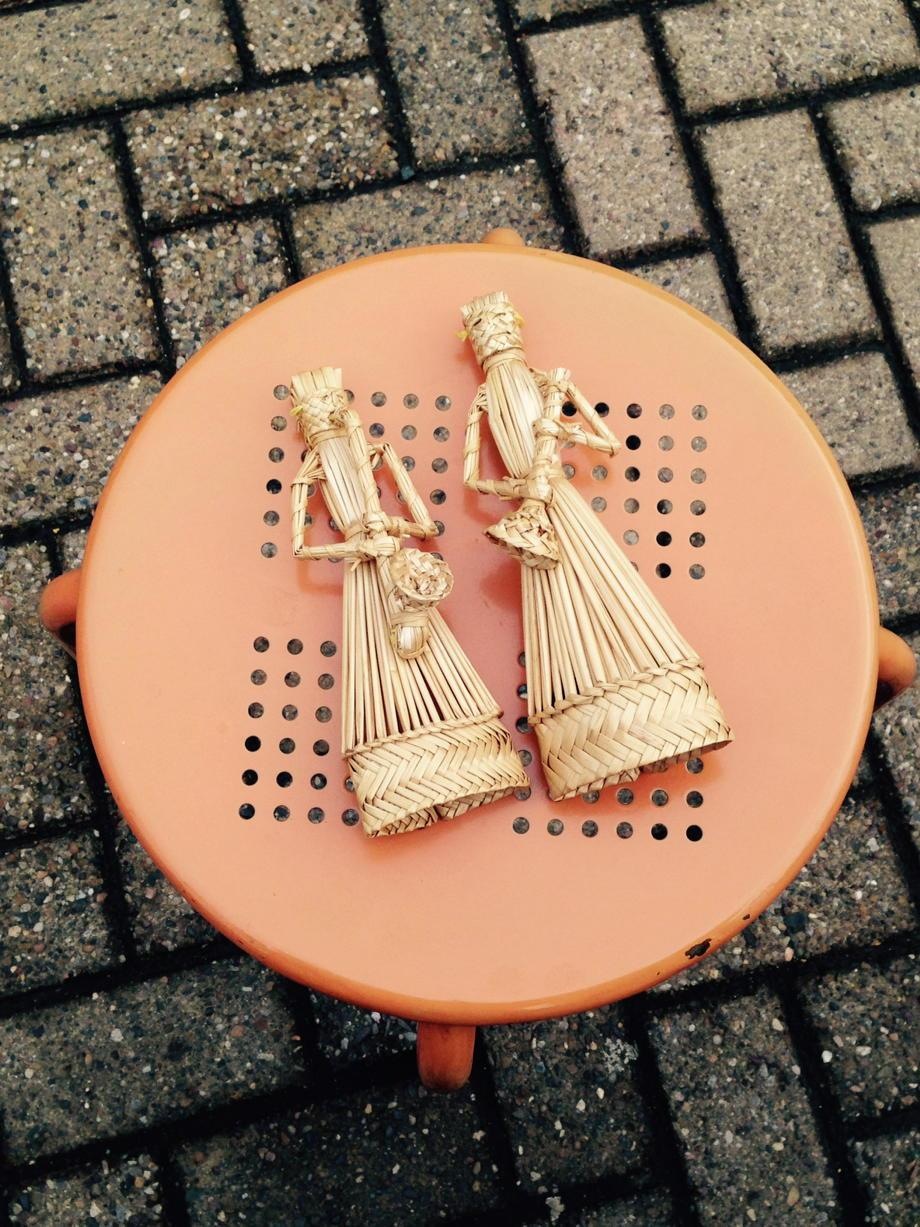
I wonder can I make her warm, as I have the window open. I can’t ask her, as speaking doesn’t feel right, so instead I keep drawing. The presence of the sitter, outside the door, is definitely one I am aware of too. It does feel like a two person piece, of the performer and the waiting person; or three if you count myself. I think about the difference between sitting with Sogol in a gallery, or sitting with her on this Home Visit. The Home Visit gives the homeowner more control in a sense to decide how to respond. I feel companionship and think of women and craft. I have two corn dollies, picked up from a Cornish charity shop, that are sitting on a shelf in the lounge. The way Sogol’s hair is plaited, their strange faces or masks and the act of women twisting the corn to make them, makes me think they are the right votives, even guardians for this home visit. I want to give my visitors something from the house.

When Sogol has completed her task with the line of press studs around half an hour later, she reaches into her pocket and takes out some hair clips and a hair band. She puts the band on the bottom of the main plait and frees the middle plait that has kept the hair over her face, drawing it backwards and re-securing it to back of her head, thus revealing her face. The performance has finished when we make eye contact. I get up and go and get the two corn dollies. I give one to Sogol, and when she has put her shoes on, I open the door. Pavel, the neighbour from upstairs, is coming down with his black and white collie Monty, who always likes me to fuss him. Pavel says hello and apologises, moving on through and down the stairs for the dog walk. Their presence nicely brings the Home Visit to conclusion, and I hand the second dollie to Emma, to signify I was aware she was there too. Sogol and Emma leave and the Home Visit is over.

14/9/15, Jenny Brownrigg

Sogol Mabadi is conducting four Home Visits as part of her residency ‘Invitation no.1: Home Visit‘ at Creative Lab, Centre for Contemporary Arts, Glasgow, Sept 2015.  Emma Reid is her assistant for the Home Visits.

photo 3


Unknown's avatar

Tell Us About

A short story ‘Tell Us About’ printed on the occasion of ‘LOCATION’, 6 Sept 2015, an open weekend at Hospitalfield, Arbroath, Scotland. Illustration: Mick Peter; Illustration Quote: Oliver Braid; Text: Jenny Brownrigg; Design: Christine Jones

Extract: [Dirk speaks slowly. It is more from tiredness than understanding the need to speak clearly to camera. The circles are visible under his eyes. They were caused by an installation that went on late into the night. Dirk is over 40 and has become used to 9 to 5s….]

Jenny_Brownrigg_Hospitalfield_image

Unknown's avatar

Colin Lindsay: Rules of the Room

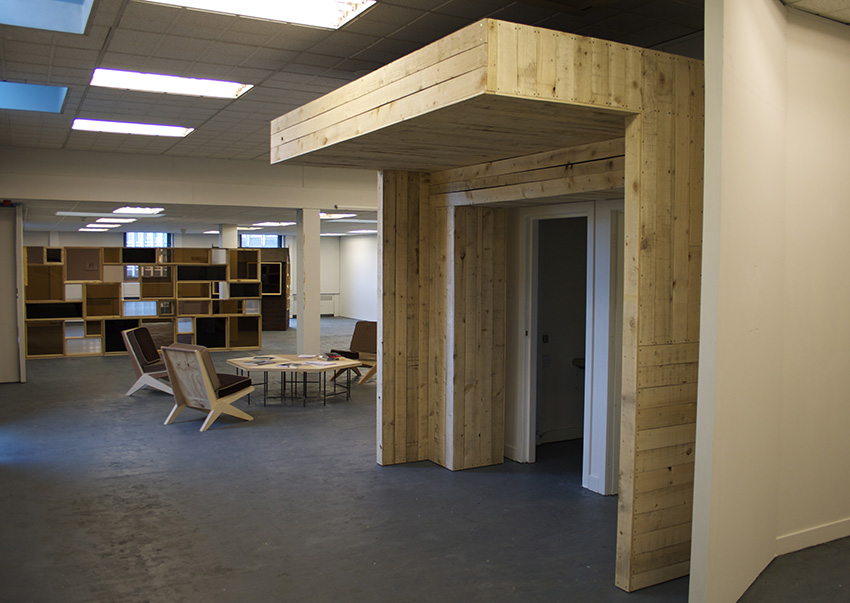
For the exhibition ‘Building Echoes’, Colin Lindsay translated back into the three-dimensional a series of architectural elements from a single found book plate depicting Le Corbusier’s Villa Shodhan. Villa Shodhan was built in 1956 in Ahmedabad, India as a private home for mill owner Shyamubhai Shohdan.  By placing the works Shodhan Screen, Shodhan Portal and Shodhan Hex Table and Chairs inside Interview Room 11, an artist-run space within Argyle House, Edinburgh, the relationship of Lindsay’s work to this particular context operates as a strange Brutalist matryoshka. Lindsay’s objects echoing Corbusier’s blueprint for Villa Shodhan are situated within a Scottish meme of Le Corbusier’s vision for urban planning. Argyle House, a 1968 office block originally providing accommodation for Government, was designed by architects Michael Laird & Partners [1]. Lindsay refers to this shared architectural lexicon as ‘trickle-down Modernism’. Basil Spence’s Hutchesontown C flats in the Gorbals, Glasgow, built in 1962 and demolished in 1993 are a further example. These buildings can be seen as urban poetics or city eyesore, dependent on the polarity of viewpoint.

Installation shot, 'Building Echoes', Interview Room 11, Edinburgh (2015). 'Shodhan Portal', 'Shodhan Hex Table and Chairs', 'Shodhan Screen', Colin Lindsay (2015). Photo: Colin Lindsay

Installation shot, ‘Building Echoes’, Interview Room 11, Edinburgh (2015). ‘Shodhan Portal’, ‘Shodhan Hex Table and Chairs’, ‘Shodhan Screen’, Colin Lindsay (2015). Photo: Colin Lindsay

With Le Corbusier as the original signal shaping both Argyle House and Colin Lindsay’s work, how is each encoded within its situation? Argyle House, which lies adjacent to Edinburgh Castle was described in a leaked City of Edinburgh planning document as a building which ‘dominated’ the surrounding area, asking for any new development to ‘respond meaningfully to the profile of Castle Rock’. [2] This document through implication refers to an antagonistic relationship through proximity between two very different eras of fortress. The latter, Lindsay’s installation within Interview Room 11, transforms the shell of an artist-led gallery into an integrated receiver, harmoniously arranged around the logic of the body and the eye. Corbusier in ‘Towards an Architecture (1923) states: ‘Our eyes are made to see forms in light; light and shade reveal these forms; cubes, cones, spheres, cylinders or pyramids are the great primary forms which light reveals to advantage; the image of these is distinct and tangible within us without ambiguity’. [3] The rules that Lindsay brought to the room allowed for a harmonious whole.

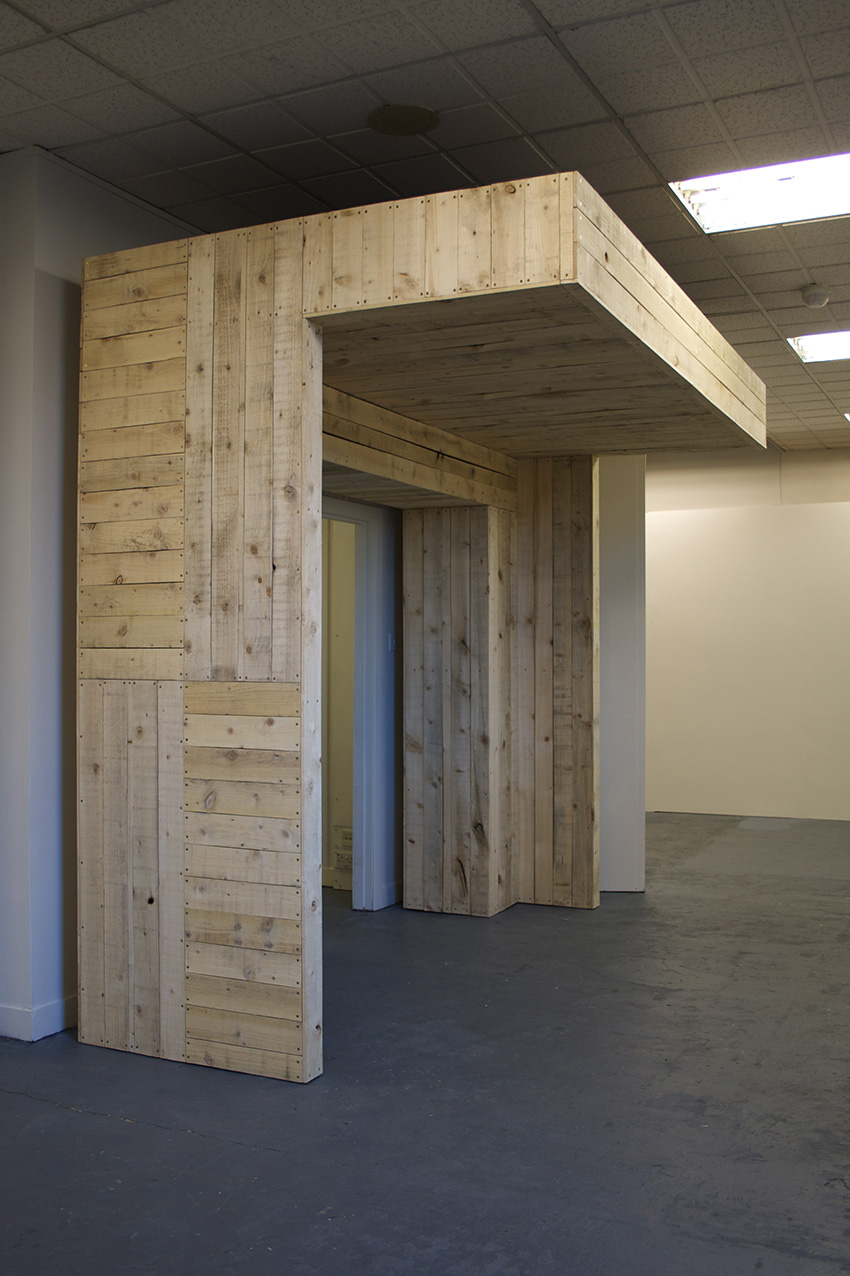
'Shodhan Portal', Colin Lindsay (2015). 'Building Echoes', (2015), Interview Room 11, Edinburgh. Photo: Colin Lindsay

‘Shodhan Portal’, Colin Lindsay (2015). ‘Building Echoes’, (2015), Interview Room 11, Edinburgh. Photo: Colin Lindsay

Shodhan Portal is key in this particular transformation of space. Made from recycled wood and left raw and primitive in construction, its dimensions and portico are monumental in scale, offering grandeur to what otherwise is a BSI [4] standard door frame. Beatriz Colomina in her essay ‘The Split Wall: Domestic Voyeurism’ suggests, In every [building] there is a point of tension and it always coincides with a threshold or boundary. [5] Placed at the liminal point of the threshold, the portal’s presence transforms this normal environment into one which reaches for another ideal.

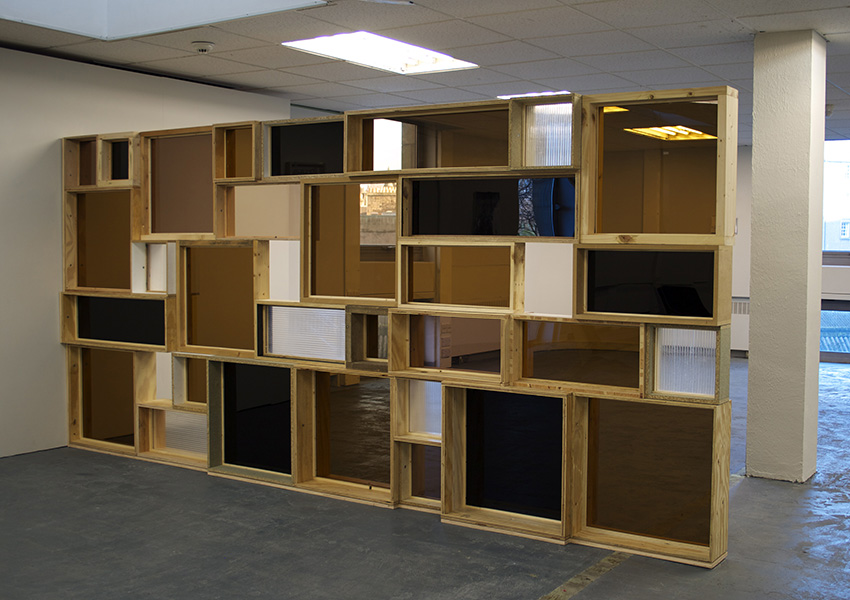
'Shodhan Screen' (2015), Colin Lindsay. 'Building Echoes' (2015), Interview Room 11, Edinburgh. Photo: Colin Lindsay

‘Shodhan Screen’ (2015), Colin Lindsay. ‘Building Echoes’ (2015), Interview Room 11, Edinburgh. Photo: Colin Lindsay

Lindsay’s approach to making is process-led, conducting a kind of archaeology of the image. Working from the found photograph of Shodan Villa combined three types of understanding or rules; the application of universally accepted principles, guess work and embodied knowledge. Some dimensions could be secured through BSI standards. For example, with the scissor chairs Lindsay used the accepted height of a chair. Others measurements were relational to the artist’s own body, such as his height compared to the potential height of the Shodan Screen. With Lindsay as the translator, the very act of making also allowed an insight into the decision process of the original transmitter, the architect. The architect Howard Roark in Ayn Rand’s novel ‘The Fountainhead’ (1943) looks at elements of nature and immediately translates it into the manmade, which he sees as having supremacy over the former:

“He looked at the granite. To be cut, he thought, and made into walls. He looked at a tree. To be split and made into rafters. He looked at a streak of rust on the stone and thought of the iron under the ground. To be melted and to emerge as girders against the sky”. [6]

However, to enter the physical space of the gallery is not to enter the photograph. Too much is retained of the architectural context of Interview Room 11 to allow for this work to be a direct replica of the Shodan Villa interior. The resulting work is rather a play between these objects and the context. Lindsay made some significant alterations to the gallery space, unblocking windows to let light and views from the outside in, and removing a free standing partition wall to allow for the flow of the space. He also chose what remained in terms of what features were to be amplified or hidden. There are four doorways that exist within the space; the gallery entrance; the original interview room the gallery takes its name from; the gallery office; and the introduced smaller Shodhan portal on Shodhan Shed. The recycled materials and natural colour palette that Lindsay uses to transcribe Corbousier’s Shodhan Screen, portal, chairs and table play off the weirdness of the modern office materials of ceiling tiles and woodchip, lending a precision to the surroundings. By introducing elements from a very different kind of space for living, Lindsay is playing with the notion of the artist-led gallery which can humbly spring up in any empty interior, like the hermit crab who inhabits another’s shell.

'Shodhan Hex Table' (2015), Colin Lindsay. 'Building Echoes' (2015), Interview Room 11, Edinburgh. Photo: Colin Lindsay

‘Shodhan Hex Table’ (2015), Colin Lindsay. ‘Building Echoes’ (2015), Interview Room 11, Edinburgh. Photo: Colin Lindsay

A further element which moves the installation away from the original and the photograph is the heightened embodied experience of the gallery visitor. In a sense Lindsay’s work makes the original Shodhan House inhabitable and publicly accessible. The owner of the original has kept the house private throughout the lifetime of the building. Passing through the Shodhan Portal, the interiorscape of the gallery opens out as a strip, curving out in front of the viewer. Walking to the end of the space, past the seating area, the screen and hut, the person looks out of the windows only to perceive that the floor they are standing on and room they are in is suspended in space. Looking around, the eponymous cladding of white walls are dotted with the past marks of nails and pins. Interview Room 11 also retains some features of its past use. There are columns or totems of computer plug sockets. Areas of wood chip wallpaper stubbornly hold onto some of the pillars. A low polystyrene seventies tile ceiling is mostly intact. Sections have been removed to reveal segments of bare neon tube lighting. A sequence of opaque pyramid  roof lights dot through the space also. There is an omnipresent buzz of the building beyond. A far off door shuts. As the pages of suggested reading matter are turned at the Hex desk, the wind whistles off the Castle’s volcanic plug and echoes in a loose fitting window and pipe. Strips of plastic bags are caught on the branches of trees outside, making an informal wish tree.

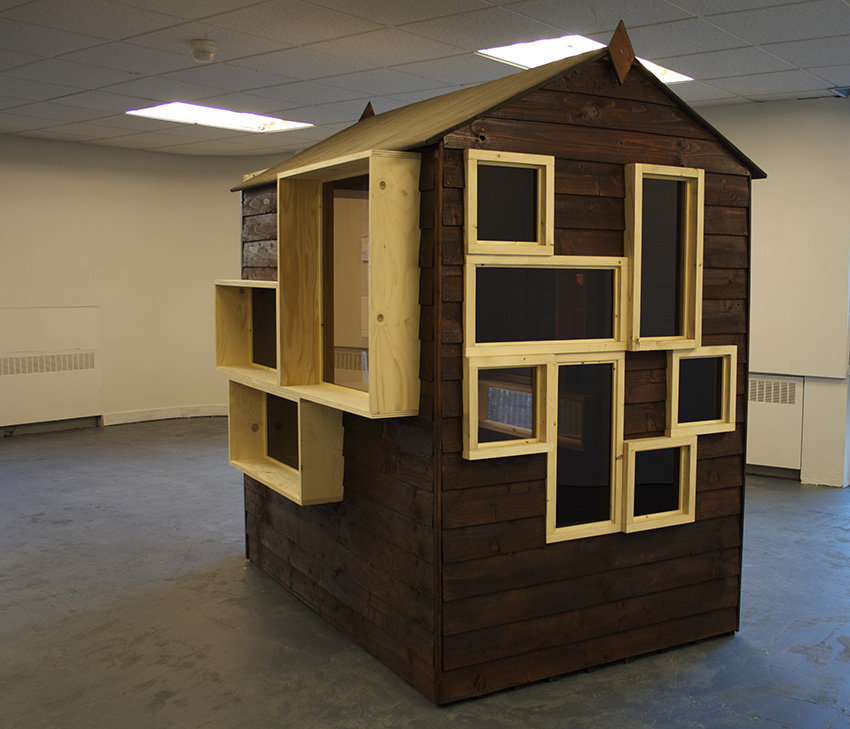
'Shodhan Shed' (2015, Colin Lindsay. 'Building Echoes' (2015), Interview Room 11, Edinburgh

‘Shodhan Shed’ (2015), Colin Lindsay. ‘Building Echoes’ (2015), Interview Room 11, Edinburgh

Within this setting, The Shodhan Screen takes the visual form of Corbusier’s brise-soleil; a wall divider with built in sun screen apertures to allow for ventilation, creating the opportunity to bring the outside in. This interplay of interior and exterior is also represented with Shodan Shed, which lies at the centre of this Brutalist Russian Doll. It is the only element introduced by Lindsay that is not directly taken from the photograph of Villa Shodhan.  The doorway on such a humble shelter has been given a smaller version of Shodan Portal. The side is clad in a single unit of the brise-soleil design. For Lindsay this structure is reminiscent of a chantry chapel or altar, a little building of difference, built inside a larger building.

Lindsay has been working on what he calls ‘parallel objects’ over several years, with recent sculptures that refer to designs by Breuer, Rietveld and Le Corbusier. Whilst these sculptures use the original as a blueprint, their transcriptions through material and intention are neither copy nor reproduction.  Time, distance, site and the evident craft skills of Lindsay make these works unique rather than a simulacrum.

Rules?” said Roark. “Here are my rules: what can be done in one substance must never be done with another. No two materials are alike. No two buildings have the same purpose. The purpose, the site, the material determine the shape. A man doesn’t borrow pieces of his body. A building doesn’t borrow hunks of its soul. Its maker gives it the soul and every wall, window and stairway express it’. [7]


‘Building Echoes’, Colin Lindsay, Alberto Condotta, Interview Room 11, Edinburgh 16-31 January 2015

Footnotes

[1] Argyle House also complies with Le Corbusier principle of erasing the past, co-existing in proximity only, with the 700 million year old extinct volcano of Castle Rock and Edinburgh Castle. Laird & Partners, the architects of many buildings across Edinburgh were innovators of the possibilities of a building sustaining itself. Laird designed the Computer Centre in Fettes Row for the Royal Bank of Scotland, reusing the energy from its computers to heat the offices. The architects also commissioned artists as part of their buildings. There is a John Bellany mural in the building of the White Fish Authority; an Eduardo Paolozzi at the RBS building in South Gyle and work by Gerald Laing at the Standard Life Building. With artists and creative organisations housed in Argyle House in present day, it is pleasing that artists are once more located in this building.

[2] ‘West Port / Kings Stables Road Development Brief’, draft for consultation, Planning Committee, City of Edinburgh Council, 6 August 2009.

[3] Corbusier in ‘Towards an Architecture (1923)

[4] British Standards Institute was established in 1931 after work since 1901 by the engineering Standards Committee to bring in standard sizes to goods such as iron and steel being manufactured. The Architects Journal Handbook contains regulatory and legislative guidelines relating to building structures and standardized measurements.

[5] Beatriz Colomina, ‘The Split Wall: Domestic Voyeurism, ‘Sexuality and Space, Princeton Papers on Architecture, Princeton Architectural Press (1992), P.95.

[6] ‘The Fountainhead’, (1943) Ayn Rand, P.16, Penguin Modern Classics.

[7] Ibid, P. 30.

Unknown's avatar

Finlay Mackintosh can dance

We look at the new model of the old Mackintosh Library that is held inside the mint green egg of the new glass building at The Glasgow School of Art, whilst the old Mackintosh is being restored. Finlay Mackintosh (b.1953) tells me about his namesake’s empathetic architectural touches. The Scotland Street School had windows positioned in the cloakroom in such a way that the sun’s rays would come through and dry the coats of the children when they were in class.

Detail, 'Park in bloom', (2014), Finlay Mackintosh

Detail, ‘Park in bloom’, (2014), Finlay Mackintosh

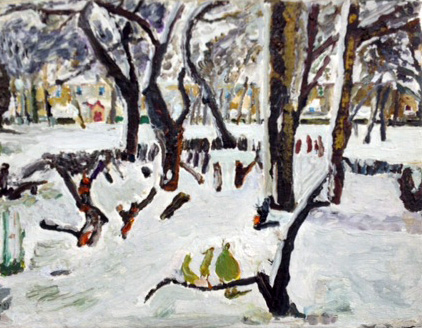
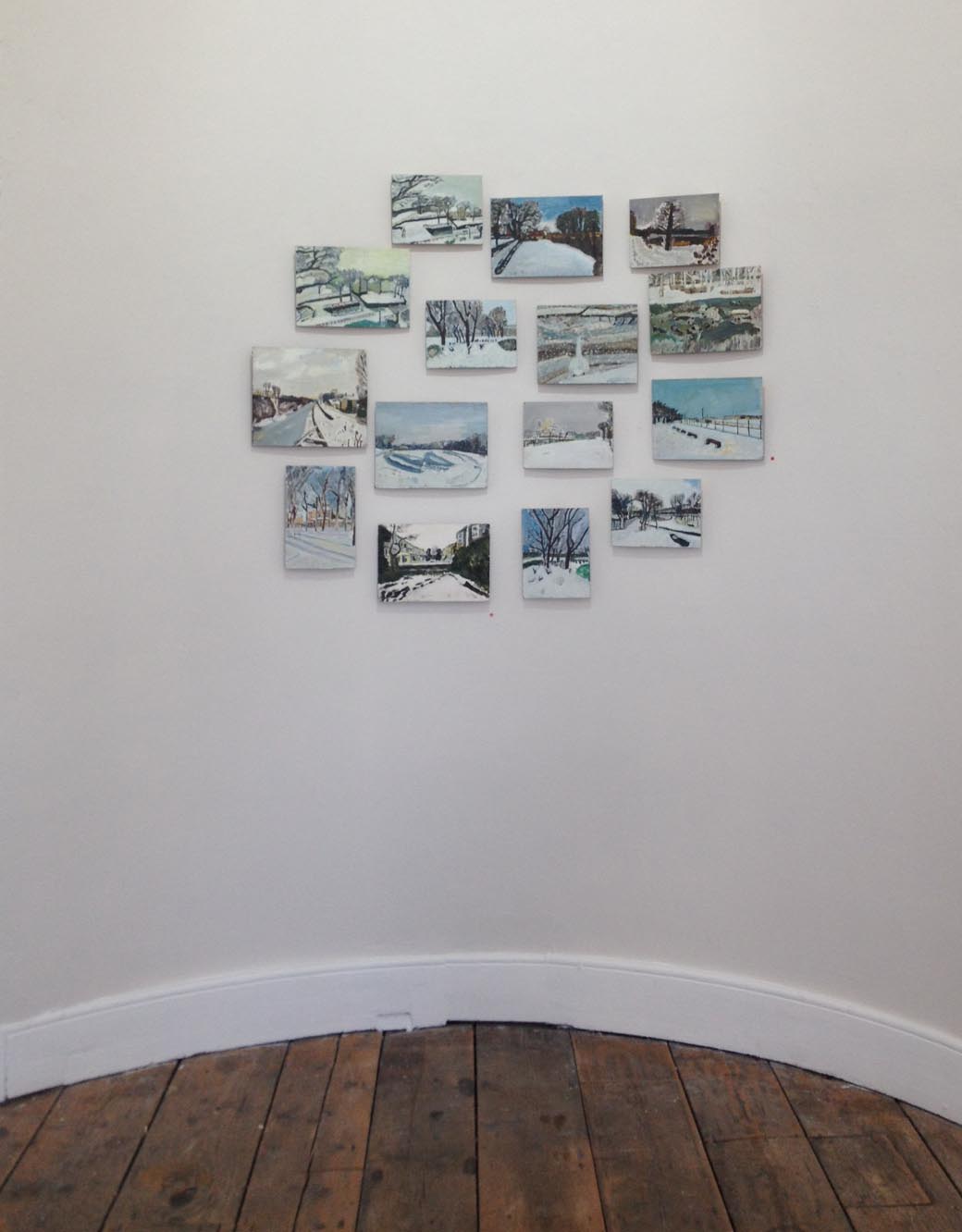
'Park in snow' (2014), Finlay Mackintosh

‘Park in snow’ (2014), Finlay Mackintosh

Finlay Mackintosh can talk. He tells me that over the years he has copied works of the masters like Van Gogh, Gauguin and Rembrandt, to understand the painting from the inside out, beginning in the hidden heart of the painting rather than the surface. “If I only learn one percent from each artist I’ll be ninety five percent better at the finish!

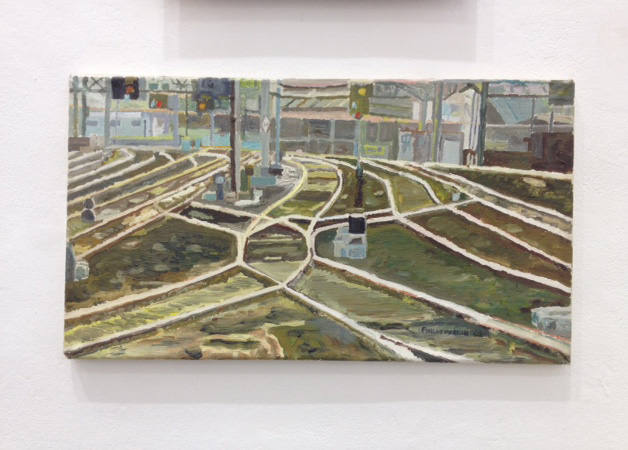
'Railway Tracks, Central Station' (2014), Finlay Mackintosh

‘Railway Tracks, Central Station’ (1995), Finlay Mackintosh

Mackintosh was inspired by his aunt Isobel whose house, he recalls, was crowded with many artworks including a painted cigar tin and a small, perfect flower painting by Scottish Colourist JD Ferguson; as well as mantelpiece paintings, long and thin, by James Morrison (1932-). Morrison was well known for painting pictures in the 1950s’ of recently derelict Glasgow tenements. Mackintosh’s aunt had been secretary to Dr Tom Honeyman, Director of Glasgow’s Museums and Art Galleries. Her husband had been the conservator who had restored the slashed, controversial Salvador Dali painting ‘Christ of St John of the Cross (1951) after it had been attacked by a visitor in 1961. Honeyman had bought that painting for the city. From seeing his sketchbooks, and realising that a love of art had been handed down in the family, Finlay Mackintosh’s aunt encouraged him to take his skills further.

He began attending art school evening classes, firstly in graphics. When homework assignments were set, he would bring in six responses to everyone else’s one; the first signs of as what he coins, a “profundicity”. The graphics tutor advised him his talents and production lay in painting. Mackintosh still continues to enjoy classes, regularly attending the life drawing class at The Flying Duck in Glasgow’s city centre. Levitating pencil drawings of recumbent women are drawn in lines that are simple and sure.

We are settled in the art school canteen now. The paintings we look at on his Smart Phone, whilst diverse in subject matter, all share a confidence in paint, a love of detail and a talent for colour and shape. There is the subject matter I am familiar with, from his sales two years ago through a charity shop on Sauchiehall Street. Dancing paintings of civic spaces captured through the seasons, over the years, include the flower beds and trees of Glasgow’s green parks.

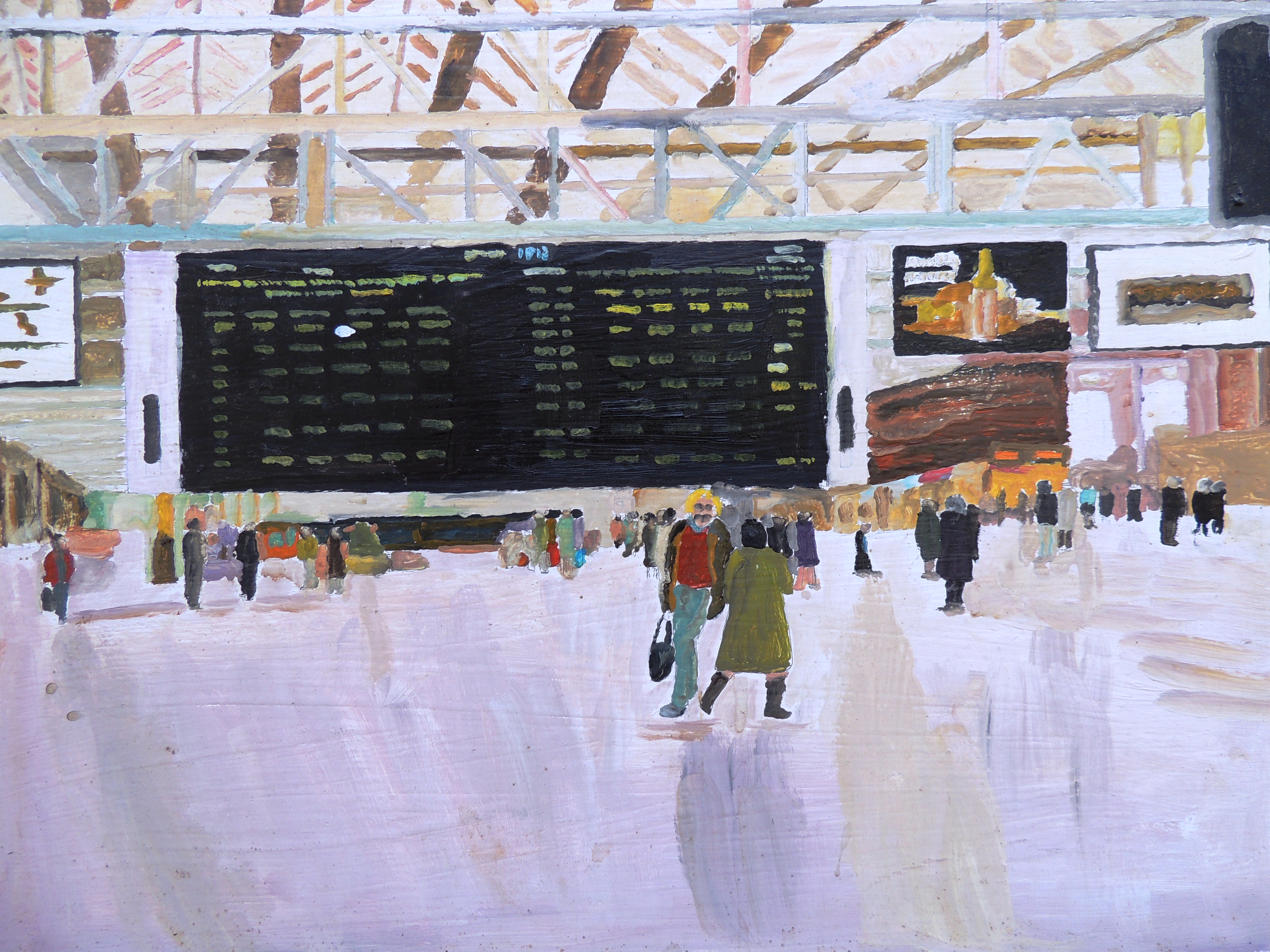
'Central Station' (2015), Finlay Mackintosh

‘Central Station’ (2015), Finlay Mackintosh

'Buchanan Street Buskers' (2014), Finlay Mackintosh

‘The Highlanders, Buchanan Street’ (2014), Finlay Mackintosh

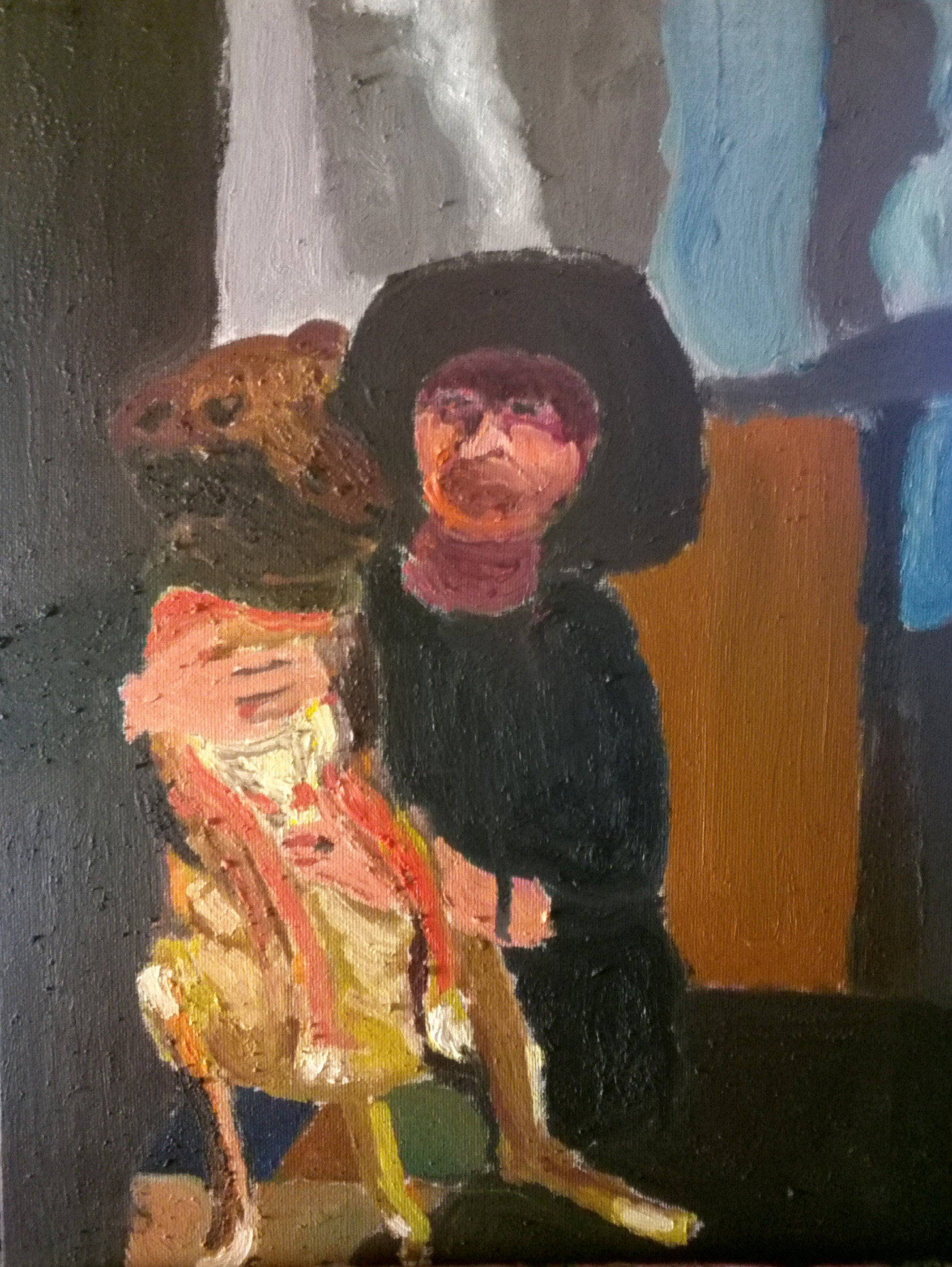
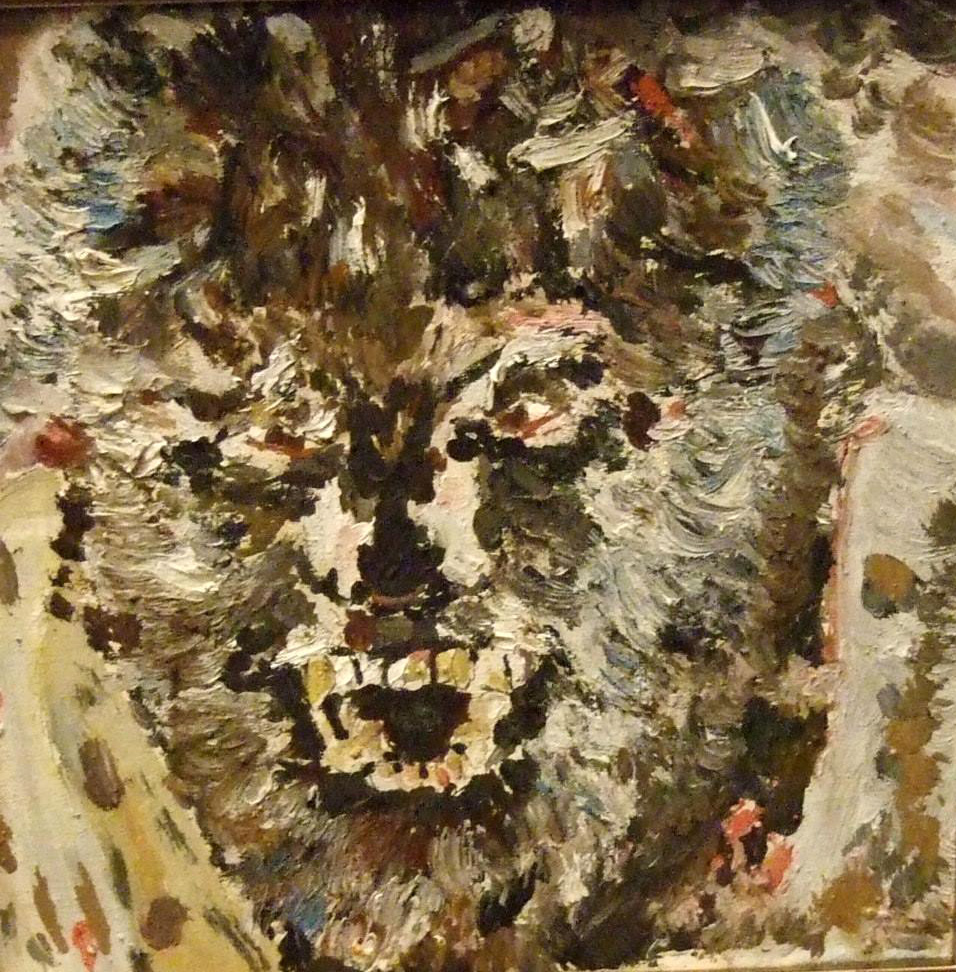
There are new paintings of the city captured in its bustle, with crowds thronging at Glasgow Central Station and another one capturing the festival atmosphere of the June festival the Glasgow Mela. There are a series of scenes which come from further afield from his past travels to Paris, Venice and Amsterdam. Surprisingly, another strong theme is films. One particularly eye-catching image sees a werewolf’s head crowding the frame with his fur painted in thick impasto. Mackintosh tells me he has also made a painting of Doctor Who’s tardis. A particular favourite of mine is a painting of a woman with her dog. He has captured the lean of the dog into her body, and introduced really contrasting planes of colour with a vibrant purple over her forehead, and white ‘socks on the sandy dog’s front paws. Mackintosh explains he is interested in the ‘pull’ of the picture; its ability to connect with a particular viewer to draw them into its depths. The painting should not be flat but have life in it. He always finishes what he starts, because if he doesn’t, he sees it “as the beginning of excuses”.

'Joanna and Frank' (2014), Finlay Mackintosh

‘Joanna and Frank’ (2015), Finlay Mackintosh

'Untitled' (2014), Finlay Mackintosh

‘The Wolfman’ (2011), Finlay Mackintosh

Mackintosh has accrued fans for his work over the years, with Peter Howson visiting him in the nineties and buying six works. He describes how two years ago, three Cornish artists got in touch, getting his phone number from contact details he wrote on the reverse of the hardboard paintings he put into the charity shop. He recalls them visiting his home in Springburn where he makes all his work- “I could see right away they were very respectable, very well dressed.” They were amazed by his level of output- he normally paints one picture a day- and bought several paintings to take back to Cornwall with them. Most recently a school teacher Hazel Walker visited him, and told her sister Audrey, who was a friend of a curator at The Dock in Carrick-on-Shannon, that they really must see his work.  This has resulted in his solo show ‘Selected Everything’ ( 10 April-6 June 2015). The paintings, kept unframed in parts, are cleverly hung in sections, creating schematic globes of how Mackintosh sees the world on the gallery walls.

Installation shot, 'Selected Everything' (2015), Finlay Mackintosh, at The Dock, Carrick-on-Shannon

Installation shot, ‘Selected Everything’ (2015), Finlay Mackintosh, at The Dock, Carrick-on-Shannon

Mackintosh defines an artist as someone who is, “always seeking without knowing exactly what you are wanting to find“. He recalls the last work Charles Rennie Mackintosh made, painting a lobby and stairwell of a Chelsea apartment for a London client. There was a public outcry about the work, as it was painted using only yellow and black. They did not realise that it was because the client was colour blind that Mackintosh had used only colours he could see.

Finlay Mackintosh can dance. He is off to a jazz class in the evening, where he may not be able to do box splits, but can, he tells me, do unusual bends that the others cannot.

Unknown's avatar

Florrie James: O.K. Rick

My review for Map Magazine of Florrie James’ film ‘O.K. Rick’ (2014) which was screened at Glasgow Film Festival in Feb 2015. ‘O.K. Rick’ is the outcome of Florrie James’ Margaret Tait Residency at The Pier Arts Centre, Orkney in 2014.

‘O.K. Rick’ (2014) dir. Florrie James


Unknown's avatar

Charlotte Prodger: microsphaeric howard hughes heaven movie

My review for Afterall Online of Charlotte Prodger’s performance ‘microsphaeric howard hughes heaven movie’ at Tramway, Glasgow, on 19 September 2014. This performance was part of ‘GENERATION: 25 Years of Contemporary Art in Scotland’ programme.

'microsphaeric howard hughes heaven movie' (2014), Charlotte Prodger. Performance view, Tramway, Glasgow. Photo: Martin Clark. Image courtesy Kendall Koppe, Glasgow

‘microsphaeric howard hughes heaven movie’ (2014), Charlotte Prodger. Performance view, Tramway, Glasgow. Photo: Martin Clark. Image courtesy Kendall Koppe, Glasgow

Unknown's avatar

Contemporary Curating in a Heritage Context

bookcover

My chapter ‘Contemporary Curating in a Heritage Context’ appears in new publication ‘Advancing Engagement’ in ‘A Handbook for Academic Museums’. It details my approach to curating the public exhibitions programme in the Mackintosh Museum, Mackintosh Building, The Glasgow School of Art, from 2009-2014. Brownrigg, J (2015), ‘Contemporary Curating in a Heritage Context’, Gold, MS & Jandl, SS (Eds.), ‘Advancing Engagement; A Handbook for Academic Museums Vol.3’, Museums Etc, Edinburgh and Boston, pp 211-241