Unknown's avatar

Documenting 1930s’ Scottish Highland and Islands life- M.E.M. Donaldson, Jenny Gilbertson and Margaret Fay Shaw

Research note 1: Jenny Gilbertson- Shetland research visit, October 2015.
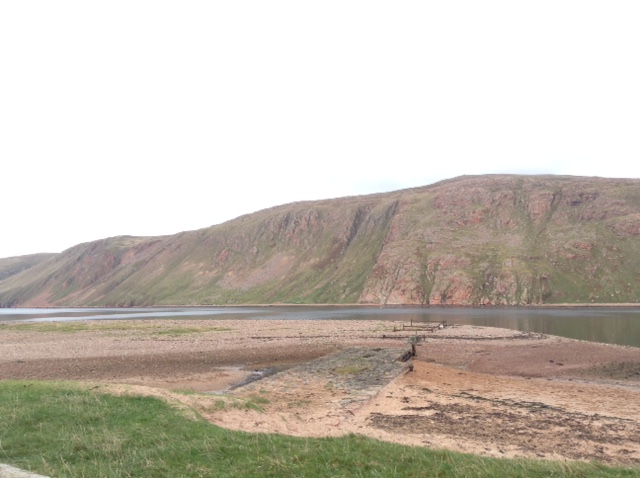
Heylor, Shetland.

Heylor, Shetland- one of the locations for ‘Rugged Island’ (1932) Jenny Gilbertson.

Thanks to research leave from The Glasgow School of Art, I have three months away from my role as GSA Exhibitions Director, to work in depth on one piece of written research. I will be looking at Margaret Fay Shaw (1904-2004), Jenny Gilbertson (1902-1990) and M.E.M. Donaldson (1876-1958), in particular their photography or filmmaking from the 1930s’, a period where all three women were independently documenting different aspects of Scottish Highlands and Islands life, having moved to live with the communities they were witnessing.  My aim is for these posts to serve as an introduction or notebook to my research and as an aid to help record, excavate and edge closer to the key points to write about.

As an early career researcher, this is the first experience I have had of working alongside other researchers on the same subject. I am incredibly lucky to be part of a motivated group of women all inspired by Shetland film maker Jenny Gilbertson– Shona Main, a writer and film-maker currently working on a biography of Gilbertson; Dr Sarah Neely, University of Stirling, who has written in particular about Gilbertson’s later work in the Arctic; and Joanne Jamieson from Shetland Moving Image Archive who is writing about Gilbertson and working to gather all Gilbertson’s films in the archive. I have been impressed by and grateful for their openness in sharing their knowledge and field work.

My first research visit has been to Shetland and the Shetland Museum and Archives in Lerwick (thanks to Brian Smith, Blair Bruce and Angus Johnson), to look through their material on Jenny Gilbertson. This resource has mostly been gifted by her two daughters Helen Thomson and Ann Black who live on Shetland.
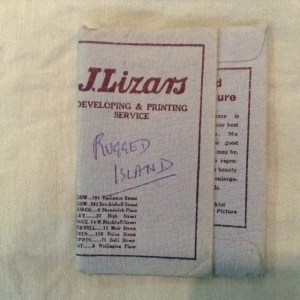
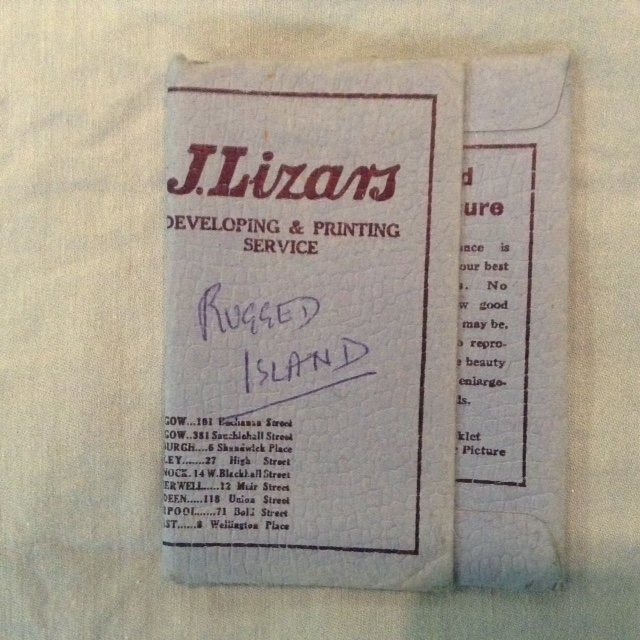
'Rugged Island' photograph holder, Shetland Museum and Archives.

‘Rugged Island’ photograph holder, Shetland Museum and Archives.

These important holdings include Gilbertson’s correspondence over her lifetime, both personal and professional;  the interpretation material she wrote about her work including autobiographical notes and film synopsis; press cuttings, in particular relating to her later filming in the Canadian Arctic with the Inuit; reflections and references from others about her work including a recommendation from her peer, filmmaker Elizabeth Balneaves (1911-2006), a letter and review of her early work by John Grierson (1898-1972) and feedback from the teachers and pupils of the schools she personally toured her films to; ephemera from film screenings and lecture tours that she undertook including some posthumous material; photographs from both her family and professional life, the latter including photographs from her early lecture tour to Canada in 1934-5 as well as from the period in her seventies and eighties living at Coral Harbour and Grise Fiord filming the Inuit; reference material she had compiled relating to subjects that interested her, both historical and contemporary; some of her film outlines and drafts, including a radio play ‘Busta House’ (1955) and essays she sent to magazines; and raw material including 35mm negatives from ‘Rugged Island’(1932) and ‘Prairie Winter’ (1934) as well as sound reels of recordings made in Coral Harbour and Grise Fiord. Shetland Museum and Archives have begun the process of cataloguing this collection.

The importance of the archives has been threefold – to see how Gilbertson saw herself and her work, through her own words and through others; to gain insight into her motivations for filming; and to understand the conditions she had to navigate as an independent filmmaker throughout her career, including those with the film and TV industry.
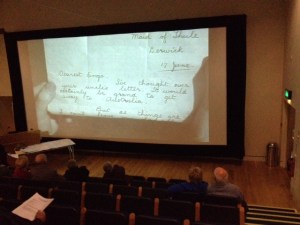
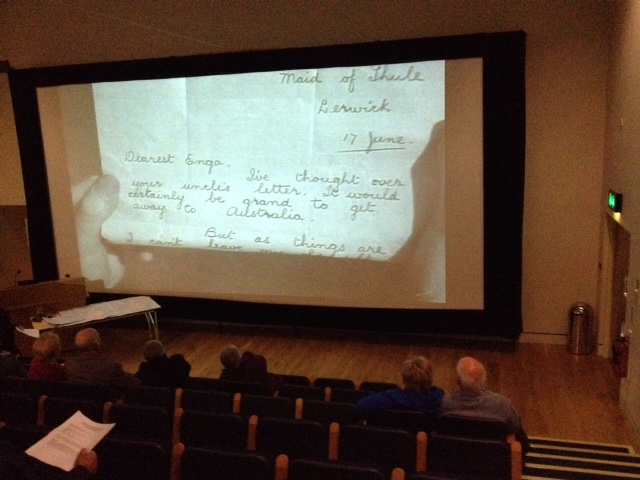
Screening of 'Rugged Island' (1932) at Shetland Museum and Archive. Photo: Joanne Jamieson

Screening of ‘Rugged Island’ (1932) at Shetland Museum and Archive. Photo: Joanne Jamieson

During the time I was in Shetland, Shona Main along with Shetland Moving Image Archive’s Joanne Jamieson, staged two screenings of Gilbertson’s 1930’s films (11 & 15 Oct 2015). The first in Lerwick at Shetland Museum was a screening of ‘Rugged Island’ (1932), the sound version with original score by Kenneth Leslie Smith. The second, to a packed village hall in Hillswick, where Gilbertson and her family had lived, showed her first film ‘A Crofter’s Life in Shetland’ (1931) alongside a number Gilbertson went on to make and sell to Grierson and the G.P.O. Library: ‘Cattle Sale’ (1932), ‘Da Makkin o’ a Keshie’ (1932), ‘Peat From Hillside to Home’ (1932) and ‘In Sheep’s Clothing’ (1932).
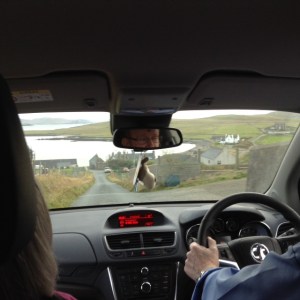
Site visit with David Anderson to Hillswick. Heylor and Eshaness

Site visit with David Anderson to Hillswick, Heylor and Eshaness.

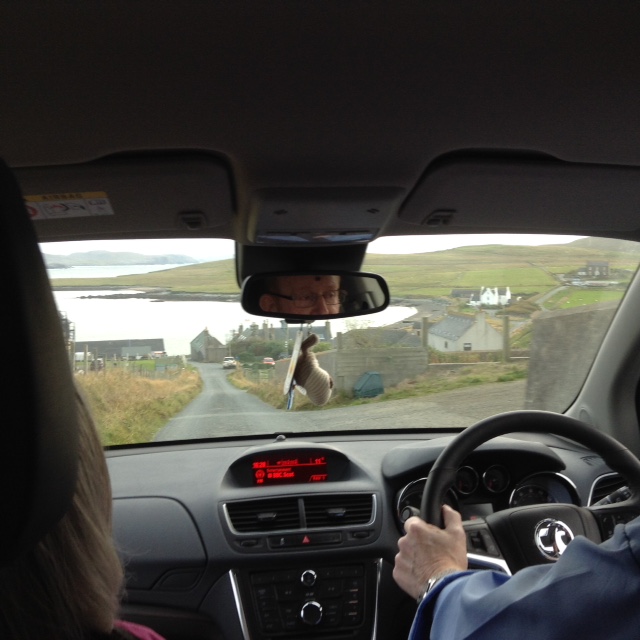
As well as showing these films, the aim of the screenings was for Main and Jamieson to find out and record from the audience if they knew the locations and people within the films. They did this following the screenings by going through the films again and using them as an ‘aide memoire’ to prompt discussions on who it was and where it was in different scenes. This proved to be a successful method, in particular leading to a subsequent site visit with David Anderson (Davie a’ Hammar), a member of the audience from the Lerwick screening who had been taught by Gilbertson at Urafirth Primary School. He drove Shona, Joanne and myself around Hillswick and Eshaness areas before the second screening, to locate the croft and ruined cottage that Gilbertson’s husband Johnny Gilbertson had worked on, at Heylor, for part of the ‘Rugged Island’ (1932) set.
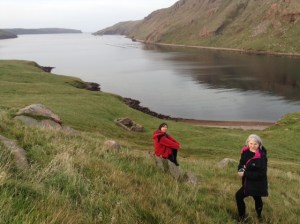
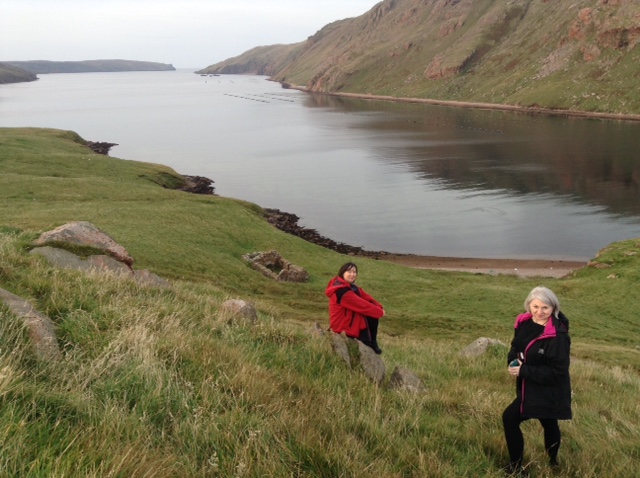
Joanne Jamieson and Shona Main at Heylor, with the croft in background from 'Rugged Island' (1932)

Joanne Jamieson and Shona Main at Heylor, with the croft in background from ‘Rugged Island’ (1932)

The experience of this research visit to Shetland has been immersive – from the darkness of the film screenings where people and places came to light, to the richness of material in the archives. I had not contended for the feeling of exhilaration that results from the first connections to occur through research, source material, conversation and of being out in the landscape on the trail of Jenny Gilbertson.



Unknown's avatar

Sorrow and Stones

“The stone was dipped in some water, where, in defiance of nature, it floated miraculously on the surface like an apple or a nut, for that which the saint had blessed could not be made to sink.” 1

Through listening to the artists’ presentations and talks on Raasay, there have been a number of links to stones and sorrow.

Ceara Conway, the artist commissioned to make work for the Derry~Londonderry knot on the Spiral, has been part of our group and gave a talk on Tuesday night on her practice and this particular project. As part of her research she visited the Stone of Sorrows at Gartan, St Columba’s birthplace in Co. Donegal. This was the stone it is said St Columba laid down and slept on, during his last night on Ireland before he was exiled. He was so full of loneliness and sorrow, but as he lay on the stone, the stone took these feelings away from him. Ceara went on to say that the stone became a site of ritual, for those leaving Ireland through the ages, in exile or emigration, to spend their last night in Ireland there. This longing and sorrow became part of her performance and sung lament, ‘Vicissitudes’, which took place in a boat on the River Foyle.

Kathryn Maude from King’s College London gave her talk last night to the group on her area of research, looking at the texts both on and by women in the Medieval period. With so few texts remaining- approximately 5 letters and 2 poems over a 500 year period- she read a section from ‘The Wife’s Lament’ in Old English, which is written in a woman’s voice. “I sing this poem full of grief, full of sorrow about my life”. 2 Kathryn went on to say as well as the distance in time she feels from these women there is also an ’emotional gap’.

Jessica Ramm sang the Gaelic song “The Cave of Gold” as part of her presentation, where a playing piper ventures deeper and deeper into a cave, in search of gold he has heard lies at the base of it. Those outside can hear the spiral of sound moving away from them, getting fainter and fainter, until the sound of the pipes at the end is transformed into unbearable discord, as the piper has met his end with the ‘Green She-Bitch’.

Over the course of this residency, the scholars and artists have offered several texts and song from different languages and times, including Latin, Gaelic, Irish Gaelic and Old English. Performing these to the group, it brings forward Professor Clare Lees’ notion of performative time: “See! Look! We’re here!” Rather than time being linear, in this moment the link to emotion and voice brings the past breaking through the surface of the present.


1 ‘Life of St Columba’, p.182′, Adomnan of Iona
2 ‘The Wife’s Lament’, translated by Eavan Boland, ‘Making New the Word-Hoard. The Word Exchange: Anglo-Saxon poems in translation’, edited by Greg Delanty and Michael Matto, published by Norton

Lewisian Gneiss, Raasay

Unknown's avatar

Encountering Some Questions on the Spiral

Brochel Castle

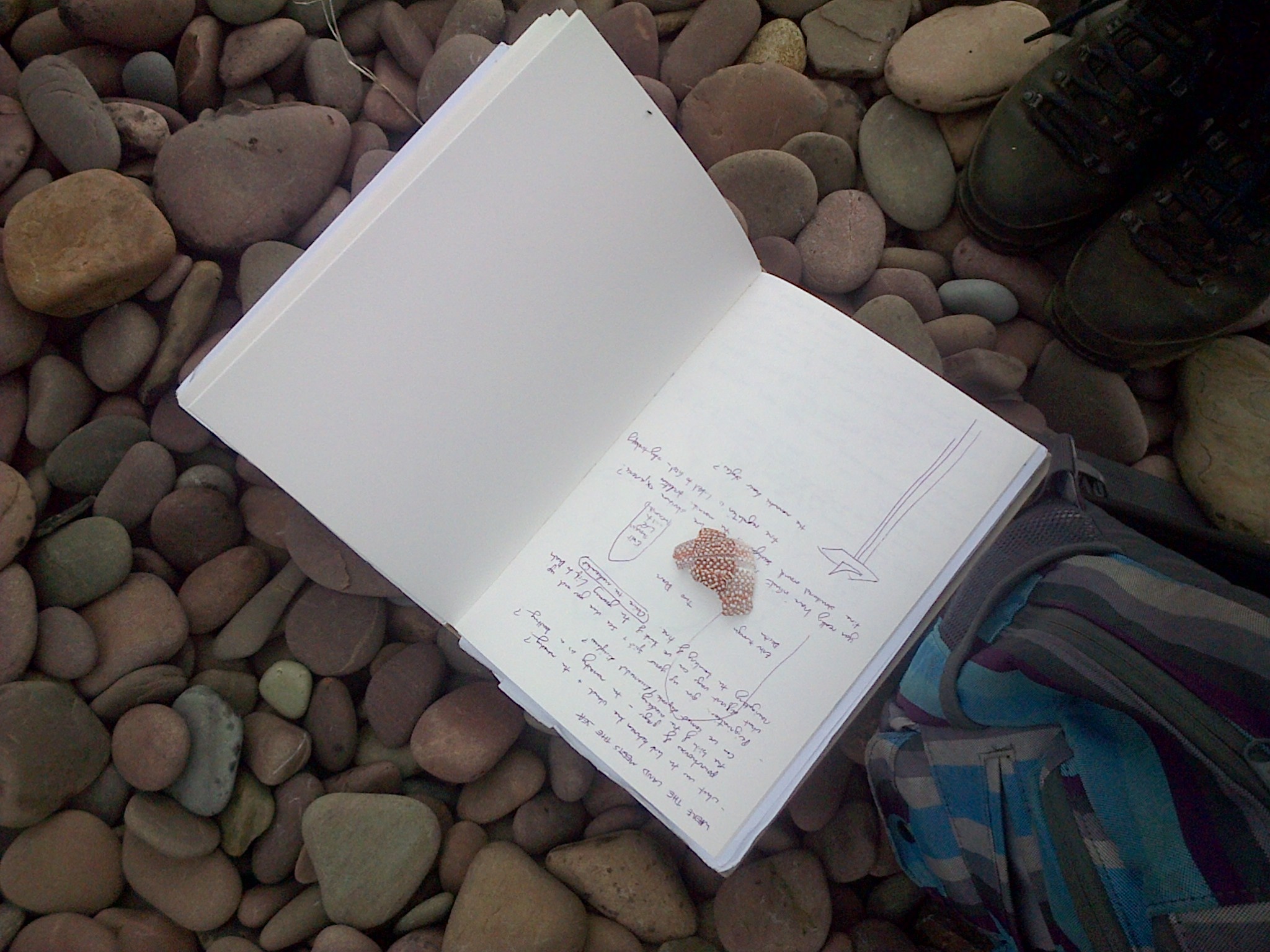
Jessica Ramm's sketchbook

Raasay Field Trip

The group at iron ore mine

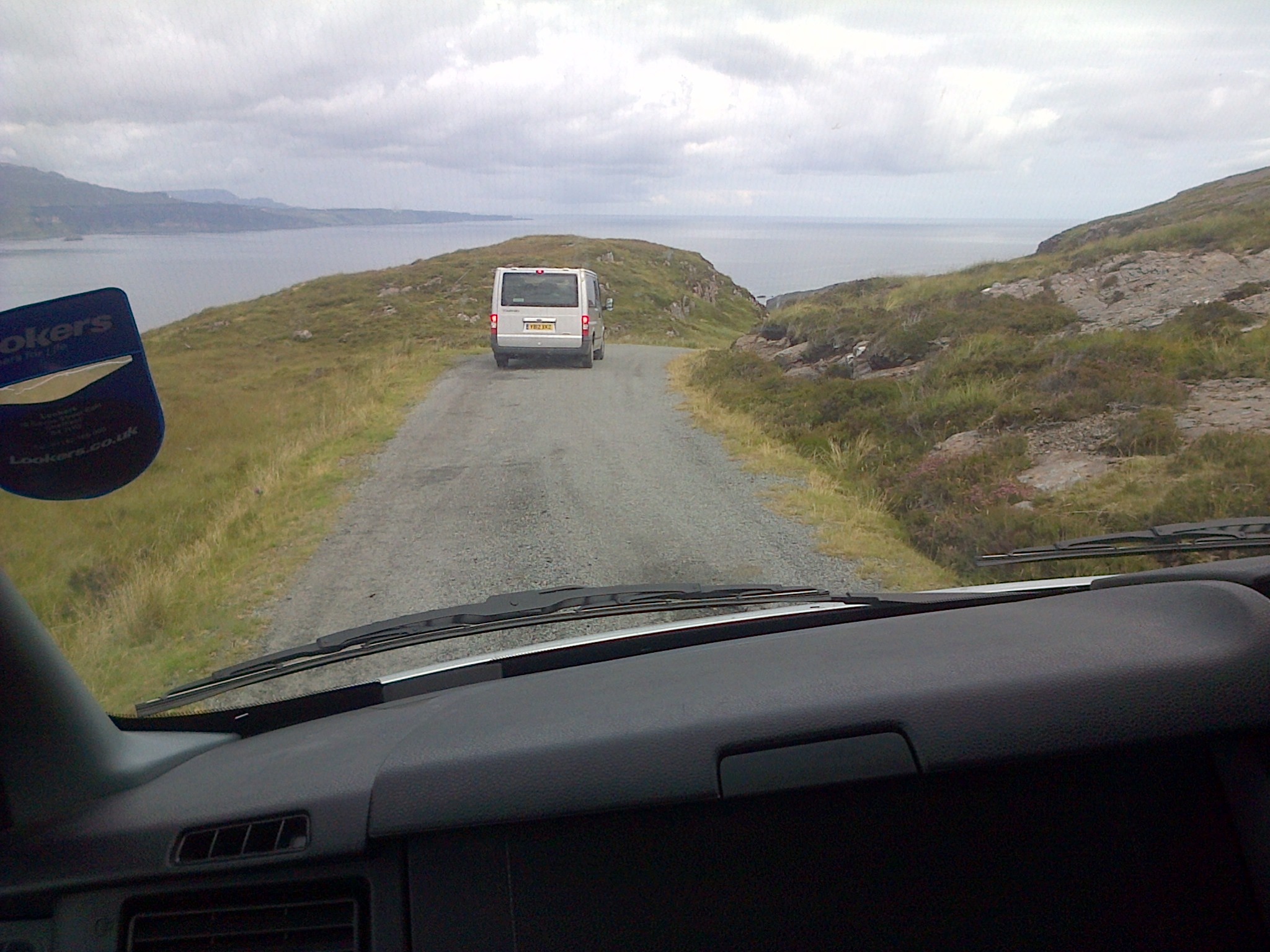
Today the group journeyed by minibus to both the north and south of Raasay. In order to find a foothold in history, and to find a way from our contemporary perspective to respond creatively to the legacy of Colm Cille, Convocation has been structured to begin with a series of questions that can give the historic background to themes that have been identified to be of interest, and also to offer the opportunity to engage with and open up the subjects through discussion within the group. The questions were illuminated by Professor Clare Lees and Kathryn Maude from Centre for Late Antique and Medieval Studies at King’s College London.

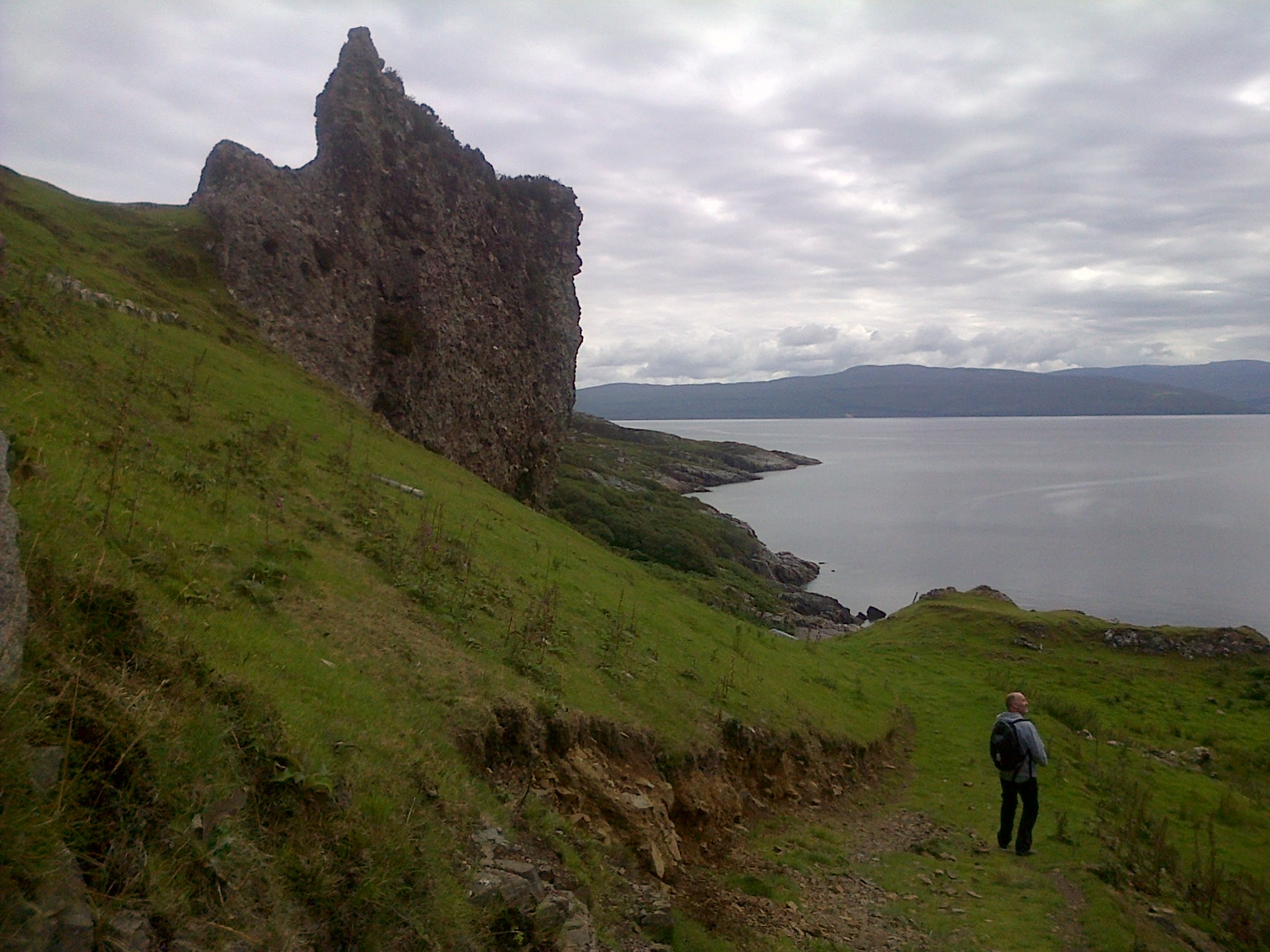
Our first stop was the beach at Brochel Castle, to look at aspects of time. To what extent can this project genuinely engage with the extreme past? Should we connect a contemporary response to the extreme past or should we maintain the gap between present and past?

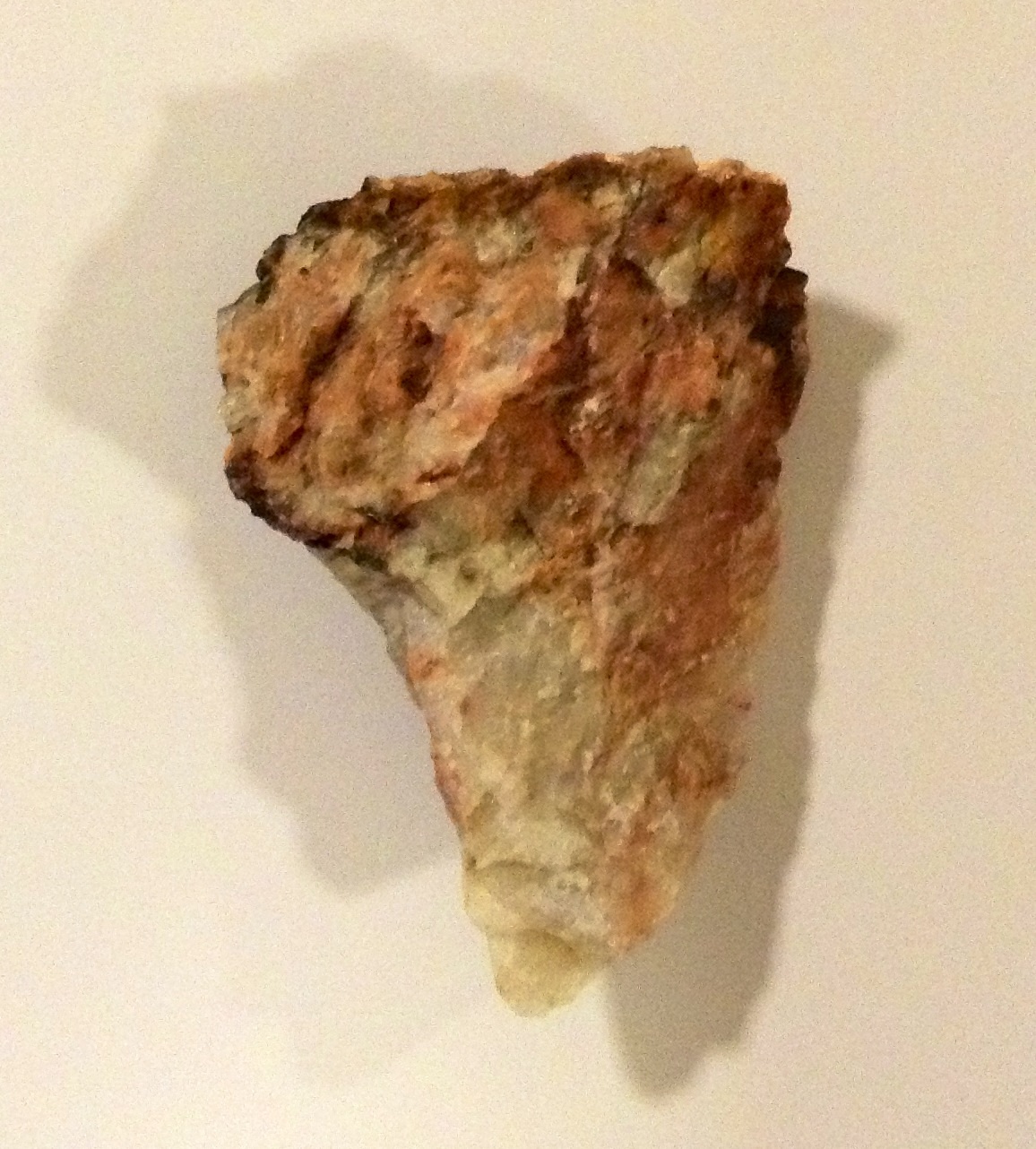
We then moved onto Calum’s Road, past the ‘deep time’ represented by the oldest rocks on the island, thought to be 3 billion years old, Lewisian Gneiss, to explore the subject of landscape and spirit. How was ‘place’ thought of in the past? Words such as nature and environment are a contemporary concept. At the third site, Calum’s Cairn, positioned at a commanding viewing point looking over the Sound to Skye, we discussed Peregrinatio and began to identify the different ways in which we can think of travelling or the journey, whether through pilgrimage, exile or from life to death. Throughout our day today, St Columba and his life and death, evidenced 100 years later by Adomnan of Iona, were present. We looked at the questions and contradictions within the life of St Columba, standing round the cist at Eyre, in itself a holder for the dead. What was more important during this time – life or afterlife? Rational truth or devotional truth? How should the book be read? Is it formulaic or symbolic? What is the nature of justice in this book? Then onto the iron ore mines, we stood inside one of the ruins and looked at the notions of the monastery as a way of working. Is there a tension between the individual and the community? What is the economy of the monastery?
Tomorrow we will begin the morning of artists’ presentations with the last question, on The Spiral. How do you navigate the Spiral? Where do you enter and exit the Spiral? What do we do with this knowledge? Is contemplation a privilege?

Unknown's avatar

Entering the Spiral

How do you navigate the Spiral? Where does it start and end?

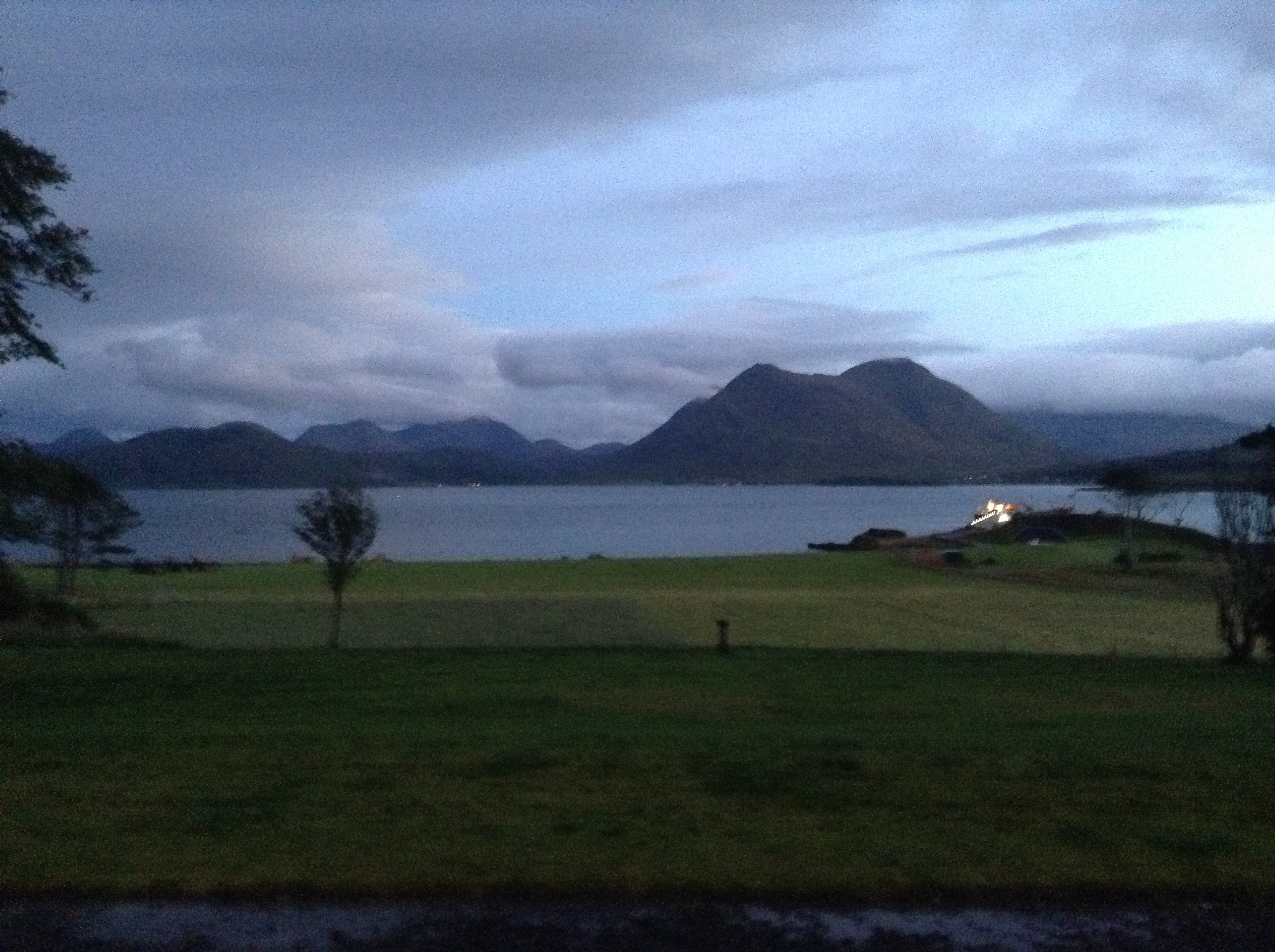
Today the group of 18 artists, scholars and organisers, completed their journeys from London, Galway, Glasgow, Edinburgh and Skye to converge on Raasay for the beginning of ‘Convocation’ and the Scottish knot of Colm Cille’s Spiral.

The Citylink bus from Glasgow, drives through a brooding Glencoe, stopping long enough in Fort William for a leg stretch, then onwards, looping past the waymarkers I always look out for on the way to Skye- the best historically named diner in the Highlands Jac-o-bites, the dramatically picture postcard positioned Eilean Donan Castle, followed by the more modest white house of author Gavin Maxwell which nestles at the foot of the Skye bridge. I see some new signs to me on Skye such as Saucy Mary’s Hostel and the Happy Hand Spinner’s studio. After the arc of the road bridge, we see another- a complete rainbow on the Sound.

The group may not all know each other, but the fact that all have been asked to dip into Abbot Adomnan’s ‘Life of St Columba’, gives a shared starting point, with each having their own observations on the text. As people seat hop over the seven hours of travel, we enter the Spiral of St Columba through conversation. Emma Balkind mentions that it is can be noted in our present and past that there has always been a threat, whether from the heathens of the past or terrorists of today. Johnny Rodger, from the GSA’s School of Architecture, talks about Columba’s ‘Back of the Hill’ on Iona, and how in Gaelic it is ‘tonn air gaoithe’, an architectural principal of orientating the back of the house to face the elements, as we see in black houses. Michael Mersinis mentions he has set himself the nighttime task of celestial photography whilst on the island, with long exposures to catch the light of the stars. The next three days, if the clouds part, we will have meteor showers.

The bus driver asks if there is a party at Sconser with so many of us getting off there, to go to Raasay. Then following a 25 min ferry ride, we arrive at an island off an island, Raasay, our destination. There is much to be discovered- a napoleonic fort, the Cave of the Oars, the remains of a prisoner of war camp and the oldest and youngest rock formations on the island. Time stretches out.

12.8.13

image