Unknown's avatar

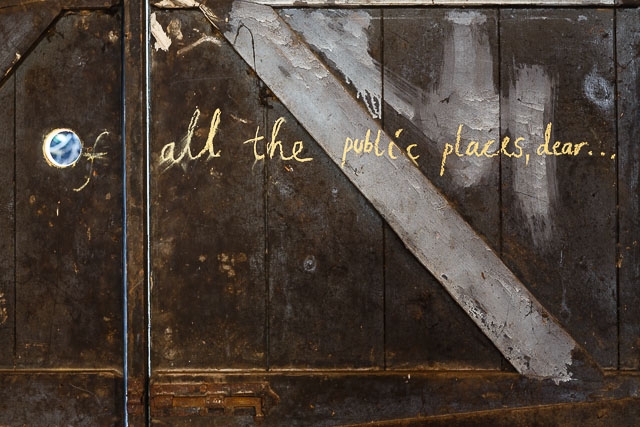
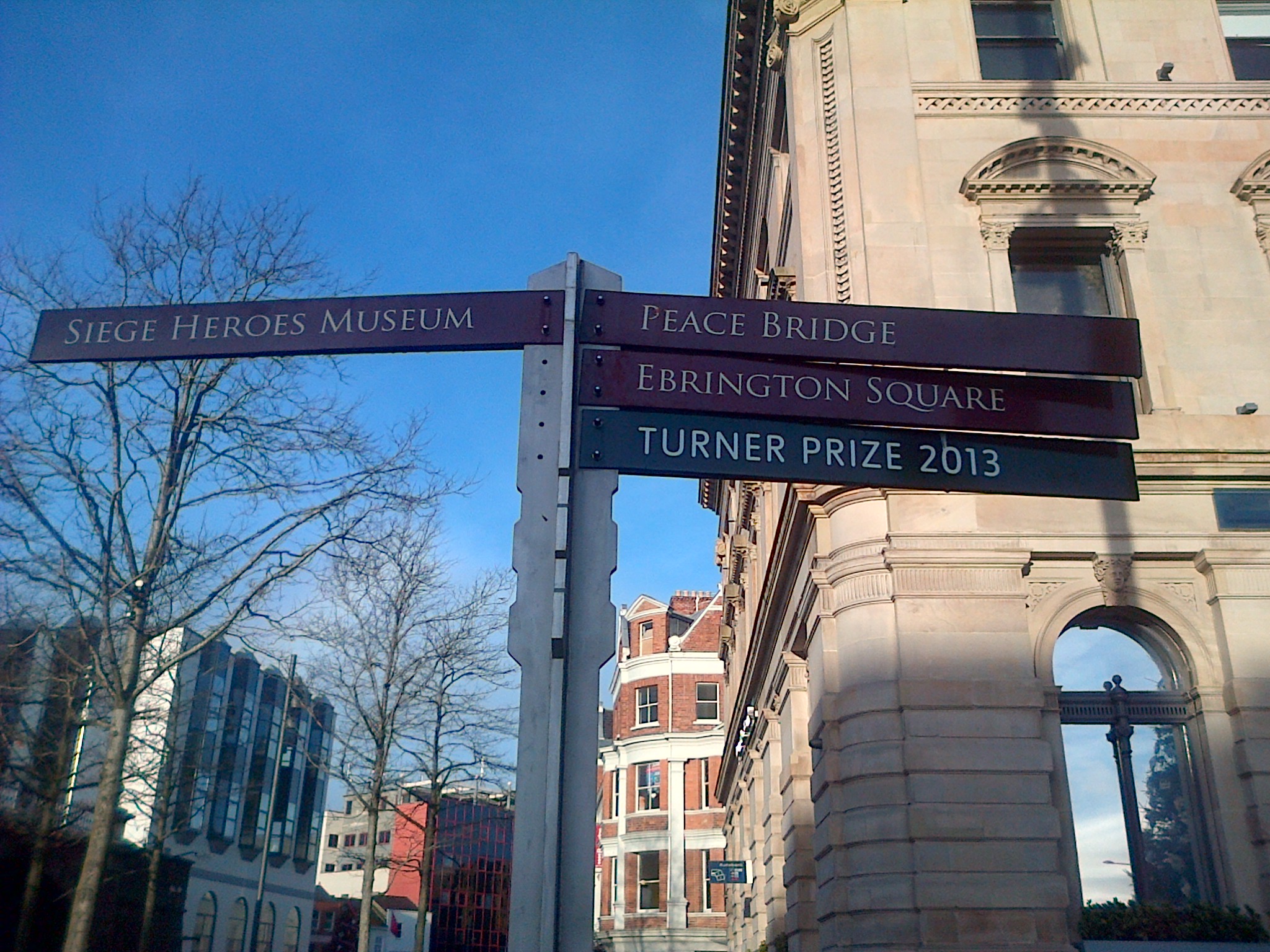
‘The Fold, A Creative Convention after Colm Cille’, ‘Colm Cille’s Spiral’, 30 Nov – 1 Dec 2013, Derry~ Londonderry

Derrysignpost


‘Colm Cille’s Spiral’ is a project taking place across the UK and EIRE, examining the legacy of 6th Century Saint Colm Cille, from a contemporary creative perspective.  I have been the curatorial lead for the Scottish ‘knot’ called ‘Convocation’, working with CCA (Glasgow), University of Glasgow and ATLAS Arts. ‘Colm Cille’s Spiral’ is a Difference Exchange and Centre for Late Antique and Medieval Studies, King’s College London project that is part of Derry~Londonderry City of Culture 2013.

Here is my blog post for ‘The Fold’, a ‘creative convention’ which brought all 6 projects together in Derry as part of : http://www.colmcillespiral.net/the-fold-a-creative-convention-after-colm-cille-colm-cilles-spiral-30-nov-1-dec-2013-derry-londonderry/ and took place at Verbal Arts Centre, Derry.

Excerpt:

[Colm Cille, the founding father of Derry, is attributed in a poem as describing the city as follows:

“The reason I love Derry /Is its quietness, its purity/ For full of angels white it is/ From one end to the other”.

We arrive in the city for our concluding event, ‘The Fold’, at a time when it could be described as busier than Colm Cille envisaged it in his mind’s eye, with impressive queues for the Turner Prize, nightly gatherings in squares to see the Lumiere Festival projections and generally a city and audience confidently in full swing for all the cultural offerings ofDerry~Londonderry City of Culture 2013. ….]

For further information on the wider project please see http://www.colmcillespiral.net/   and http://creativefutureshq.com/projects/colm-cilles-convocation/ for my blog posts on ‘Convocation’.
Unknown's avatar

Review: ‘Suspended Sentences’. Turners Warehouse, Newlyn, Cornwall

Photo: Steve Tanner
Photo: Steve Tanner

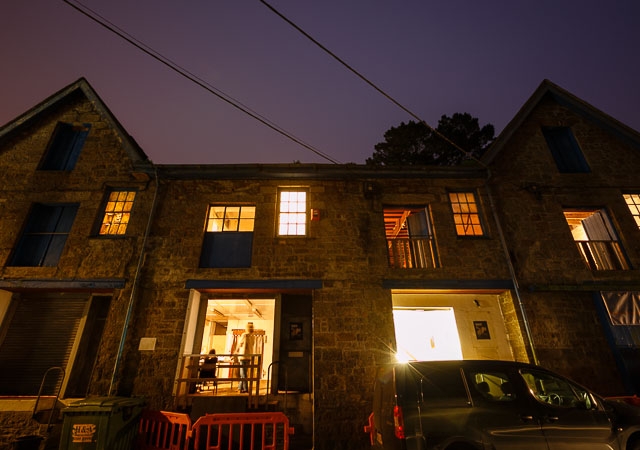
{Excerpt} Exemplifying a community-minded approach, ‘Suspended Sentences’ was a large artist-led group exhibition and series of events including experimental film, music and sound nights, taking place at an old unused fish processing factory, Turners Warehouse in Newlyn, Cornwall 2-22 Sept 2013. The exhibition formed an open response to Armitage’s poetry, after his 2013 walk along the South West coast path from Minehead to Land’s End with his last mainland reading happening at Newlyn Art School. Regional artists were invited by the project’s curators Jesse Leroy Smith and Mark Spray, to take Armitage’s poetry as a departure point or to explore the idea of a journey. The show’s title references poet Simon Armitage’s past employment as a probation officer, or as Armitage added on hearing it, could be reminiscent of poetry being written in zero gravity. 

Here is a link to my full review on ‘Interface: Reviews Unedited’ on anhttp://www.a-n.co.uk/interface/reviews/single/3933778

Photo: Steve Tanner

Photo: Steve Tanner

Marie-Claire Hamon (2013)

Marie-Claire Hamon (2013)

Unknown's avatar

Have You Ever Seen the Rain

In view of it being National Poetry Day today, I scribbled down a conversation I had last night with a Glasgow taxi driver.

Rod Stewart

Have You Ever Seen the Rain 

I am a sinny man yet God loves me
This is unconditional love
If I love Rod Stewart
Why does he charge £70 a ticket?
This is not unconditional love
Rod needs to look at this
I love the rain
With every raindrop there is an angel
The rain falls from so high up
It is from God
Rain is a mercy
If you are ill, if you are hurting
Just ask the rain
And it will help you
I hope to meet you in heaven
And if we do
You will tell me
Taxi driver, you were right


Have You Ever Seen the Rain, Rod Stewart, Composer: John Fogerty (1970 – released 1971, Rod Stewart cover version 2006)


Unknown's avatar

Axisweb Spotlight Feature: Jenny Brownrigg selects Lucienne Cole

Axisweb asked curators from across the country to browse their directory and pick one work to write about. I selected Lucienne Cole’s, ‘Dance to Music’, 2012.   

[excerpt]

Morrissey was not afraid in the 1980s’ to move his body, arms and legs to the music. Upping the confidence of others perceived as misfits, he spawned a generation of young male lone dancers happy to spiral away in their own world on the dance floor….

http://www.axisweb.org/features/default/spotlight/jenny-brownrigg-selects-lucienne-cole/

Lucienne Cole, 'Dance to Music' (2012)

Unknown's avatar

They Had Four Years

Kevin Reid

Kevin Reid

‘K. believes his agenda was firmly in place as soon as he arrived at art school, fresh from 25 years spent in Kelty and the School of Life.’

As this year’s students get set for Freshers Week at The Glasgow School of Art and post-graduate degree shows are happening, it seemed timely to revisit my essay from 2003 for GeneratorProjects’ annual  ‘They Had Four Years’. Graduates are selected from Degree shows and invited back a year later to show developed work at this artist-led organisation in Dundee. My essay looks at the motivations the selected five graduates had for going to art school, their expectations, what was discovered and experiences after the four years are over.

Unknown's avatar

Peregrinatio: Thomas Joshua Cooper

Thomas Joshua Cooper

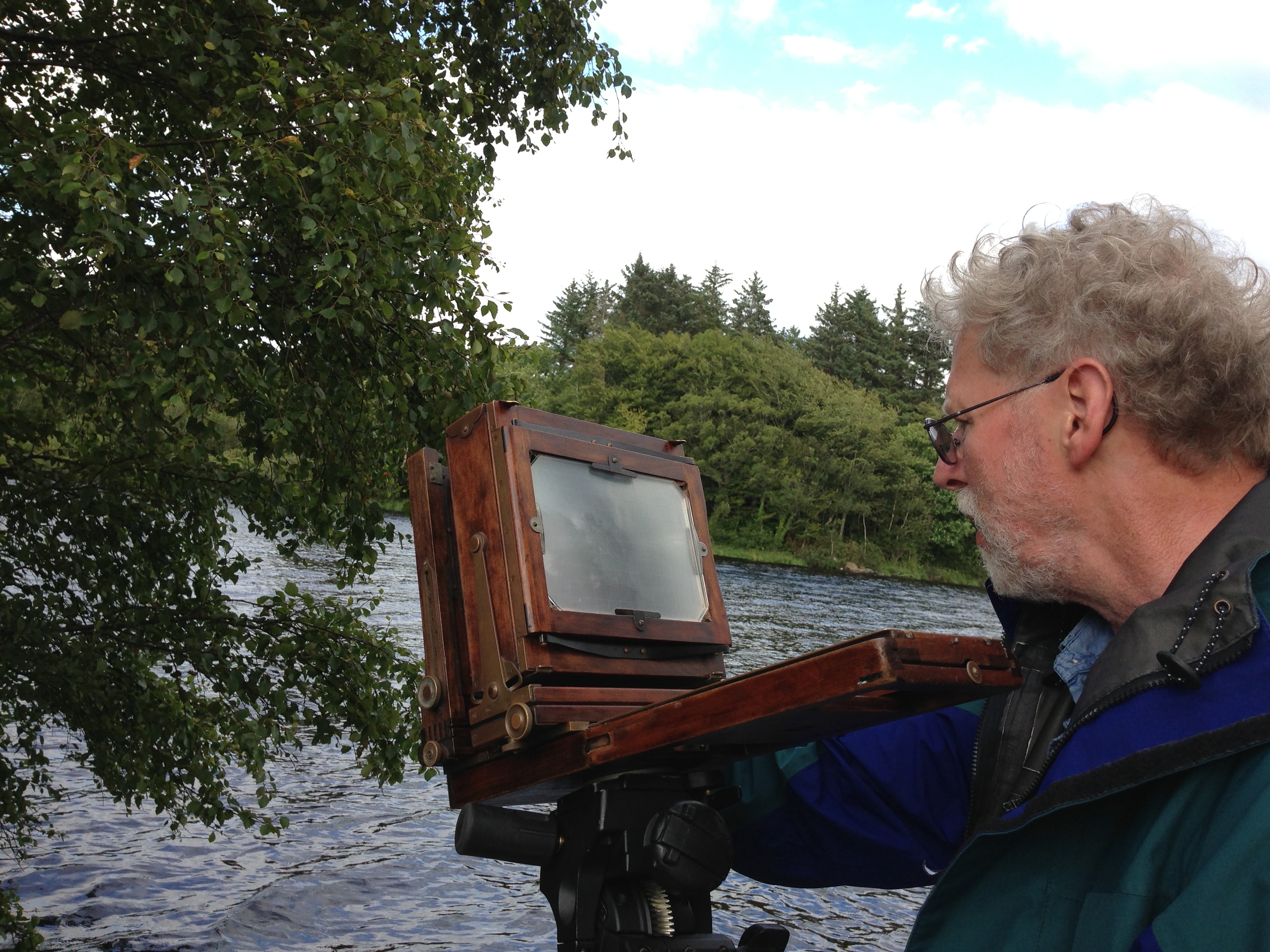
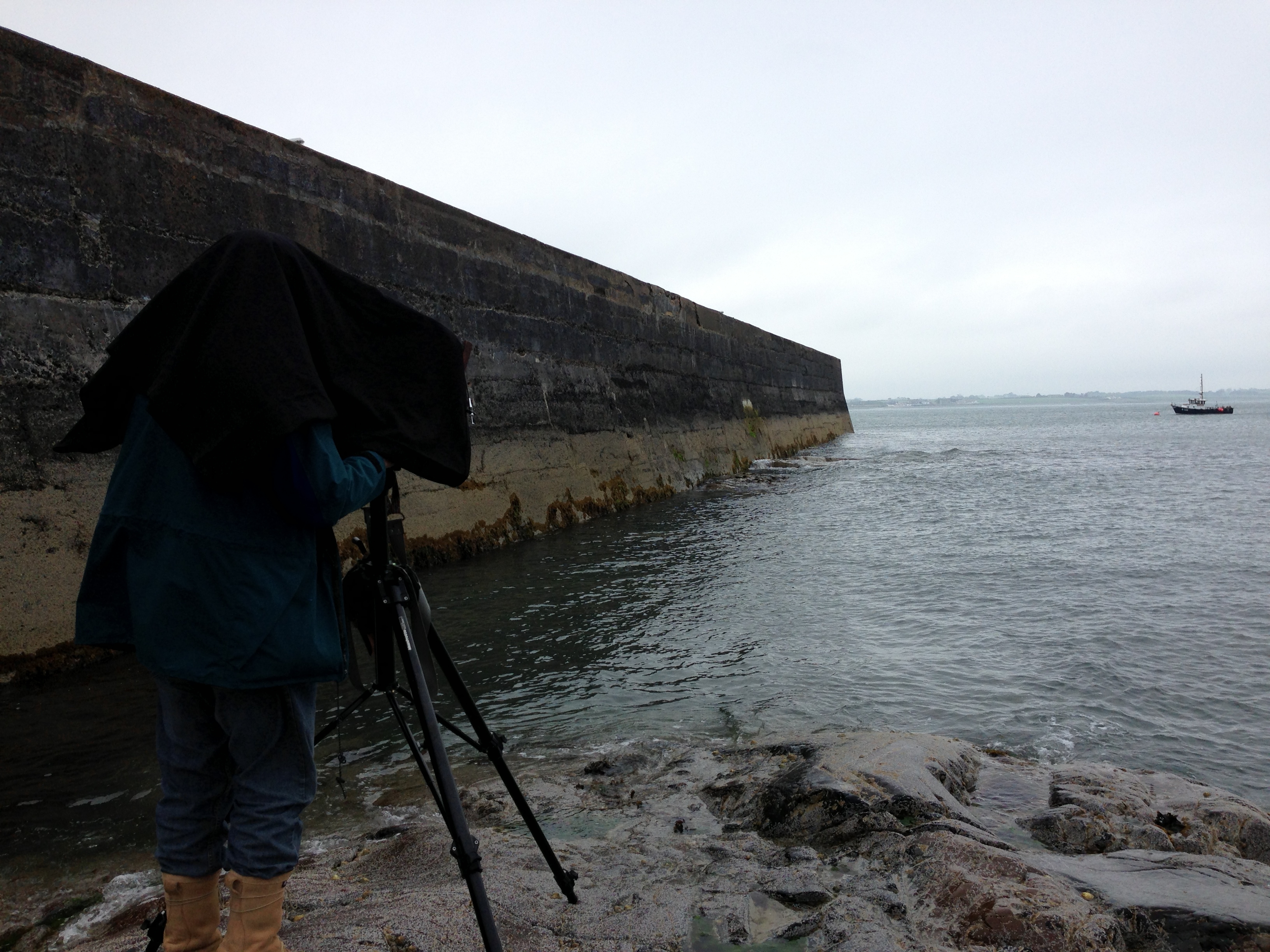
Over an eleven day period, GSA’s Head of Fine Art Photography Thomas Joshua Cooper travelled to Skye, Raasay, Cumbria and Northern Ireland, covering a total of 3135 miles.

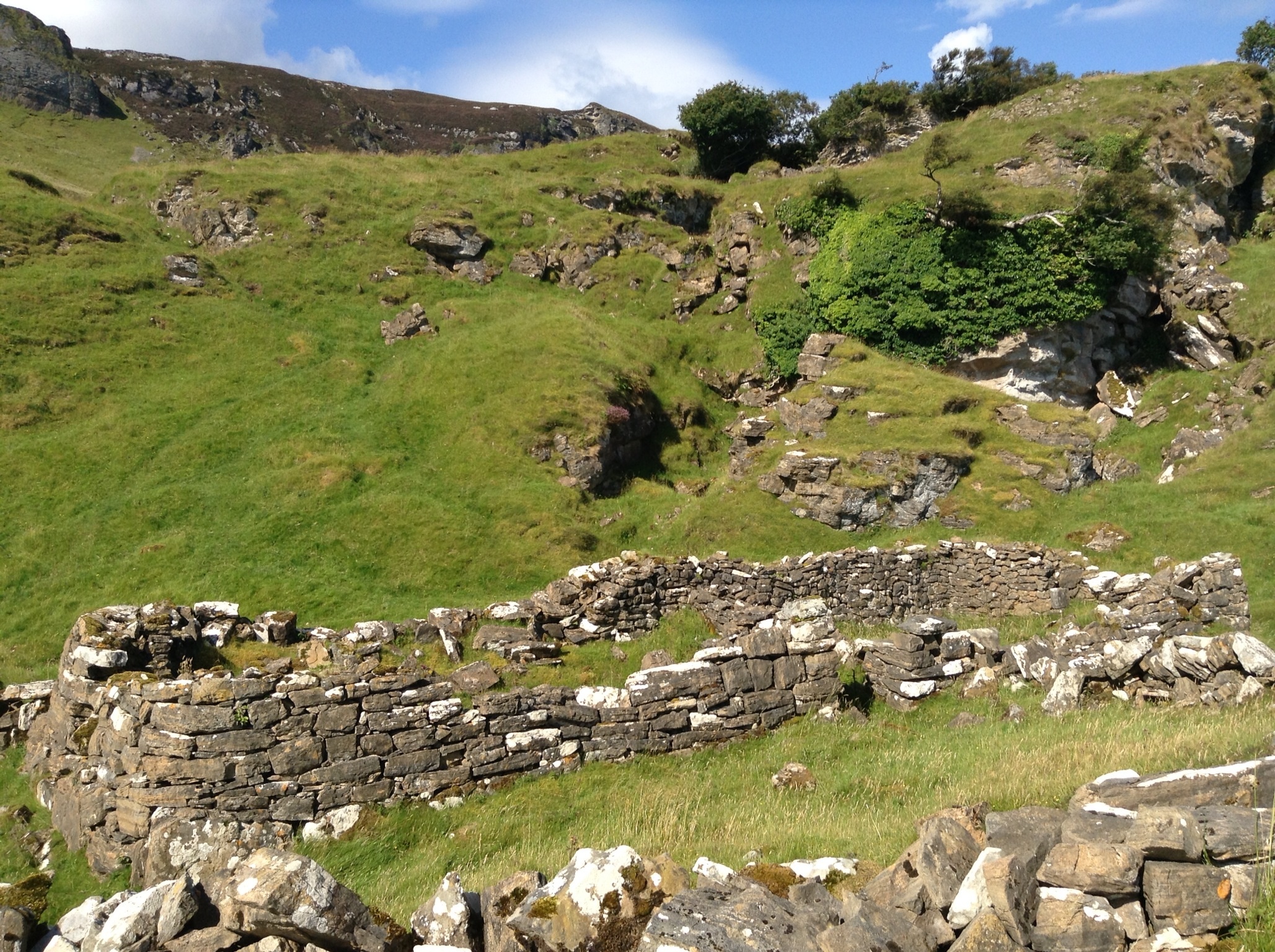
He worked on two photographic bodies of work. For the first, he travelled to photograph the birthplaces of Saint Patrick, St Brendan and St Columba. His description of Lough Gartan, St Columba’s birthplace, echoes the mention of trees in Sorley MacLean’s poem ‘Hallaig’. MacLean imagines the cleared village’s absent women as, “ … a wood of birch trees / Standing tall, with their heads bowed.” Cooper speaks of, “Three silver birches, leaning towards the Lough, a trinity picture”.

For his second series, he went to the very edges of land, visiting the cardinal points of Northern Ireland including Benbane Head, County Antrim, the north-west point and then onto the east-most point at Burr Point on the Ards Peninsula.  In particular, with the latter location, he focused on the view from Ireland across the water to Scotland, aiming to echo St Columba’s last view from Ireland, before his exile to Scotland.

A quote from a book brought in during our residency by local Raasay resident Jenifer Burnet, describes who St Columba was in terms of the cardinal points.

‘In the West he [St Columba] was called upon as a bard, a guardian of the magical powers inherent in the literary traditions of the Celtic languages; in the North, he was a prince, a member of a prestigious lineage with a responsibility for the defence of his people; in the East he was a father, an abbot who was a just and tender provider of the many monks under his care and in the South he was a priest who dealt directly with the forces of the Otherworld.’ 1

In an interview after he had returned firstly from Raasay, Cooper explained his relation to the land and how it impacts on his photographic process. In particular, the group’s question on Peregrinatio had a real resonance for Cooper in describing his creative practice, which involves going out to the edges of the world. He described peregrinatio as, “The compulsion to send yourself out on potentially an unending, undestined voyage”. He went on to say, “As soon as I heard it [peregrinatio], it’s one of those words. It creates through syllabic movement a motion, and I have been set in that motion always, since as a boy. I find my way but I never know where the way is”.

Cooper also described the title of our project ‘Convocation’ as having meaning for him in terms of how he works with the land, as he only takes one negative at each site. “Can there be a convocation with the site? In enough silence, things will speak. If there is enough respect and the site is willing to participate, then that for me is a conversation.”

1 P. 252, ‘Anam Cara: Spiritual Wisdom from the Celtic World’, John O’Donahue

Acknowledgement

Thomas Joshua Cooper would like to express his deep thanks to Kate Mooney, Laura Indigo Cooper (who travelled with him to Northern Ireland) and David Bellingham, “for their insights, practical help and kindnesses in helping me take this project to conclusion. “

Photos of Thomas Joshua Cooper at work (2013): Laura Indigo Cooper

Thomas Joshua Cooper

Thomas Joshua Cooper

Thomas Joshua Cooper at work

Unknown's avatar

Di Domhnaich

image

We leave the island today.

Over the course of the week, we have oscillated between the rational and aspects of faith or mystery. The artists in the group are comfortable about using the latter terminology in talking about their practice, with Michail Mersinis talking about “photography as an act of faith”. The group are split however between the two entities when thinking about ‘The Life of St Columba’. “Maybe the book doesn’t want you to know”, Clare Lees said earlier in the week. “The book is its own I”.

As we sat in the waiting room yesterday evening for our last discussion, looking out to the ferry making its way in between Raasay and Skye, it was a good location to highlight that the group are at the start of seeing how the information from the week will filter down into their practice. Distance and the return home seemed to be the next stage that will help us see what we have learnt.

Jennifer Burnet, the woman who helped Jessica Ramm cut peat, has been visiting Raasay House with a wealth of information in forms of books, photocopies and photographs relating to our area of enquiry. A quote from one of the books she brought, sums up our first phase of the Spiral.

“The Celtic mind was never drawn to the single line; it avoided ways of seeing and being which seek satisfaction in certainty. The Celtic mind had a wonderful respect for the mystery of the circle and spiral”1
1 ‘Anam Cara: Spiritual Wisdom from the Celtic World’, John O’Donahue


Unknown's avatar

Thisssssss: Sound and Silence

image

Jessica Ramm and Emma Nicolson


Hallaig


Yesterday was bookended with both a real and a transmitted experience of the same place, Hallaig. In the morning, Emma Nicolson led the group on a walk to this cleared village situated in the south-east of Raasay. In the evening we watched we watched Francis Mckee’s copy of ”Hallaig: The Poetry and the Landscape of Sorley MacLean’ 1

‘Back through the gloaming to Hallaig,
Through the vivid and speechless air,
Pouring down the steep slopes,
Their laughter misting my ear.’ 2

Emma Balkind, one of our illuminators, has been recording the sound of our field trips and conversations. When we interviewed her for the short film we are making about the residency, she said, “I felt I was switched on all the time”. She and her microphone have captured the layers of words and movement of the group, alongside the land and the sea around us. I asked her if she has managed to record silence at Hallaig and she said no. Even when Johnny Rodger, one of the most ebullient in our group, asks for silence on the hill, the put-put-put of a boat out on the Sound can be heard, followed by the musical tone of a button on a digital camera.

In the evening, the cadence of Sorley MacLean’s voice and his delivery of the word ‘Thisssssss….’ sticks in my mind. The letter ‘s’, a spiral in form, fizzes in his mouth, shaping the word into a new sound and entity.

How can something, as Sorley MacLean has it, be ‘vivid and speechless’ at the same time? Much of our discussions have circled around pairs of words that come from different realms but are interwoven in order to exist: Faith and Doubt. Rational and Spiritual. Discipline and Devotion. History and Present. Interior and Exterior. Both Clare Lees and Kathryn Maude from King’s College London talked of the desire for dates in their field to evidence an occurrence or event versus the reality of the gaps that exist. As Clare put it, “My career is half-knowing things”. There are many different ways of learning, from the academic to the intuitive. In our discussions over Raasay, “The landscape has unsettled the theory”. 3 We have referred to the remoteness of the past whilst being surrounded by three billion year old rock.The Spiral is still turning, but it is important to acknowledge “Thisssssss”; that the disjoints, impossibilities, gaps and unknowns occurring are as important as the entities that surround them.

1 ‘Hallaig: The Poetry and the Landscape of Sorley MacLean’, originally produced by The Island House Film Workshop, Alva (1984), a film by Timothy Neat.

2 ‘Hallaig’ by Sorley MacLean, translated by Seamus Heaney.

3 Francis McKee’s observation

Unknown's avatar

Vision on Raasay

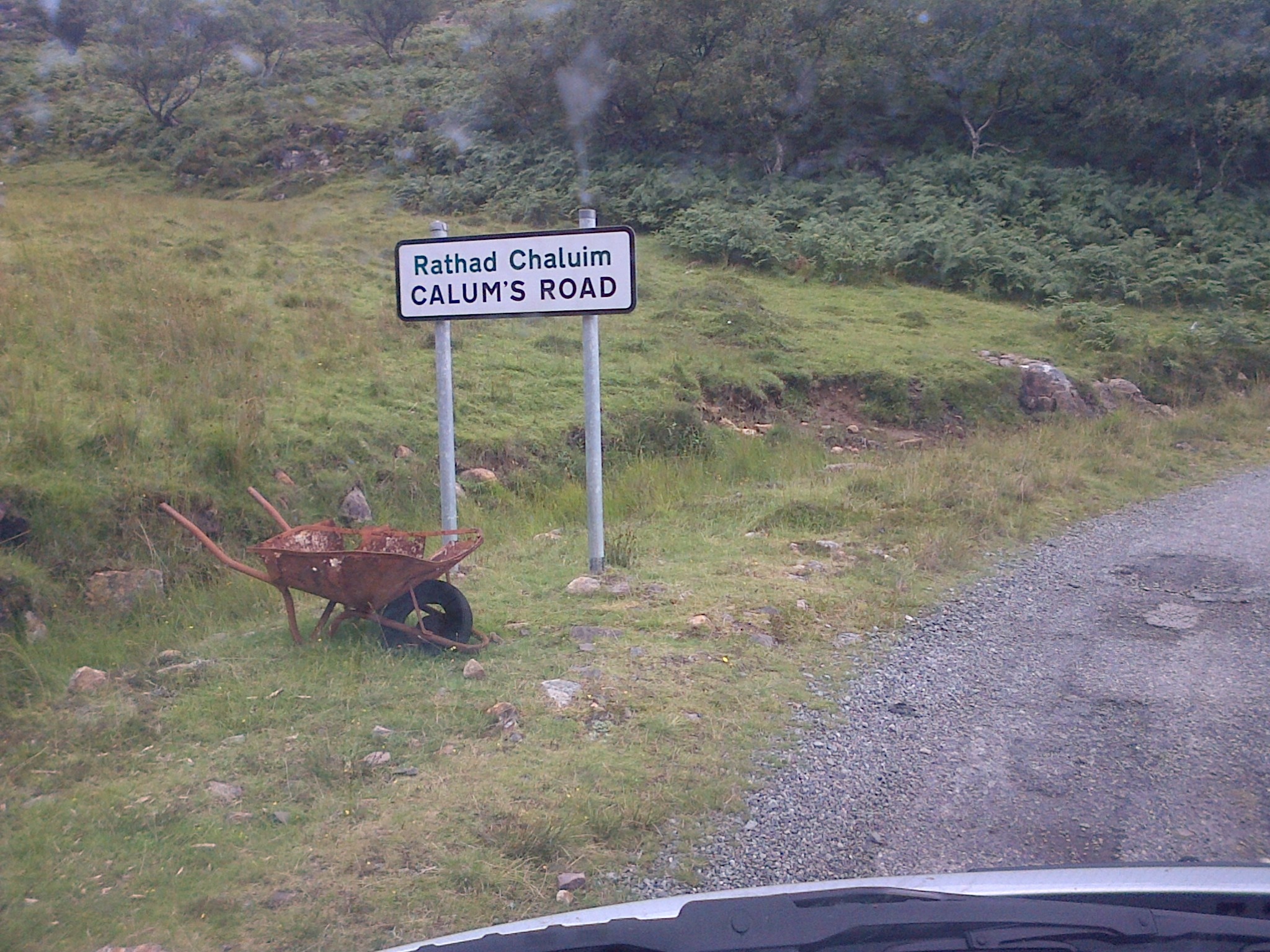
Calum's Road

“It’ll be like an Autobahn” 1

Emma Nicolson, Director of ATLAS Arts, joined the Spiral. Her input on the shaping of the project, her choice of Raasay as location and suggestion of Skye artists Caroline Dear and Jessica Ramm, has proved invaluable. Emma invited local author Roger Hutchinson to meet the group and talk about ‘Calum’s Road’, which tells the true story of a road built over ten years by one man on his time off, Calum MacLeod, to link up to his declining community of Airnish at the north of Raasay.

MacLeod wanted a ‘motor road’, using a 1901 book about building roads for motor vehicles to act has his guide. Using a pick, wheelbarrow, spade and hammer to make the road from stones, his friends also got him dynamite, which he used to blow up a local landmark, a stack that was in the way of the road. He completed the road in 1979, at a point when it was only he and his wife remained in Airnish.

Roger Hutchinson covered the ‘practical sphere and metaphorical sphere’ of this true story. He said that MacLeod was aware he was ‘building a metaphor’ as he fully realised that the migration from his home community was terminal. As the local council, Inverness County Council, had always refused to build the road, latterly citing their decision in view of unsustainable costs for such an enterprise, for such a low population, MacLeod also knew he was building something subversive. Hutchinson said that the Raasay islanders he interviewed said, “Just how he did it was beyond belief to all of us”.

Hutchinson proved to be a great storyteller. He concluded that Calum Macleod died in 1988, found by his wife in his wheelbarrow, presumed to have had a heart attack. Calum MacLeod was posthumously awarded a British Empire Medal, not for the feat of building singlehanded this two mile stretch of road, but for his work as an assistant lighthouse keeper.

1 Vision of Calum MacLeod, Oct 1982, ‘Calum’s Road’, Roger Hutchinson, 2008, Birlinn Limited

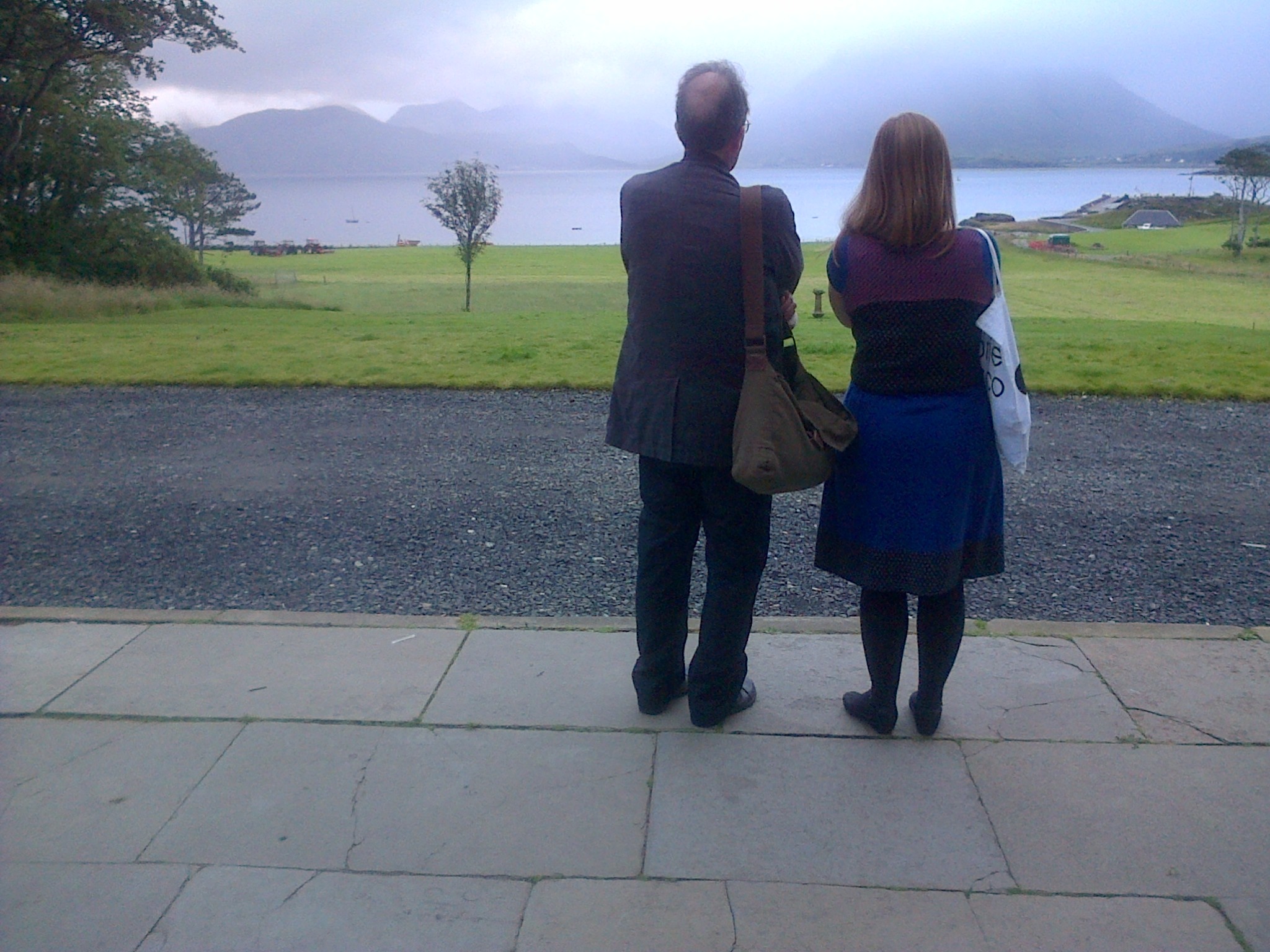
Roger Hutchinson and Emma Nicolson

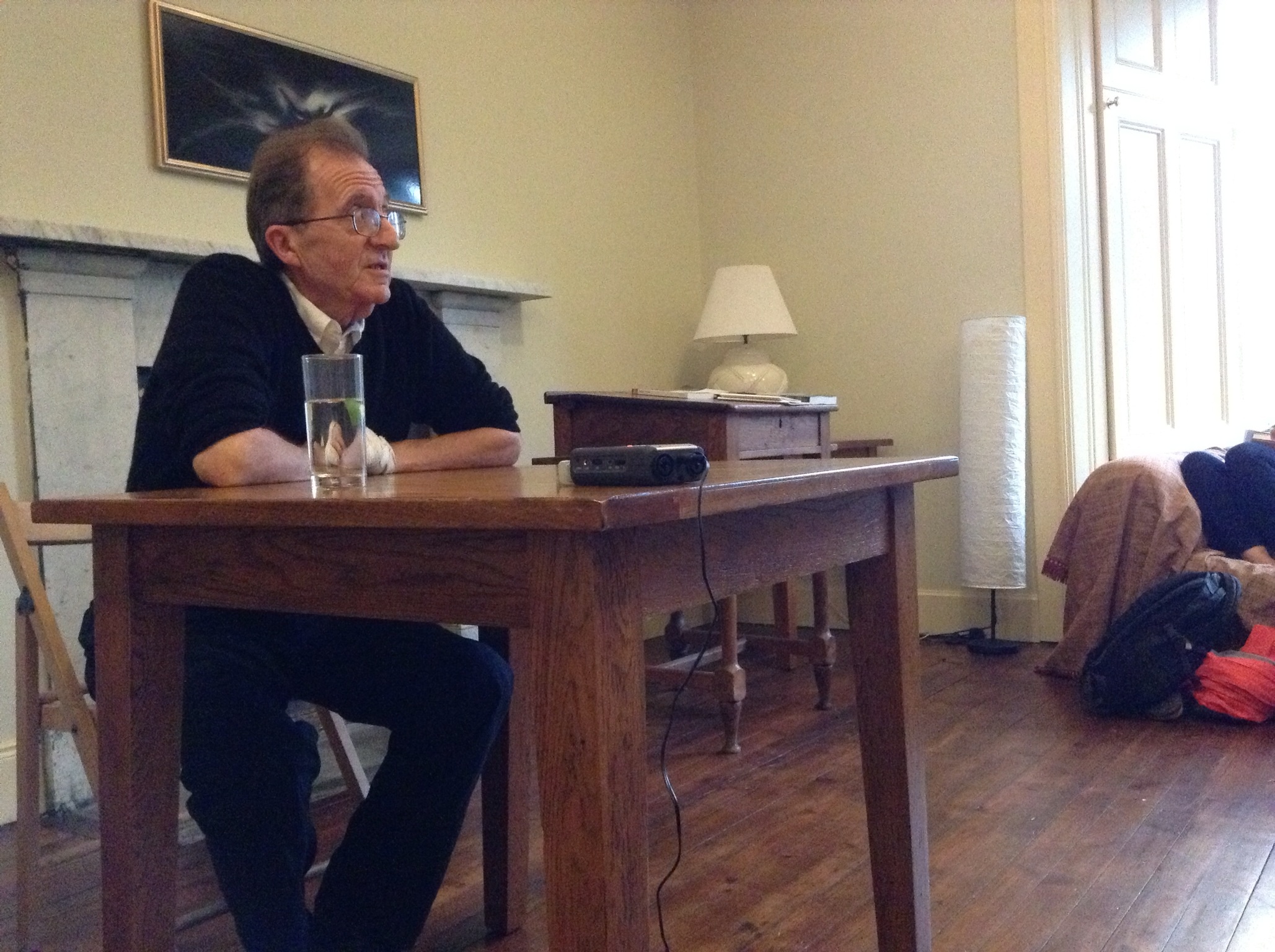
Roger Hutchinson