Unknown's avatar

Disperse and Distill

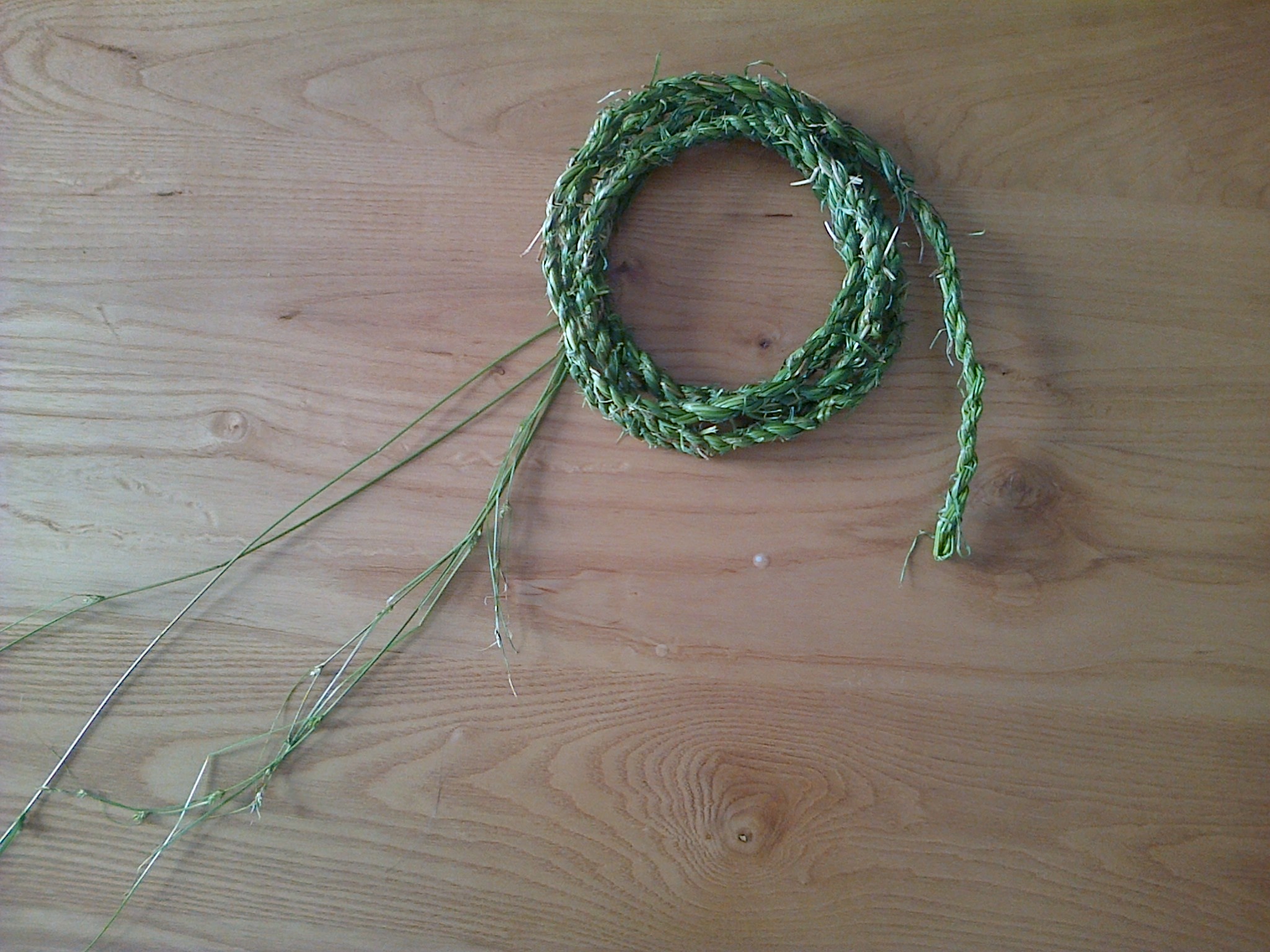
Rope by Edwin Pickstone

The rhythm of the residency has changed.

After saying goodbye to the Medievalists, the day became one of ‘Disperse and Distill’ for the group, allowing time for ideas to form and information to settle. Artists set out both individually and in small groups, to swim, walk, and cycle across the island. Some sat with Skye artist Caroline Dear to learn how to make ropes from the reeds near the beach. Jessica Ramm went in search of a local resident who still cut peat, meeting Jennifer, who showed her a Viking burial mound and discussed the Celtic spirit along the way to the peat bank. Hardeep Pandhal found two containers of Camp Coffee in Raasay House’s library, and thought one of us had placed them there on purpose. He is currently making work back in Glasgow about this coffee originating from the same city, bearing its picture label of a Sikh servant serving a British soldier with a cup.

Augustus Veinoglou summed up the type of endeavour many have at this point, by saying “I want to extract wisdom from this space”. What is this space formed from? We have the book, our conversations with each other and the Medievalists, our past work, this location, experiments, serendipity and the unknown we are yet to encounter.

A number of artists have previously explored aspects of extraction, dispersal or distillation in their work. Edwin Pickstone, one of our illuminators, runs the Letterpress at The Glasgow School of Art. He gave us a summary of the Letterpress at the artists’ presentations, focusing on what this form of production had historically meant, speeding up the hand printing process by ‘the equivalent of 300 years’. Edwin said that learning about the placement of type, helps computer-literate students to understand the weight of space between words. He showed us an image of a close-up of the edge of an 8pt letter ‘e’, the black ink seeping into the white pulp of the paper. This view pushed the physical matter of language into an unknown territory. In his work ‘The Components of the Complete Compact English Dictionary’, Edwin distilled the dictionary ( a book already condensed from twenty-six books into one, through the use of 1pt font) into the sum of its parts – namely 1123 sheets of bible paper and a concentrated poured blob of 128.8 grams of black ink equalling the exact weight of its words. For Convocation, Edwin plans to distill ideas, activity and information of the residency onto the surface of a Raasay map.

In ‘Life of St Columba’, Book Two, there is a story of a knife, which following St Columba’s blessing, has the sacred property that it cannot harm man nor beast. ‘Having discovered this fact…. the monks melted down the iron of that knife and then coated the liquid metal on to all the other iron tools in the monastery. From then on, these tools were unable to harm any flesh…’.

Michail Mersinis has been mixing liquid silver to coat photograph plates, for his series of Raasay landscapes he is making, taking each image at the same times of day and night when the monks prayed.


Unknown's avatar

Sorrow and Stones

“The stone was dipped in some water, where, in defiance of nature, it floated miraculously on the surface like an apple or a nut, for that which the saint had blessed could not be made to sink.” 1

Through listening to the artists’ presentations and talks on Raasay, there have been a number of links to stones and sorrow.

Ceara Conway, the artist commissioned to make work for the Derry~Londonderry knot on the Spiral, has been part of our group and gave a talk on Tuesday night on her practice and this particular project. As part of her research she visited the Stone of Sorrows at Gartan, St Columba’s birthplace in Co. Donegal. This was the stone it is said St Columba laid down and slept on, during his last night on Ireland before he was exiled. He was so full of loneliness and sorrow, but as he lay on the stone, the stone took these feelings away from him. Ceara went on to say that the stone became a site of ritual, for those leaving Ireland through the ages, in exile or emigration, to spend their last night in Ireland there. This longing and sorrow became part of her performance and sung lament, ‘Vicissitudes’, which took place in a boat on the River Foyle.

Kathryn Maude from King’s College London gave her talk last night to the group on her area of research, looking at the texts both on and by women in the Medieval period. With so few texts remaining- approximately 5 letters and 2 poems over a 500 year period- she read a section from ‘The Wife’s Lament’ in Old English, which is written in a woman’s voice. “I sing this poem full of grief, full of sorrow about my life”. 2 Kathryn went on to say as well as the distance in time she feels from these women there is also an ’emotional gap’.

Jessica Ramm sang the Gaelic song “The Cave of Gold” as part of her presentation, where a playing piper ventures deeper and deeper into a cave, in search of gold he has heard lies at the base of it. Those outside can hear the spiral of sound moving away from them, getting fainter and fainter, until the sound of the pipes at the end is transformed into unbearable discord, as the piper has met his end with the ‘Green She-Bitch’.

Over the course of this residency, the scholars and artists have offered several texts and song from different languages and times, including Latin, Gaelic, Irish Gaelic and Old English. Performing these to the group, it brings forward Professor Clare Lees’ notion of performative time: “See! Look! We’re here!” Rather than time being linear, in this moment the link to emotion and voice brings the past breaking through the surface of the present.


1 ‘Life of St Columba’, p.182′, Adomnan of Iona
2 ‘The Wife’s Lament’, translated by Eavan Boland, ‘Making New the Word-Hoard. The Word Exchange: Anglo-Saxon poems in translation’, edited by Greg Delanty and Michael Matto, published by Norton

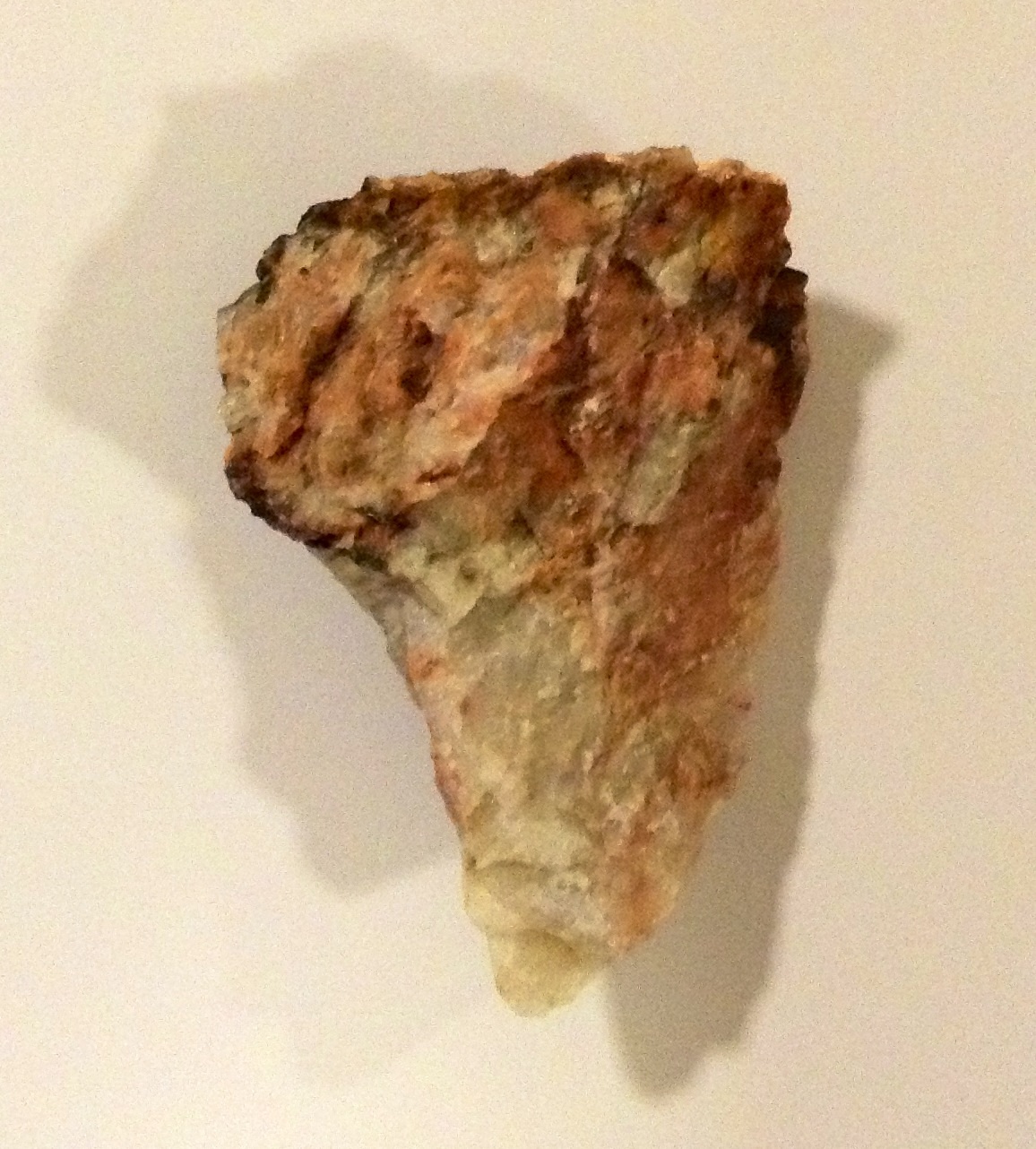
Lewisian Gneiss, Raasay

Unknown's avatar

How do we navigate the Spiral?

Swimming on Raasay

Whoever wishes to explore the Way,

Let him set out, what more is there to say?”
In Sue Brind’s presentation today, she referenced our question of Peregrinatio, through Farid ud’din Attar’s C13th poem, ‘The Conference of the Birds’, where, as she outlined, “The Hoopoe tries to lead all the birds of the world on a journey to find the Simorgh- the Persian name for a benevolent flying creature-who appears in Attar’s poem as the illusive King of the whole World. It will be an arduous journey, over deserts, mountains and through valleys, gaining knowledge along the way. Only 30 birds have the courage to complete. They finally arrive at the land of Simorgh and what they discover is a mountain lake in whose surface is revealed a reflection of their true selves”. 1
In our journey of ideas and expedition for new knowledge, as we explore the histories behind ‘Colm Cille’s Spiral’ then hear about the group’s own work as individuals, what is our objective? Do we wish the group to find St Columba, and what he means for our times, by peering at history through the mountain lake’s calm surface, or instead to have the ‘sea churning and lashing itself, in maniacal states’? 2
‘The Spiral’ is a common form in manuscripts and monuments, which amongst various meanings represents the dialectic; a method of debate for resolving disagreement. The discursive nature of this project is intended to mirror this dialectic. Where do you enter and exit the Spiral, if it has no beginning or end? The ongoing discussions at different times of the day, both formally in the allotted time at different points of the island, and informally over meals, travel and sharing each others’ space, have allowed us to enter into the debate at diverse points. Through strange alignments of place, repetition, language, mirroring, dislocation, thought and reflection, we are beginning to circle Colm Cille’s Spiral. At times we move away, only to return to the anchor of the book ‘The Life of St Columba’. Where one person finishes speaking, another loops in with the next point or observation.
If you unravel a spiral you will always find a circle. I can recognise Convocation’s structure as made up of three interlocking circles. At the beginning of the project, the working group debated and discussed ideas for the structure. This has been developed until it could be a feasible form to be opened up and made public to the group of artists and scholars participating in the residency on Raasay. The final circle occurs in October, when in the exhibition and event opens up and presents the first two circles for public engagement with a new audience.

History has proved to be a spiral for the group, at times running parallel only to slip out of reach. Yesterday we saw, at a distance, disturbances on the water of the Sound, and birds hovering, then two whales coming out of the water. Professor Clare Lees from King’s College London had, before to this event, spoken of, “The past surfacing like a whale in the present”.

The Spiral is turning each day of the residency. Yesterday, the medievalists successfully illuminated the historical background to the questions. The day was intense with information, with so much of a rich oral resource created it would be impossible to capture it as a whole. Today, the next turn on the Spiral occurred, with the morning’s focus on presentations by each of the group on their practice. Like links in the knot, hearing about each other’s processes and ideas allowed connections to be made between each other and also to begin to see connections to this project.

In the morning Francis McKee observed that the default of yesterday’s discussions had been on the rational, looking at the geo-political aspects of the text, whereas in essence this book is equally about the spiritual, with much emphasis on miracles and prayer. This afternoon’s discussion, on the beach of stones near Raasay House, allowed us to begin with reference to mystery and spirit. As the group unconsciously sat in a spiral formation, in this open landscape and often in a light rain, we saw the other side of the Spiral, and the that the rational and the spiritual exist at the same time. Francis talked of the tradition of immersive prayer, taking place in water. We had originally gone to the beach, as members of the group had wanted to swim there. At the end of the discussion, it seemed fitting that the work of the mind gave way to the embodied experience of the water.

Footnotes
1 Susan Brind and Jim Harold, presented at CCA, Glasgow, for ‘What we make with words’, Artists’ Readings, 10.12.11

2 This quote comes from Johnny Rodger’s presentation, where he quoted from ‘The Long Ship of Clan Ranald’, by Gaelic poet Alasdair MacMhaighstir Alasdair.

Unknown's avatar

Encountering Some Questions on the Spiral

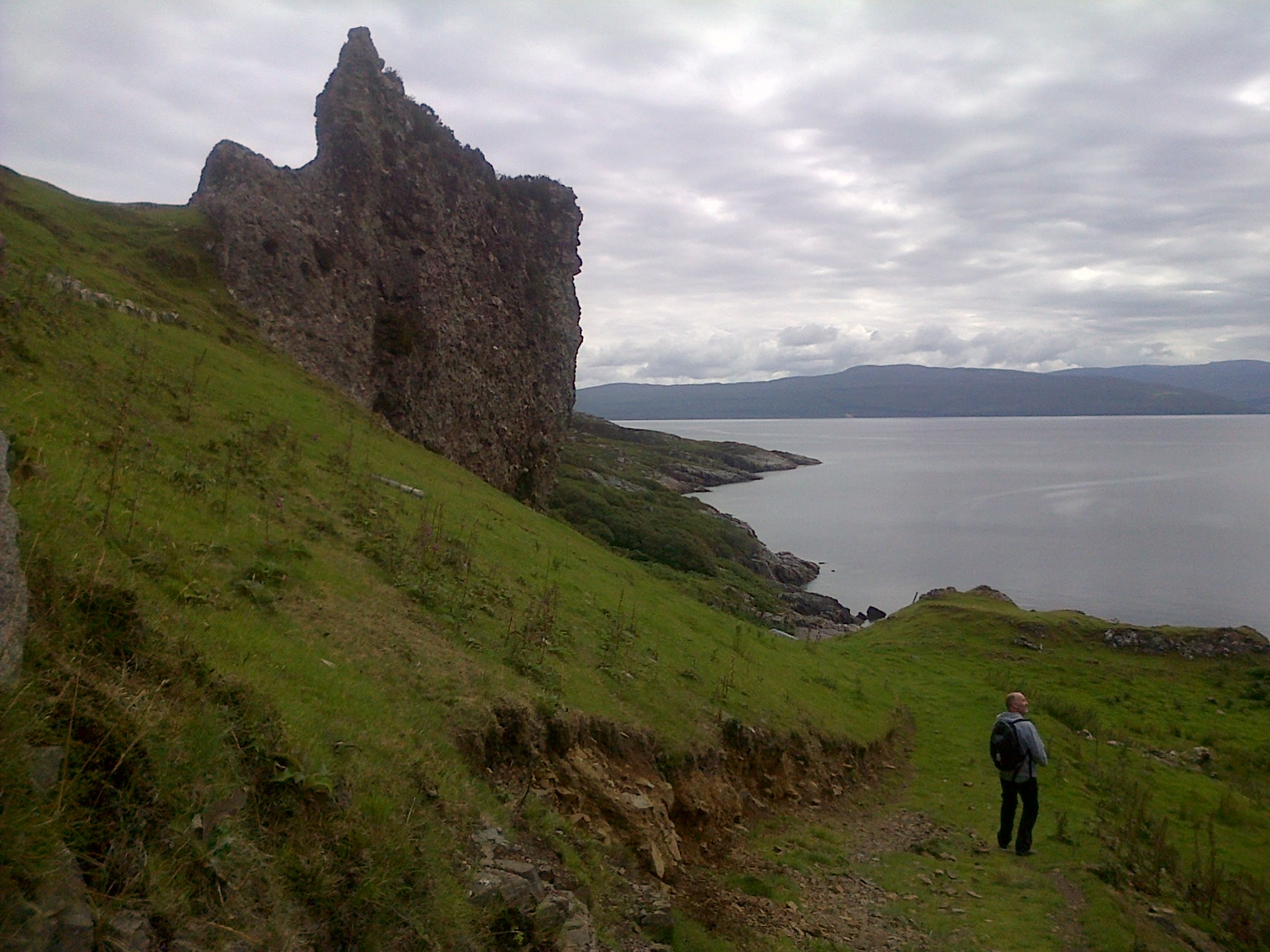
Brochel Castle

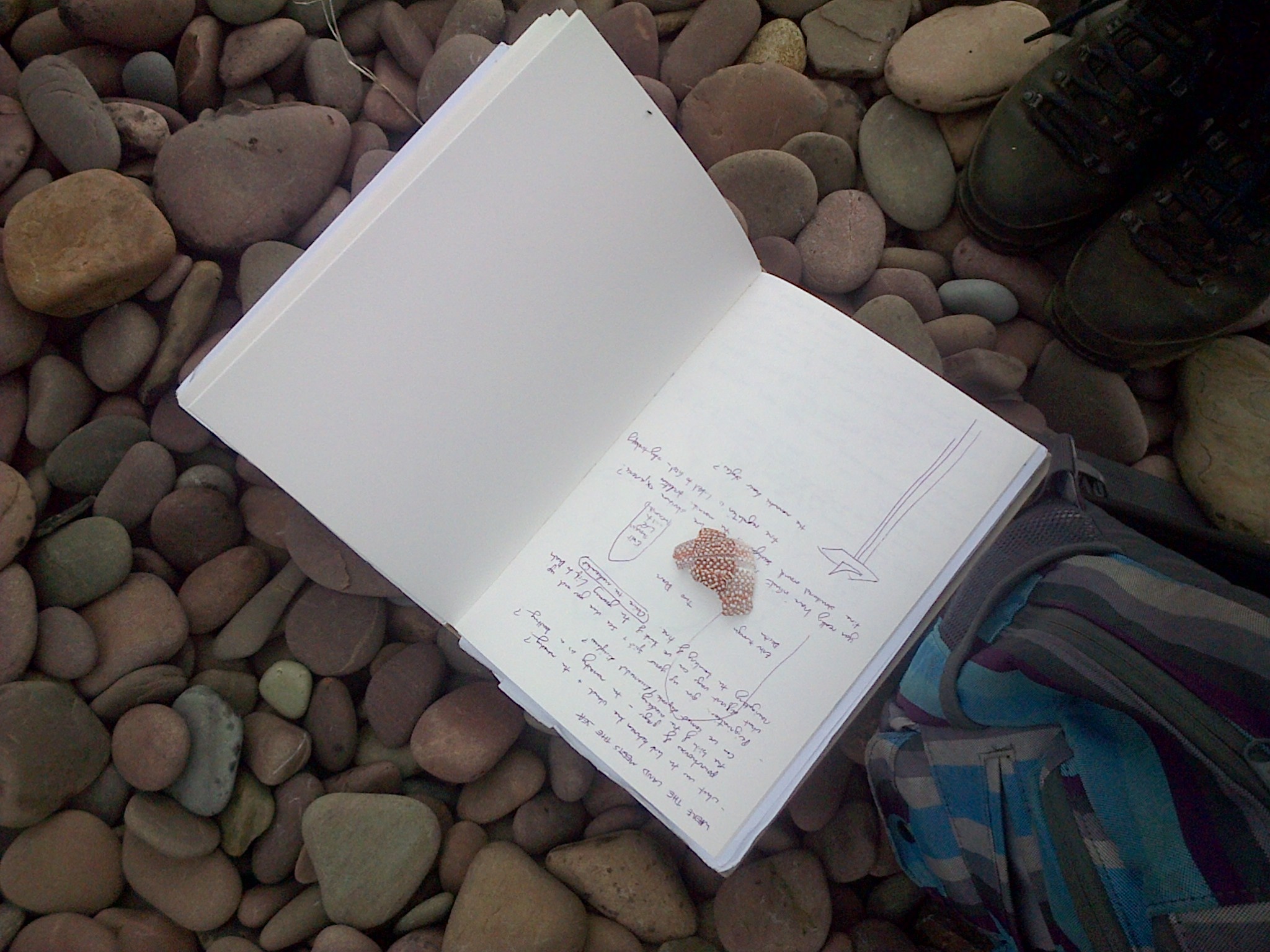
Jessica Ramm's sketchbook

Raasay Field Trip

The group at iron ore mine

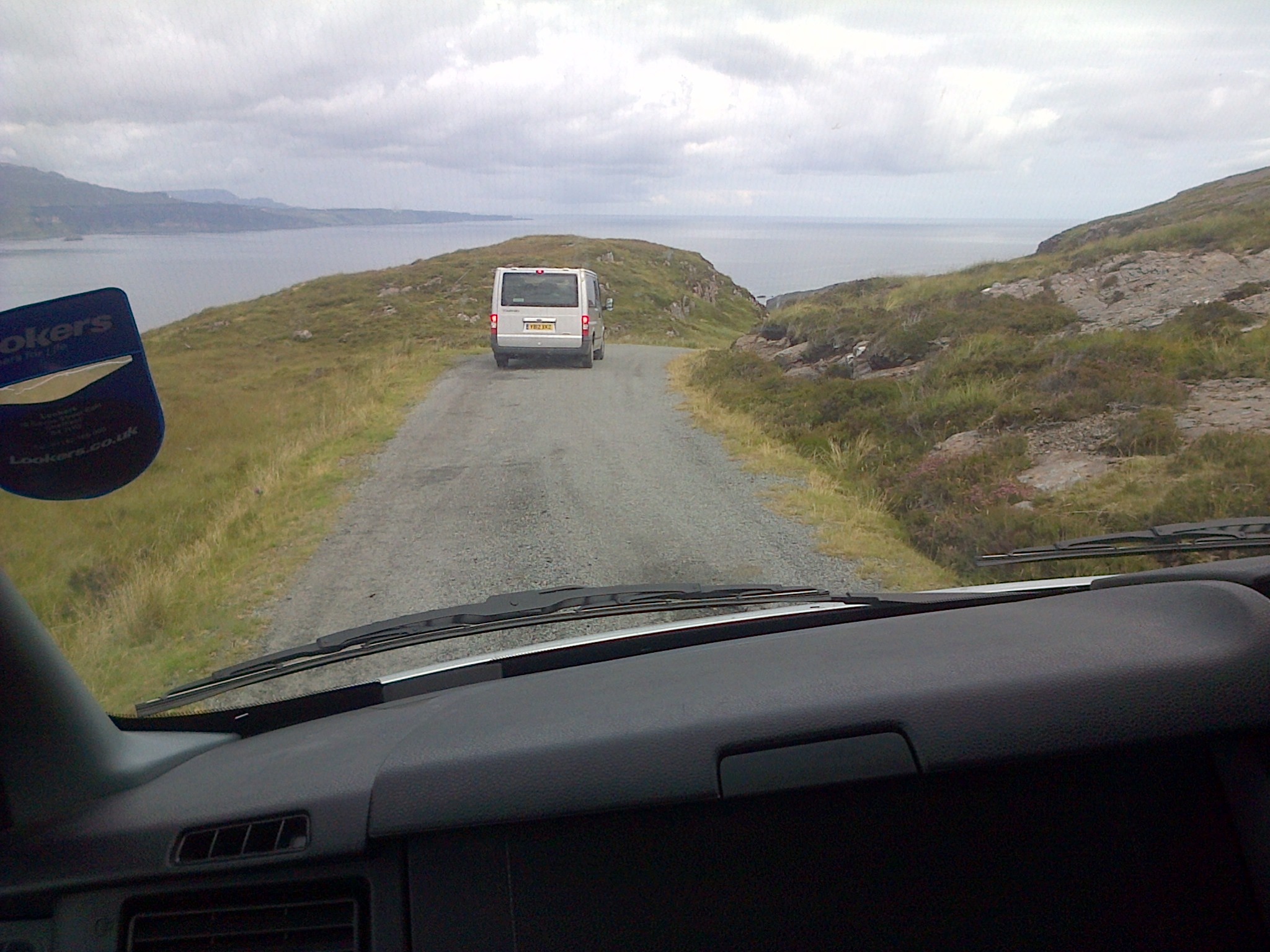
Today the group journeyed by minibus to both the north and south of Raasay. In order to find a foothold in history, and to find a way from our contemporary perspective to respond creatively to the legacy of Colm Cille, Convocation has been structured to begin with a series of questions that can give the historic background to themes that have been identified to be of interest, and also to offer the opportunity to engage with and open up the subjects through discussion within the group. The questions were illuminated by Professor Clare Lees and Kathryn Maude from Centre for Late Antique and Medieval Studies at King’s College London.

Our first stop was the beach at Brochel Castle, to look at aspects of time. To what extent can this project genuinely engage with the extreme past? Should we connect a contemporary response to the extreme past or should we maintain the gap between present and past?

We then moved onto Calum’s Road, past the ‘deep time’ represented by the oldest rocks on the island, thought to be 3 billion years old, Lewisian Gneiss, to explore the subject of landscape and spirit. How was ‘place’ thought of in the past? Words such as nature and environment are a contemporary concept. At the third site, Calum’s Cairn, positioned at a commanding viewing point looking over the Sound to Skye, we discussed Peregrinatio and began to identify the different ways in which we can think of travelling or the journey, whether through pilgrimage, exile or from life to death. Throughout our day today, St Columba and his life and death, evidenced 100 years later by Adomnan of Iona, were present. We looked at the questions and contradictions within the life of St Columba, standing round the cist at Eyre, in itself a holder for the dead. What was more important during this time – life or afterlife? Rational truth or devotional truth? How should the book be read? Is it formulaic or symbolic? What is the nature of justice in this book? Then onto the iron ore mines, we stood inside one of the ruins and looked at the notions of the monastery as a way of working. Is there a tension between the individual and the community? What is the economy of the monastery?
Tomorrow we will begin the morning of artists’ presentations with the last question, on The Spiral. How do you navigate the Spiral? Where do you enter and exit the Spiral? What do we do with this knowledge? Is contemplation a privilege?

Unknown's avatar

Entering the Spiral

How do you navigate the Spiral? Where does it start and end?

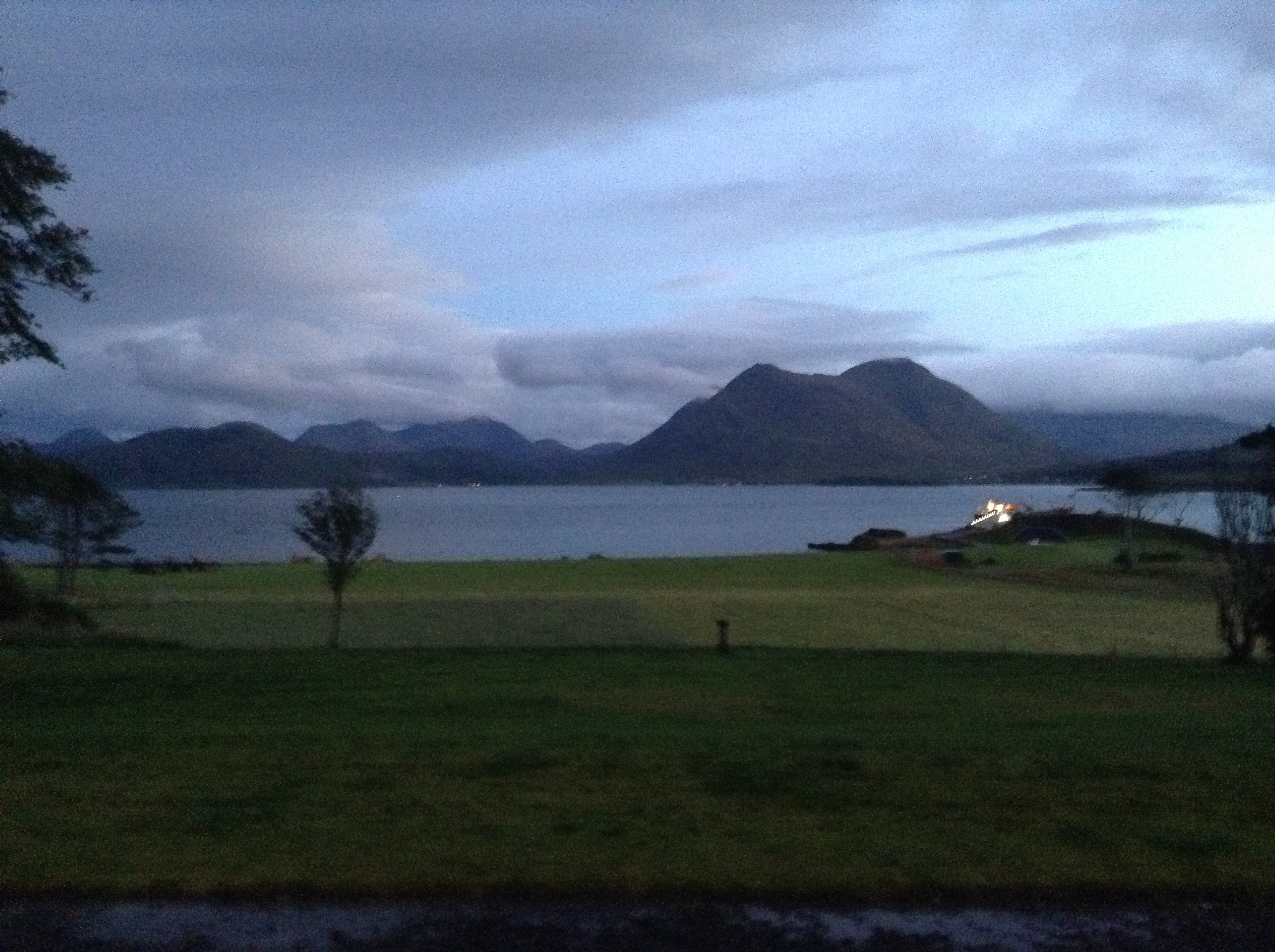
Today the group of 18 artists, scholars and organisers, completed their journeys from London, Galway, Glasgow, Edinburgh and Skye to converge on Raasay for the beginning of ‘Convocation’ and the Scottish knot of Colm Cille’s Spiral.

The Citylink bus from Glasgow, drives through a brooding Glencoe, stopping long enough in Fort William for a leg stretch, then onwards, looping past the waymarkers I always look out for on the way to Skye- the best historically named diner in the Highlands Jac-o-bites, the dramatically picture postcard positioned Eilean Donan Castle, followed by the more modest white house of author Gavin Maxwell which nestles at the foot of the Skye bridge. I see some new signs to me on Skye such as Saucy Mary’s Hostel and the Happy Hand Spinner’s studio. After the arc of the road bridge, we see another- a complete rainbow on the Sound.

The group may not all know each other, but the fact that all have been asked to dip into Abbot Adomnan’s ‘Life of St Columba’, gives a shared starting point, with each having their own observations on the text. As people seat hop over the seven hours of travel, we enter the Spiral of St Columba through conversation. Emma Balkind mentions that it is can be noted in our present and past that there has always been a threat, whether from the heathens of the past or terrorists of today. Johnny Rodger, from the GSA’s School of Architecture, talks about Columba’s ‘Back of the Hill’ on Iona, and how in Gaelic it is ‘tonn air gaoithe’, an architectural principal of orientating the back of the house to face the elements, as we see in black houses. Michael Mersinis mentions he has set himself the nighttime task of celestial photography whilst on the island, with long exposures to catch the light of the stars. The next three days, if the clouds part, we will have meteor showers.

The bus driver asks if there is a party at Sconser with so many of us getting off there, to go to Raasay. Then following a 25 min ferry ride, we arrive at an island off an island, Raasay, our destination. There is much to be discovered- a napoleonic fort, the Cave of the Oars, the remains of a prisoner of war camp and the oldest and youngest rock formations on the island. Time stretches out.

12.8.13

image

Unknown's avatar

The Field Guides of Hans Waanders

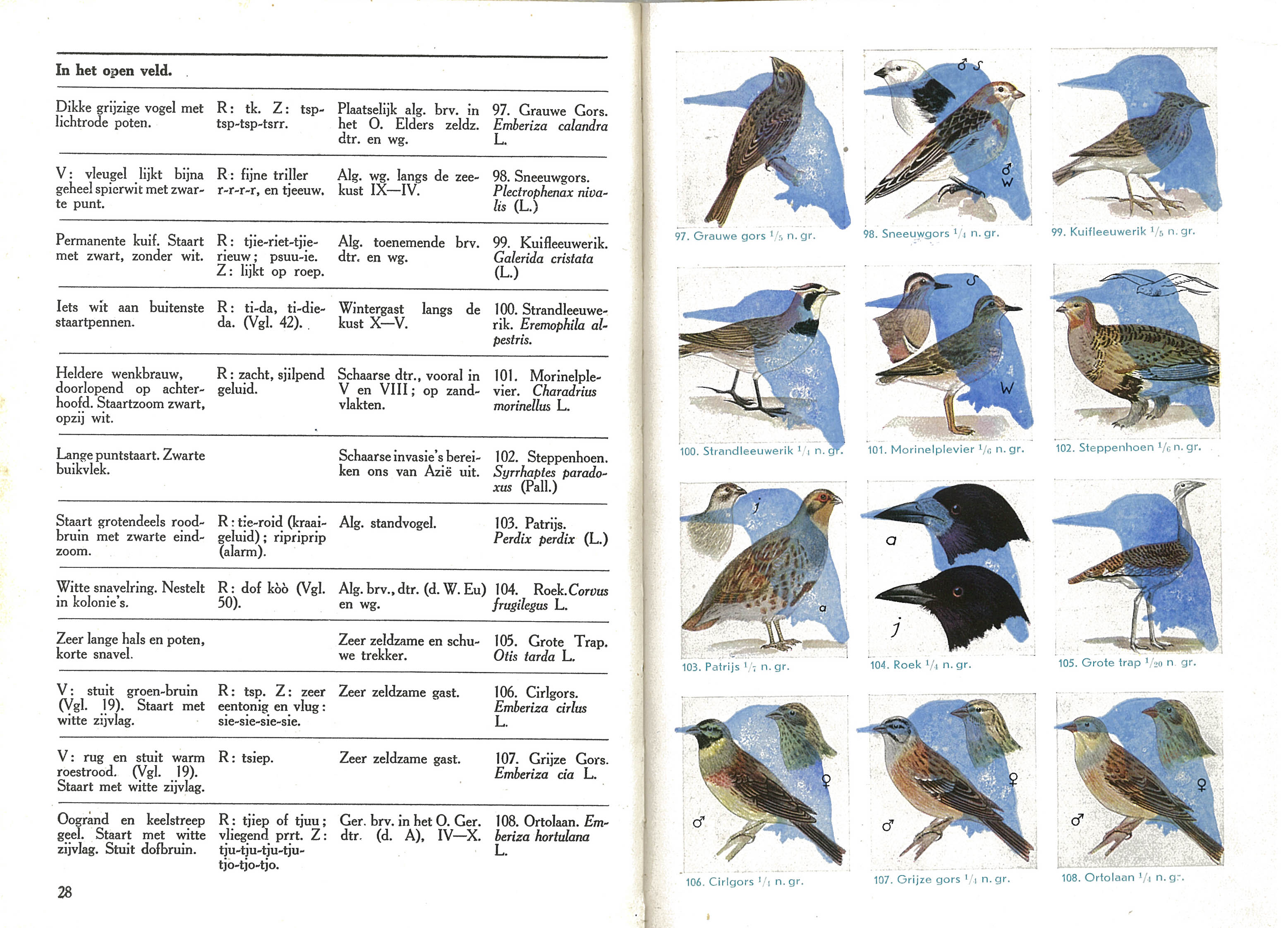
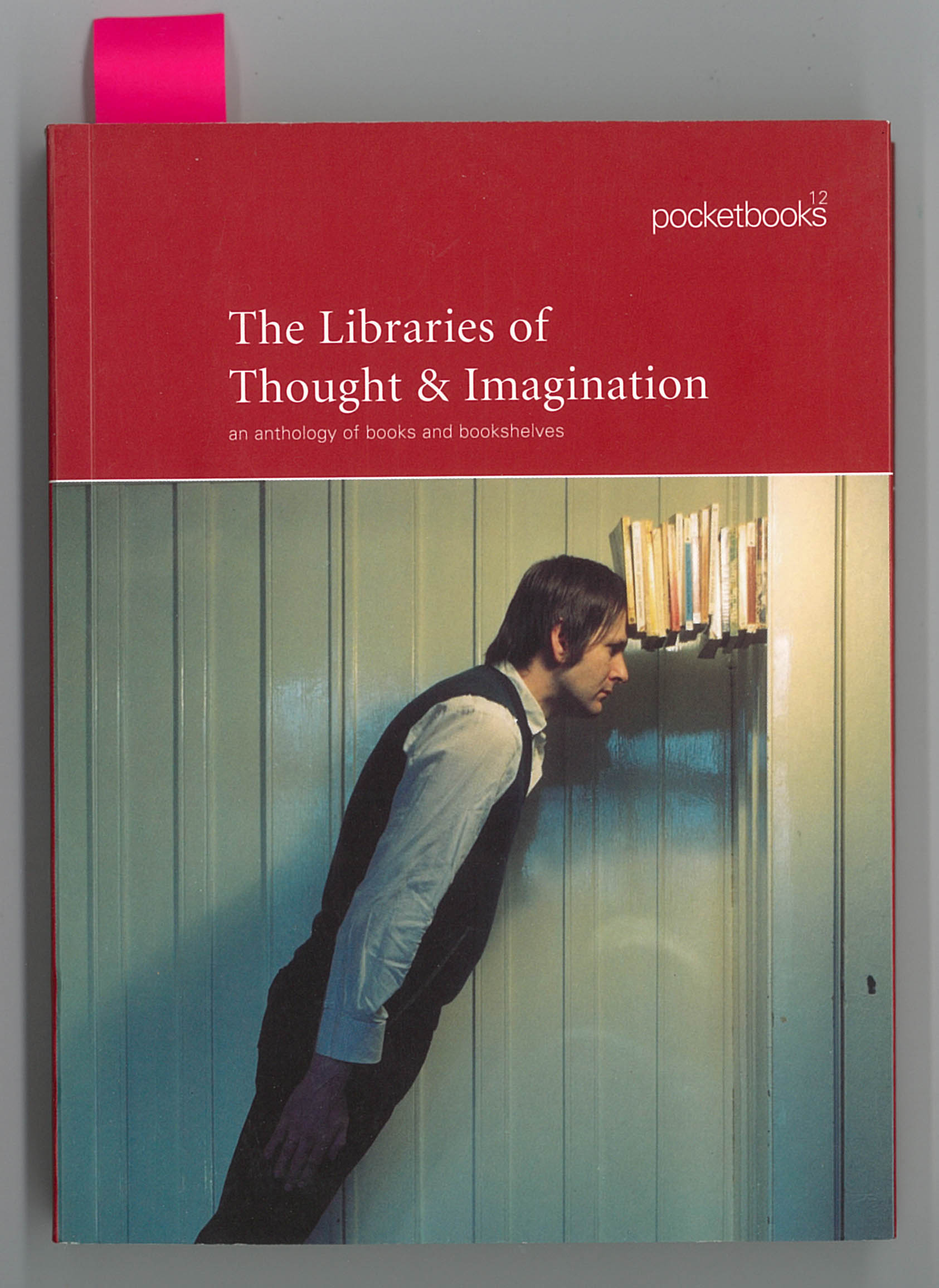
Hans Waanders (1951-2001) was a Dutch artist who, following a chance sighting of a kingfisher, became obsessed with them in his work for over fifteen years. Using the silhouette of the kingfisher, he stamped it over every image of every other bird in the Field Guides he found in charity shops and book shops. For him the kingfisher represented a metaphor for life – its possibilities, survival, flight and fall. I had the pleasure of meeting him at Grizedale, which he wrote about in a postcard to me after, as ‘a very nice spot but perhaps a little remote?’.  Alec Finlay published the resulting short essay in Pocketbooks 12, ‘The Libraries of Thought & Imagination’ (2001). Dowload  The Field Guides of Hans Waanders

Hans Waanders


Front cover Pocketbooks

Unknown's avatar

Forest Flashpoints

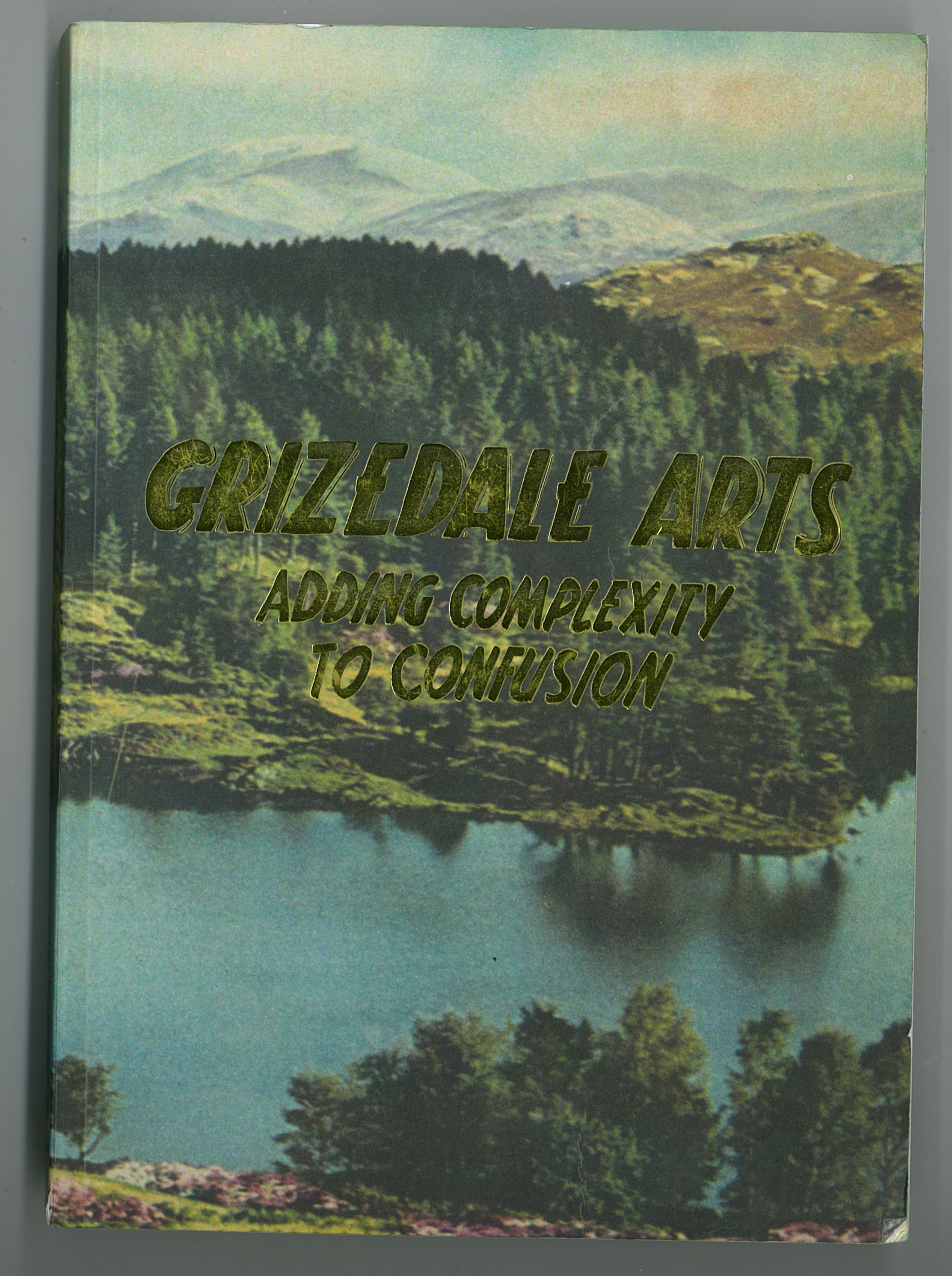
‘Forest Flashpoints’ is an essay in Grizedale Arts book ‘Adding Complexity to Confusion’, P120-122, published by Grizedale Arts in 2009.  Download Forest Flashpoints to read my essay which sets up a virtual dialogue between Andy Goldsworthy and Grizedale Arts’ approaches to making work.

[excerpt]
Andy Goldsworthy’s balls of snow have been insured by Hiscox, the specialist art insurers, against events that could happen but are not desired, such as ‘being vandalised or run down by a car – anything other than it just disappearing in front of your eyes, which is the point of art’…

Grizedale book cover

Unknown's avatar

‘Bird of the Devil’: Hobby Thrush (Hobi albicans)

In 2006 I contributed to Edward Summerton’s book ‘Bird of the Devil’ with Hobby Thrush .  Eddie had invited people including Michael Marra, Sandy Guy, Norman Shaw, Laura Hird and Neil Mulholland, to write entries to accompany a series of strange birds he had created though altering book illustrations.

That year at work, there had been a rash of Spam email, all from senders with highly dubious names. I chose the names which had aspects of nature in their titles, in order to make my contribution and return their ‘virus to nature’. ‘Bird of the Devil’ is a Strict Nature Reserve Book, Published by ET4U Denmark. ISBN 87-991279-0-8 http://www.edwardsummerton.co.uk/

birdofdevilcover